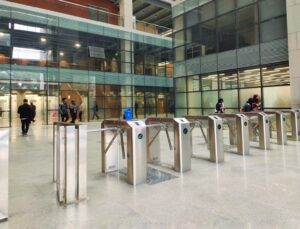
Walk out of Nishikasai station on a Saturday evening and the first thing you notice is the smell of frying spice. There are grocery stores stocking Basmati rice in ten-kilo sacks, restaurants advertising thali sets in Hindi and English, a temple across the road, and a steady flow of families in and out of the shopping arcade.
Nishikasai, tucked into eastern Tokyo along the Tozai subway line, is not a large area by international standards — but over the past two decades it has quietly become the biggest and most visible Indian neighborhood in Japan.
And in 2026, with the Indian community across the country continuing to grow, it is worth taking a closer look at how that community actually lives, what they follow, and how they stay connected to home.
Who lives here and why
Japan’s Indian population has grown from a few thousand at the turn of the century to somewhere between forty and fifty thousand today, depending on how you count long-term residents versus dependents.
The Ministry of Foreign Affairs of Japan tracks these numbers, and its consular statistics are the most reliable public source for the year-on-year figures. Most of the growth came from a specific channel: IT professionals recruited into Japanese banks, telecoms, and consulting firms during the wave of digitalization that started in the mid-2000s and accelerated after 2015.
Around that recruitment pipeline, a whole community formed — families, schools, restaurants, temples.
Nishikasai became the center partly by accident. In the early 2000s a handful of Indian IT contractors settled there because rent was cheaper than central Tokyo, and it was two subway stops from Otemachi, where a lot of them worked.
Once a few families lived there, more followed. Indian grocery shops opened, then restaurants, then two Indian schools within a fifteen-minute walk of the station. The area now has probably the highest concentration of Indian residents anywhere in East Asia outside of Singapore.
What daily life looks like
An average weekday in Nishikasai in 2026 involves a familiar rhythm. School buses for the Global Indian International School and the India International School in Japan run in the morning.
Adults commute inbound to jobs in finance, IT, consulting, or engineering. Evenings run late — Indian dinner hours are noticeably later than Japanese ones, and restaurants along Nishikasai’s central strip often stay busy until eleven. Weekends bring temple visits, cricket at Edogawa Rinkai Park, and community events at Kasai Rinkai Park in warmer weather.
The children’s experience is interesting. Many grow up genuinely bilingual, sometimes trilingual. Home languages are Hindi, Tamil, Telugu, Gujarati, Bengali, or others depending on the family.
School language is often English. The environment outside is Japanese. A ten-year-old raised in Nishikasai can typically order food in Japanese, argue in Hindi, and complete school assignments in English — sometimes all in the same afternoon.
Staying connected to home
One of the recurring themes in conversations with Indian residents of Tokyo is how much easier it has become to stay connected to home over the past decade. Video calls with parents in Bengaluru or Mumbai are routine. Amazon Prime carries a large enough Indian catalog.
Streaming services deliver Bollywood and regional cinema in real time. Payment platforms let people send money to family accounts back in India within minutes.
Sports is a major part of that connection. Cricket in particular. The Indian Premier League, which runs from late March through May, is the single biggest shared cultural event in the community every year. Households organize dinners around important matches.
WhatsApp groups light up during Chennai versus Mumbai fixtures. Some of the older Indian restaurants in Nishikasai and Ikebukuro run large screens on match nights, filling up with regulars who could just as easily watch at home but come out for the atmosphere.
Fantasy leagues and match statistics are part of the ritual. Indian sports platforms are widely used for keeping up with detailed scorecards, injury news, and team announcements.
Operators like Rajbet.com are among the platforms that Indian users abroad often check for live coverage and statistical depth on IPL matches, international fixtures, and other sports, all in a familiar format that mainstream international outlets rarely reproduce.
That mix of live information and community discussion during matches is a big part of how the season actually gets experienced by fans living outside India.
Festivals and public events
Deepavali is the biggest annual public event, and in 2026 it will fall in early November. In previous years, the celebrations at Nishikasai split into Kasai Rinkai Park, with music, food stalls, and dance performances drawing a mixed crowd of Indian families and curious Japanese neighbors.
Holi in March gets similar treatment on a smaller scale. Independence Day in August, Ganesh Chaturthi later in the same month, and various regional festivals for Tamil New Year or Onam show up on the calendar for whoever wants to participate.
Japanese neighbors have adapted with a mixture of curiosity and hospitality. In the early years of the neighborhood there was some friction over noise and unfamiliar cooking smells.
That has mostly settled. Nishikasai is now one of the more genuinely mixed corners of Tokyo, with elderly Japanese residents and Indian families sharing the same shopping arcade and often the same apartment buildings.
Work and business
Most Indian professionals in Tokyo still work in IT or finance, but the sector mix has broadened. There are Indian doctors at several Tokyo hospitals, Indian professors at Japanese universities, a growing number of Indian-founded startups in the Shibuya and Otemachi areas, and a small but visible group of Indian restaurant chains that have expanded beyond Nishikasai into central Tokyo and beyond.
Chef-run establishments in areas like Roppongi and Ebisu have brought regional Indian cuisines — Kerala, Punjabi, Hyderabadi — into the mainstream Tokyo dining scene in a way that would have been unimaginable twenty years ago.
What is next
The community will keep growing. Japan’s continued need for skilled foreign workers in IT, engineering, and healthcare points to a steady inflow. The second and third generations of Indian residents — born in Japan, educated partly in Japanese schools — are only just starting to enter the workforce, and their trajectory will be worth watching.
Some will build careers here permanently. Others will move on to the US, Singapore, or back to India. Most will maintain the connection to both worlds that has become the community’s defining feature.
For anyone curious to see what an established Indian community in Japan looks like on the ground, an evening in Nishikasai is the shortest way to find out. Get off at the north exit of the station, walk two blocks in either direction, and eat wherever the queue looks longest. That is the local method, and it usually works.