
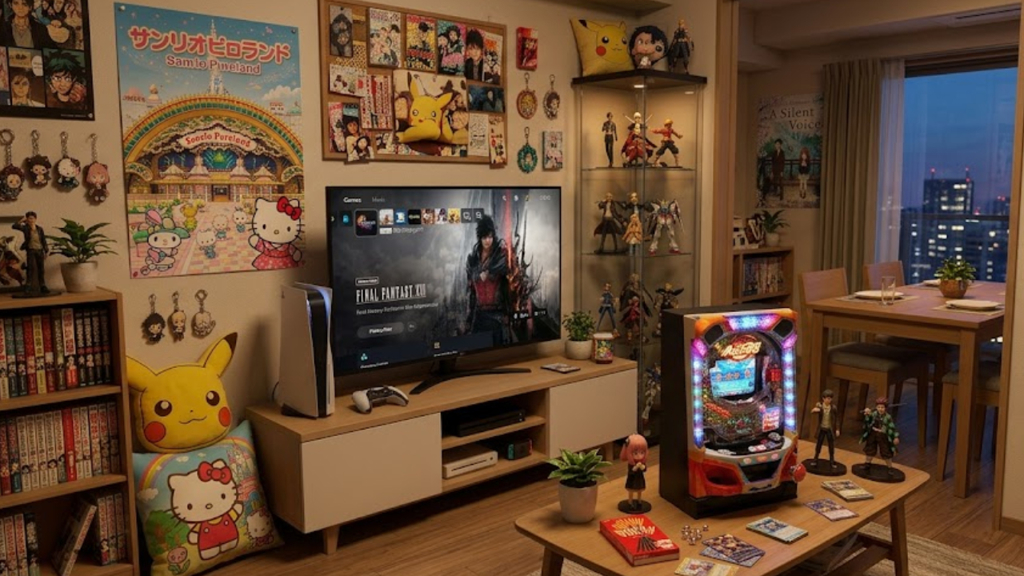
 Japan’s entertainment business is unique globally. While sports, streaming, video games and gambling dominate globally – Japan’s entertainment culture is hugely inspired by its massive anime and manga business. Although the entertainment revenues are still dominated by pachinko parlour like slot games, these often feature anime and videogame characters.
Outside of the gambling sector – which has declined, but this article will explain just how big of a business it still is – Japan’s biggest entertainment sectors are anime, videogames and theme park tourism. This is a detailed look at how the Japanese like to spend their entertainment money in 2026.
Pachinko and Pachislot Games Still Dominate
Interestingly, despite casino gambling being mostly illegal – apart from a few potential new integrated resorts – Japan’s biggest entertainment business by consumer spend (and by some distance) is gambling related.
Pachinko games are actually quite similar to slot games, but instead of giving out cash they give out prize balls. These prize balls are traded at separate but related establishments for cash, which sell them back to the casino for a slight profit.
Much as online casinos like NetBet provide gambling services in the UK, a similar niche is filled by pachinko parlours (or pachislots) in Japan. Online casinos in Western markets like the UK offer colorful, mile-a-minute games with recognisable branding, jackpot prizes and bonus incentives to get players started – which are all things you’ll see in Pachinko slots parlours in Tokyo.
These operations have been massively popular for years. And by that, think bigger revenues than all the casinos in Las Vegas and Macau combined. Numbers have been dropping since their peak in 2005, but they are still likely Japan’s biggest entertainment business sector with a market size of some ¥8.5 trillion ($53 billion) in 2025. But that is down from a high of ¥16.7 trillion as recently as 2023.
In terms of scale that is well ahead of the online gambling market in the UK, and slightly bigger than the regulated North American online gambling market of the US and Canada. All done through physical machine parlours, with increasing regulatory and legal pressures, and no real online presence to speak of.
Anime and Related Merch is Still Huge
Japan’s second biggest entertainment business sector owes its success partly to its international appeal. Anime and its related content are now worth ¥3.4 trillion ($20 billion) a year in market value.
Revenue from anime and related markets mostly comes from:
- Streaming series
- Manga sales
- Merchandise
- Cinema releases
- Overseas distribution
- Live events like expos and cosplay shows
Interestingly, merchandise and character IP deals for anime companies now make more revenue than television broadcasting – although streaming still dominates. There are now more than one billion anime fans globally, according to some estimates.
Anime characters are also prime for cross-selling. Big ticket deals with western audiences include the Demon Slayer games, which sold 4 million copies globally, and anime character skins in games like Fortnite are just two examples.
Video Games are Still a Big Deal
Japan is globally known for its videogames. Sony, Nintendo, Capcom, Konami, Sega (the last two of which you might not know got their start making slot machines and pachislots) are all massive multibillion dollar-valued and globally known video game developers and publishers.
Yet interestingly, despite making arguably the two biggest home gaming consoles in the world, the Japanese videogame industry is not as big as anime or pachinko.
Estimates are that in 2025 Japanese videogame business revenue was around ¥4.21 trillion, or around $26 billion – with the upper range at ¥4.87 trillion or $30 billion.
Another quirk to Japan’s market is that its video games are enjoyed globally – but the domestic market is arguably almost just as strong. According to surveys Japan is home to around 2% of videogame players worldwide – but in some years they account for as much as around 9% of global videogame spend. It is often the third largest videogame market in the world, after the US and China.
Japanese game franchises are beloved multi-billion dollar franchises globally including games like Pokémon, Super Mario, Sonic, Resident Evil, Silent Hill, Tekken, Street Fighter, Final Fantasy, Dark Souls and so many more.
Japan Still Loves Amusement and Theme Parks
Lastly, but not exactly least, Japanese amusement parks and purpose-built tourist attractions have seen somewhat of a revival in recent years.
Tokyo Disneyland, Yomiuri Land, Huis Ten Bosch (which is a quirky, pastoral recreation of a Dutch town) Sanrio Puroland, Nagashima Spa Land. Japan, and the region around Tokyo in particular, is home to some incredible theme parks.
The market is worth around ¥1.29 trillion a year, or around $8 billion. Which puts it comfortably at the bottom of this list, but is still no small change by any sector’s standards.
In 2023 more than one third of Japanese people surveyed in one large poll of thousands said they visited amusement parks more than once a year. In the UK, for an example used earlier, that stands at only 10%. Interestingly, the biggest age group of Japanese theme park visitors, this survey said, was 20 to 40 year olds.
So – there you have it. Japan’s most popular entertainment choices in 2026, according to consumer spend. Did it surprise you?