TOKYO (TR) – Behind the polished facade of IT conglomerate GMO Internet Group, details have emerged regarding the lavish lifestyle, neighborhood grievances, and turbulent past of its 63-year-old founder and CEO, Masatoshi Kumagai, reports weekly tabloid Shukan Shincho (Nov. 12).
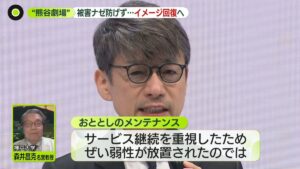
Kumagai, whose group encompasses over 150 companies with a combined market capitalization exceeding 1 trillion yen, has recently shown cracks in his armor, even shedding tears at a press conference as his aggressive expansion strategy backfired.
With an estimated personal net worth of roughly 180 billion yen as of October and an annual executive compensation package of 130 million yen, Kumagai lives in an upscale central Tokyo apartment where rent averages around 2 million yen per month.
His taste for luxury includes bespoke apparel from Hermes and Chrome Hearts, an oceanfront condominium in Hawaii valued at 1 billion yen, and a 90-million-yen Mercedes-Maybach Pullman limousine driven by a personal chauffeur. On occasion, he pilots his own private jet to Tottori Prefecture simply to dine on local crab alongside fellow executives.

Deafening noise
However, his high-flying lifestyle has generated significant friction. Neighbors have voiced bitter complaints over deafening noise caused by Kumagai piloting his private helicopter, as well as raucous parties hosted at GMO’s exclusive VIP reception facility.
Kumagai’s romantic indulgences have also drawn insider attention. According to group sources, the executive frequently gifts high-end Cartier “Love” bracelets — specifically diamond-encrusted pink gold editions valued at over 3 million yen — to favored female companions.
Observant social media users have pointed out that a prominent biracial fashion model and a Ginza hostess club mama both began sporting the identical Cartier bracelets. Shortly after receiving the gifts, both women began sharing social media photos of cakes and trinkets featuring bear motifs — an apparent nod to the “Kuma” in Kumagai’s surname. Inquiries sent by the magazine to GMO regarding Kumagai’s personal relationships were met with no response.
Unconventional path
Kumagai’s path to the billionaire ranks was far from conventional. Born in Nagano Prefecture in 1963 to a father who operated movie theaters in Tokyo, he attended the private Kokugakuin High School in Shibuya Ward. Although Kumagai has claimed in interviews that he entered at the top of his class, former classmates paint a very different picture.
“I don’t recall him having outstanding grades,” one former classmate said, describing Kumagai as the leader of a rowdy clique of five or six youths who talked back to teachers. During the first term of his second year, a teacher caught Kumagai hiding a pack of cigarettes in his uniform pocket, sparking an uproar that led to him dropping out.
Following stints working as a disco DJ and other odd jobs, Kumagai joined his father’s company at age 20, marrying the same year and having a daughter shortly thereafter. Despite his early start, relations within the family remained rocky; following his father’s death, Kumagai reportedly became embroiled in a bitter inheritance lawsuit with his half-brothers.
Aggressive corporate acquisitions
Spurred by a personal resolution to take a company public before turning 35, Kumagai launched a voice-information service in 1991 utilizing Dial Q2 — a premium-rate telephone service that later became a major social controversy in Japan due to exorbitant charges. As regulatory scrutiny tightened, Kumagai pivoted, founding the internet provider InterQ in 1995 just as Windows 95 ignited the consumer tech boom.
Through aggressive corporate acquisitions — notably in server hosting and credit card payment processing — Kumagai expanded the business into today’s GMO empire. Yet industry observers warn that his freewheeling management style has left structural flaws.
“Kumagai certainly has an eye for new business trends,” economic journalist Toru Machida said. “However, given incidents such as past unauthorized access leading to credit card data leaks, he clearly overlooks the operational details. It is difficult to avoid the criticism that his management approach lacks discipline.”