TOKYO (TR) – Criminal syndicates are increasingly turning to advanced caller ID spoofing techniques, disguising incoming calls as police stations, corporate entities, and even victims’ own family members to swindle hundreds of millions of yen nationwide.
The alarming trend was highlighted in October following the arrest of a suspect tied to a massive telecom scam that defrauded a Hiroshima Prefecture man out of more than 200 million yen. In that case, the caller falsely presented themselves as a police officer.
Investigators believe the wider fraud syndicate has racked up roughly 730 million yen in illicit gains across Japan through similar tactics, reports TBS News (Nov. 8).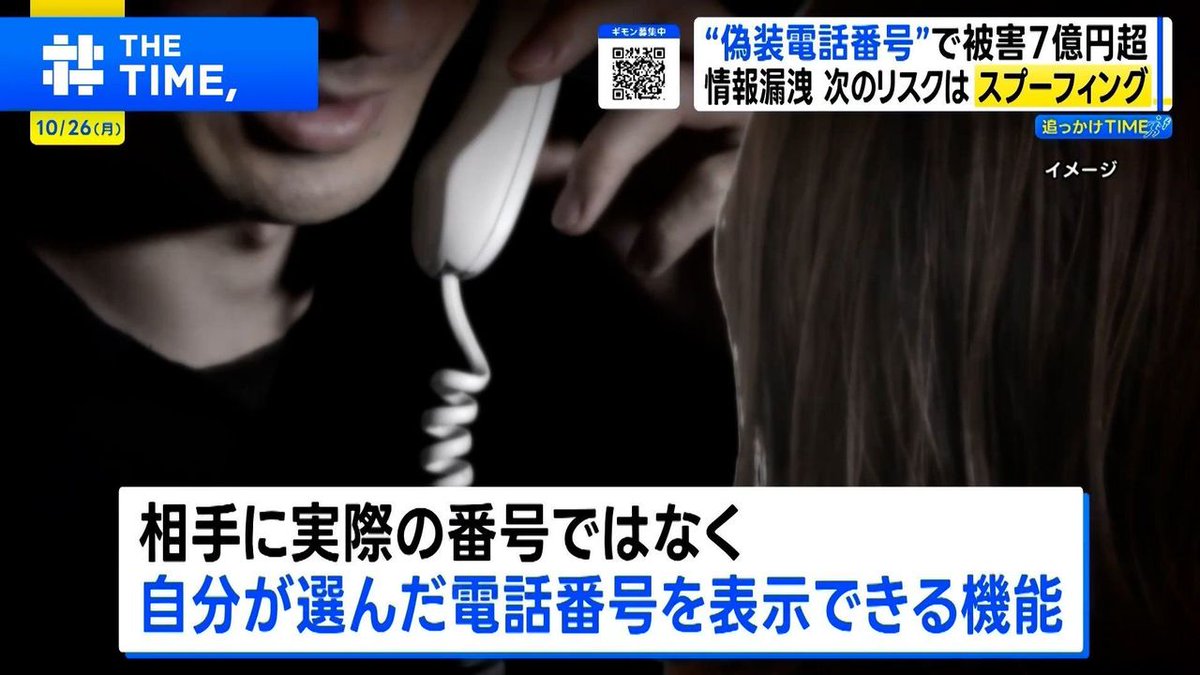
ID spoofing
Known as caller ID spoofing, the method allows fraudsters to display virtually any telephone number on a recipient’s smartphone screen. Social media has seen a surge of reports from citizens receiving dubious calls ostensibly originating from the Tokyo Metropolitan Police Department, local kindergartens, or known business associates.
According to Masakatsu Morii, an emeritus professor at Kobe University specializing in cybercrime, perpetrators typically coordinate with overseas telecommunications operators to route calls with falsified origin data. While domestic carriers have attempted to implement countermeasures, they have so far failed to fully plug the loophole.
The manipulation of caller IDs significantly lowers a target’s guard, warns crime journalist Yukio Ishihara.
“When an unknown number calls, people answer with caution,” Ishihara said. “However, when the number belongs to a person or business they recognize, they immediately drop their guard and listen attentively.”
Parents’ residence
In one chilling instance cited by Ishihara, a victim answered an incoming call showing the telephone number of their parents’ residence.
Upon answering, an unfamiliar man’s voice delivered a terrifying message: “We’ve broken in. Your parents are unharmed, but get the money ready.”
Believing the extortion threat was genuine purely because the call originated from their parents’ home line, the terrified victim transferred 200,000 yen before realizing it was a hoax.
Corporate data breaches
Criminals are also exploiting a wave of recent corporate data breaches. Masquerading as representatives of compromised companies, fraudsters call victims using the firms’ legitimate telephone numbers under the guise of issuing an official apology.
During the conversation, the scammers trick the victims into divulging sensitive financial details and personal information that were not exposed in the initial leak.
Experts urge the public to exercise extreme vigilance, even when the caller appears familiar. If a caller requests money, demands bank transfers, or asks for private data, recipients are advised to hang up immediately and dial the entity’s verified telephone number manually to confirm the inquiry.