
CHIBA (TR) – A court here last week handed a 32-year-old woman from a suspended prison term for assisting in the suicide of her Nepalese boyfriend at a love hotel in Funabashi City last year.
The ruling was handed down despite claims by the family of the victim, 21-year-old Chantal Badar, that he would not kill himself, reports the site for tabloid Friday (Mar. 11).
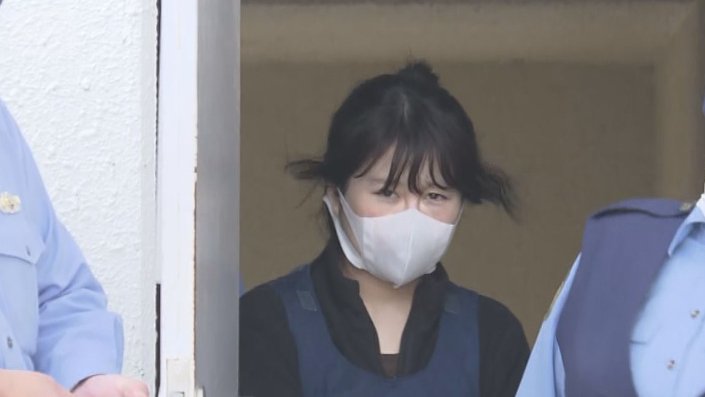
At the Chiba District Court on March 10, Presiding judge Kenta Tsuchikura handed Mami Asaka a two-year prison term, suspended for five years, for assisting in the suicide of Badar.
In handing down the ruling, presiding judge Kenta Tsuchikura stated, “Despite various options being considered, including input from family members, the defendant impulsively prepared two kitchen knives and assisted in the suicide. There are few mitigating circumstances regarding these circumstances and motives.”
The prosecution had requested a two-year term.
Regarding the suspension of the sentence, the judge stated, “This case involves assisting suicide. The defendant admitted her guilt and expressed remorse.” He added, “In this case, after imposing the sentence of imprisonment as stated in the main judgment, the suspension period was set to the maximum of five years.”
Murder
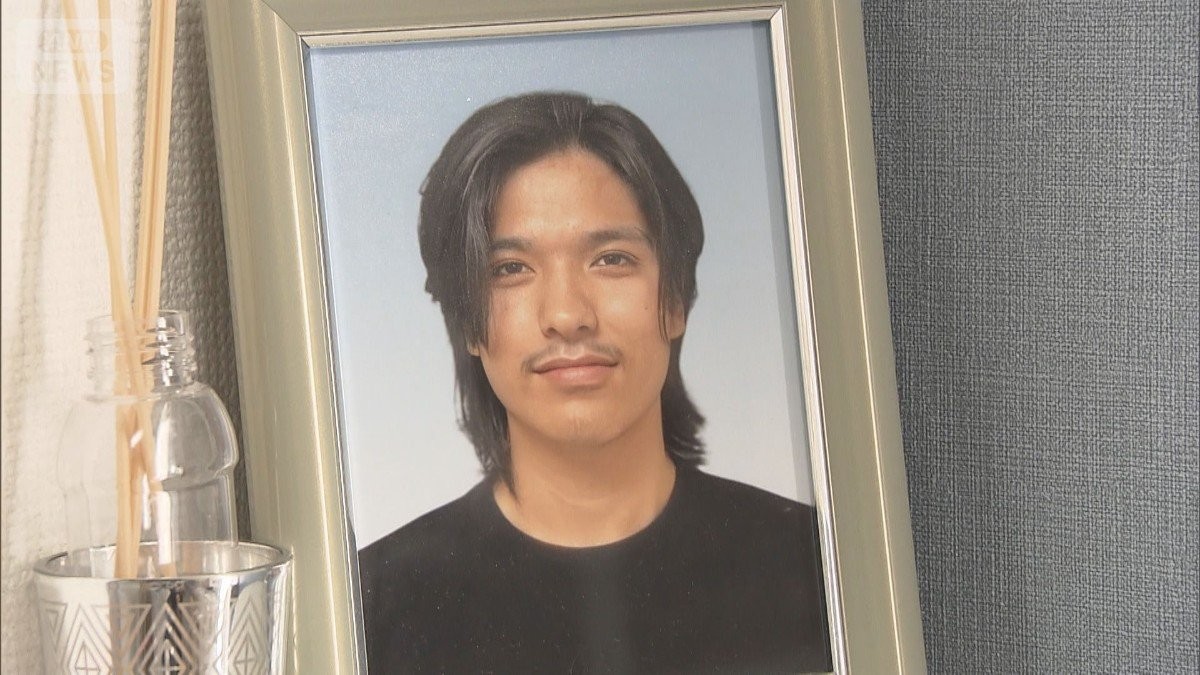
On October 5, Badar was discovered dead face-down in a pool of blood at a hotel in Funabashi City. He had suffered a fatal stab wound to the chest. Asaka made the initial emergency call, telling paramedics, “He stabbed himself.”
On the day of the incident, police first accused Asaka of theft. She allegedly stole two knives from a retailer in Chiba City two days before. The knives are believed to have been used in the incident.
Based on the condition of the scene and the body, police determined that Asaka was likely involved in a murder, which led to her arrest at the Funabashi Police Station on that charge on October 28.
However, Asaka denied allegations of murder. The prosecution eventually indicted her on charges of assisting suicide, theft and violating the Swords and Firearms Control Law. The prosecution stated that the decision not to charge him with murder was based on “the evidence.”
“I want to marry you”
On February 19, Asaka’s first trial was held at the same court. Relatives of Badar also attended the trial and listened to Asaka’s testimony through a Nepali interpreter.
During the trial, the details of what happened that day gradually became clear.
In December 2024, Badar, a student at a Japanese language school, and Asaka met at the factory where they worked. The two, who were 11 years apart in age, began dating in March 2025. Asaka recalls that Badar had asked her to marry him in March, when their relationship began.
She testified, “He [Badar] first sent me a passionate message that included the phrase ‘marriage.’ When we actually met, he also said things like, ‘I want to marry you.’ I liked him, but at that time I wasn’t thinking about marriage yet.”
Because Badar had school and Asaka was working two jobs, they mainly met at hotels. When asked by the victim’s lawyer if they had ever gone to the movies or an amusement park together, Asaka answered, “No.”
“My parents opposed it”
Around September, Asaka began considering marriage with Badar, but faced opposition from those around her. Asaka cited three reasons for his suicidal thoughts: “My family opposed the marriage, we didn’t have enough money to live together and Badar changed jobs, which reduced the time we could see each other.”
Regarding her family’s opposition, she explained in response to her lawyer’s questions: “My parents opposed it, saying that our different cultures and upbringings would make it difficult for us to live together. He [Badar] also told me that his father called him and asked, ‘What did you come to Japan for?’ and that his father opposed the marriage.”
According to Asaka, Badar was “very shocked, saying things like, ‘I want to be with you,’ and ‘I want to get married.'”
And then, without either of them explicitly saying so, they began to contemplate suicide.
Asaka said, “Badar showed me a picture of a Nepalese kukri knife and said, ‘If we can’t be together, let’s kill ourselves.'”
Prepared knives
Asaka interpreted the image of the kukri knife as a message asking her to prepare a knife. Thinking, “Since we’re going to die anyway, there’s no need to buy one,” she stole two knives from a 100-yen shop on October 3, 2025.
On the night of October 4, she met Badar at the hotel and placed the two knives on the table, telling him she had prepared knives.
Regarding Badar’s suicide attempt, Asaka stated: “We were lying in bed, crying and talking, when suddenly he sat up and said, ‘If we can’t be together, I’ll kill myself,’ and picked up one of the knives from the table and stabbed himself in the chest.”
Regarding why she didn’t follow Badar, she said, “My mind went blank, and I couldn’t act.” After hesitating for a while, she called emergency services.

Eleven stab wounds
What was puzzling was that Badar’s body was in a far too gruesome state to have been self-inflicted.
At the second hearing on March 3, Badar’s brother revealed the following:”My brother’s body had 11 stab wounds. A deep stab wound to the neck. There were also wounds on both hands, with the blade penetrating his left hand. Furthermore, the blade reached a depth of 16 centimeters near his heart.”
The prosecutor then asked Asaka, “Do you understand how so many wounds could have been inflicted?” To this, she responded, “I was in bed, so I could only see Badar’s back. He was hunched over, so I couldn’t see what he was actually doing.”
“I believe Badar was murdered”
In his statement, Badar’s brother insisted that he couldn’t believe Badar would commit suicide, saying, “If Badar had been suffering from mental health issues, we would have definitely noticed.” He added, “Badar had already created his work schedule for the following month. Would someone planning to take their own life create a future work schedule?”
During police questioning immediately after the incident, the brother also stated, “I heard that Badar broke up with Asaka on the night of October 2. I believe Badar was murdered.”
The family could not accept that Badar had committed suicide. The trial centered on Asaka’s charge of aiding and abetting suicide. However, the guilty verdict confirmed Badar’s suicide, leaving the family feeling betrayed.
Asaka stated in court, “When my marriage was opposed, my perspective narrowed, and I didn’t consider trying to resolve the issue, even if it took time.”
The suspended sentence means that this statement was acknowledged as an expression of remorse.