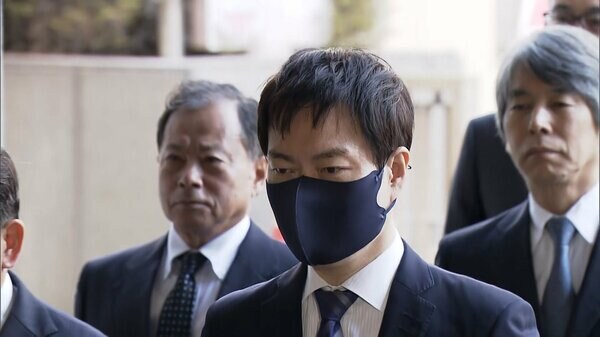
TOKYO (TR) – Prosecutors at the Tokyo District Court have demanded a six-year prison sentence for Masatoshi Akimoto, 51, a former member of the House of Representatives, after arguing he accepted approximately 72 million yen in bribes.
The bribes were in exchange for posing favorable parliamentary questions on behalf of an offshore wind power developer, reports Jiji Press (Nov. 5).
The demand was made during a session of the trial on Thursday, presided over by judge Hiroshi Ono. Prosecutors also sought a 42 million yen surcharge against Akimoto, arguing that the depth of his corrupt conduct was “extremely serious and deeply habitual.” according to reporting by Japanese media.
Also in the dock is Masayuki Tsukawaki, 67, former president of Japan Wind Development Co., who faces a three-year sentence on bribery charges for his alleged role in bankrolling the scheme. Final arguments from the defense are scheduled for January, after which the case will be concluded.
Both defendants have pleaded not guilty. Akimoto’s legal team insists he never received requests to tailor his parliamentary questions and that no improper benefits changed hands. Tsukawaki’s defense has echoed that position.
Prosecutors laid out their case in closing arguments, alleging that Akimoto put his parliamentary platform to work for Tsukawaki on four separate occasions between 2019 and 2023, using official Diet questions to push for a revision of the criteria used to evaluate offshore wind project applicants. That revision, prosecutors noted, actually came to pass.
Racehorses
The alleged vehicle for the payoff was a racehorse partnership. The two men shared a passion for thoroughbreds and in 2021 jointly established a horse-owners syndicate. Prosecutors argued that because Akimoto handled the selection of racehorses and breeding mares for the partnership, the purchase costs and related expenses covered by Tsukawaki amounted to corrupt payments in kind.
The defense has pushed back on that framing, arguing the syndicate was set up to fulfill Tsukawaki’s personal dream of breeding a horse he had a sentimental attachment to, and that legal ownership of the animals rested with Tsukawaki alone, negating any bribery element.
In a separate matter, Akimoto has also been indicted for allegedly fraudulently claiming 2 million yen in COVID-19 business sustenance grants. His defense team has indicated it does not intend to contest that charge.