TOKYO (TR) – Police in Koganei City have arrested 13 people in connection with a series of brazen break-ins targeting a single residential address.
After investigators determined that multiple anonymous, fluid-type crime groups, known as tokuryu, had been fed inside intelligence on the homeowner and sent to rob him, according to Tokyo Metropolitan Police, reports NHK (Nov. 5).
The campaign of terror began on May 3, when the resident, a company executive who lives alone, came downstairs for a cigarette and found an east-facing window smashed and roughly 100,000 yen in cash stolen from his desk.
Appliances and liquor bottles had been knocked over. “The wind was strong that night and masked the noise,” the resident told the broadcaster. “I spotted a figure running away when I briefly woke up, but I never imagined my own home was being targeted. Two hours later I found the mess and called police.”
Dedicated task force
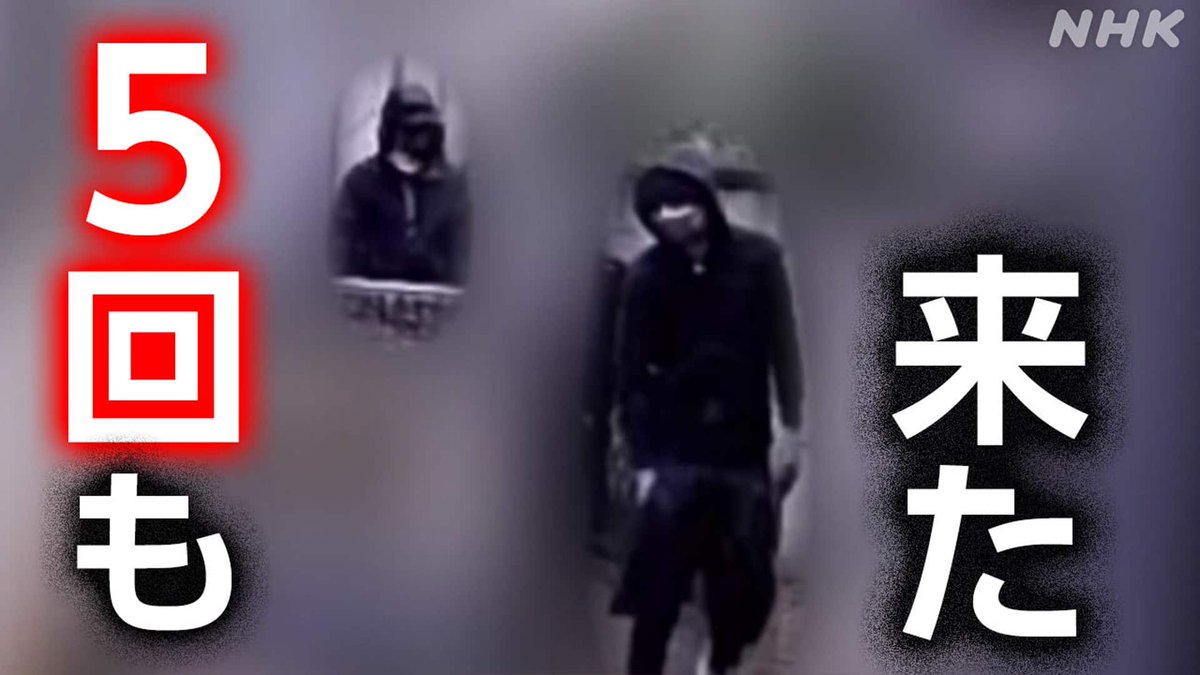
Eight days later, on May 11, a neighbor caught two figures peeling tape from the same broken window in the early hours of the morning. The intruders fled when challenged. Rattled, the resident installed security cameras the following day, May 12, only for the cameras to immediately capture a fresh black-clad prowler circling his property that same night.
Tokyo Metropolitan Police’s dedicated tokuryu task force analyzed the pattern of incidents and concluded the home had been earmarked for robbery by one or more anonymous crime rings. Officers ramped up patrols of the surrounding streets.
On May 24, at around 4:30 a.m., officers on watch stopped two men loitering on a nearby road and found them carrying concealed screwdrivers and other tools. The pair, a 31-year-old and a 21-year-old, both listed as having no fixed address or occupation, were arrested on suspicion of preparing to commit robbery and later indicted.
Separate tokuryu cell
A third suspect, 37, believed to have served as the getaway driver, was also arrested and indicted. Police said at least one of the three had recruited himself through a so-called yami-baito (dark-side job) listing on social media, and the men had no prior relationship with one another.
In June, two further suspects, aged 25 and 23 and both residents of Gunma Prefecture, were arrested and indicted over the May 12 intrusion. Police said those two appear to belong to a separate tokuryu cell with no confirmed links to the May 24 group, suggesting the same address had been simultaneously targeted by rival gangs.
By November 4, police had arrested a total of 13 people, including those believed to be recruiters, across the connected cases. Investigators have confirmed traces of communications between suspects and an unidentified handler conducted via high-secrecy encrypted messaging apps.
“Never received a single yen”
NHK reporters visited one of the indicted operatives, a man in his 40s who had been working as a contract security guard, at his detention facility. He said he applied for the dark-side job because living in Tokyo on a guard’s wages felt impossible.
Directed by a figure known only as “M” through an encrypted app, he was cycled through four different targets in two days before arriving in Koganei City. “I was told I’d get 400,000 yen even if nothing happened,” the suspect said. “But they told me, you didn’t get inside, so forget it. I never received a single yen.”
Before the Koganei City job, the operative said, he was instructed via voice call to purchase gloves, a mask, a hat, and sunglasses and to wear a hooded jacket. The handler had told him the target was a company executive living alone who was frequently out at night, and that a safe inside the house held a large amount of cash. The handler also claimed to have purchased the job lead for approximately 1.8 million yen.
In reality, there was no safe. Police sources say the intelligence circulating among tokuryu cells was inaccurate in several respects, but that an as-yet-unidentified source had distributed the same target information to multiple crime groups simultaneously, apparently resulting in overlapping raids on the same address.
“Information source”
Investigators have identified two key roles within the tokuryu intelligence pipeline. A so-called “information source” obtains details about wealthy targets, such as the amount of cash kept at home, assets owned, and vehicle type, and passes them to a so-called “job broker,” who assembles a full operational plan including crew size and payment splits. In at least one confirmed case, information changed hands between these roles for 1 million yen.
As for where the Koganei City homeowner’s details originated, the resident himself offered one possible answer. ‘I once talked about my finances with a staff member at a restaurant I visited,’ he told NHK. ‘That may be how it leaked.’
Police analysis of tokuryu cases across Tokyo this year has found that tip-offs have originated from a variety of sources, including real estate workers with access to floor plans, conversations overheard or repeated by restaurant employees, and even criminals using map apps to identify homes with luxury vehicles parked outside. In a 2025 robbery at an apartment in Tachikawa City, the handler supplied operatives with a floor plan and pinpointed the exact location of 9 million yen in cash inside the unit.
20 incidents since February
Since February this year, more than 20 tokuryu-linked robbery and theft incidents have been recorded in Tokyo alone, with at least 86 suspected operatives arrested as of November 4.
Tokyo police are urging residents never to discuss personal finances or assets with casual acquaintances, to reinforce home security, and to immediately report to police any unfamiliar person loitering in the area or any out-of-prefecture luxury vehicle parked nearby with multiple occupants.
The resident of the targeted Koganei City home said he is now considering moving. “There is no money here and no one has a grudge against me,” he said. “I still don’t understand why they chose my house.”