
TOKYO (TR) – In a desperate bid to plug internal leaks, major broadcaster Fuji TV is turning to police-style investigative tactics to scrutinize the personal smartphones of its employees, sparking fears of a new “compliance hell” within the network, reports weekly tabloid Shukan Shincho (Apr. 30).
Driven by the network’s Risk and Compliance Committee — comprised of directors and executives — sweeping revisions to employment regulations and information security guidelines are set to take effect in July. Under the new rules, all work-related communication must be conducted exclusively on company-issued PCs and smartphones. Using personal messaging apps like Line to issue work instructions will be strictly prohibited.
However, an alarming caveat exists. According to network insiders, the new guidelines grant the company the power to inspect the private emails and social media accounts on employees’ personal devices using “digital forensics” — a term typically reserved for law enforcement agencies investigating criminal suspects.
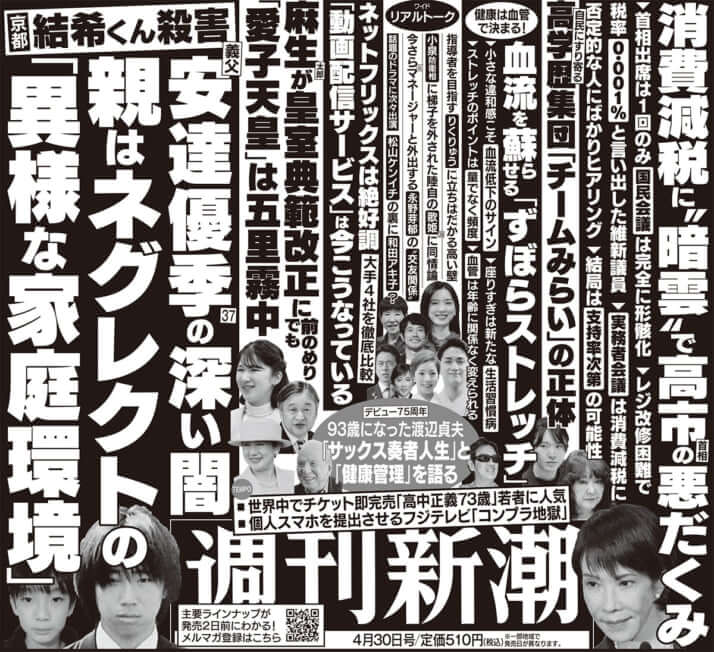
To enforce this, employees will be required to register any personal device that could potentially be used for work and sign a document consenting to digital forensic analysis. Should the company deem it necessary, it can extract and analyze the device’s data to uncover who the employee has been communicating with and what was said.
While news reporters and information program staff gathering external intelligence on personal devices are granted exceptions, the overarching policy has cast a dark shadow over the company.
“Of course, this is done with the individual’s consent, but for a salaryman belonging to an organization, refusing is no simple task,” an insider at the network revealed.
The draconian measures appear to be a direct response to a series of embarrassing leaks to weekly tabloids, including internal concerns over plummeting viewership ratings and the exposure of a past scandal dubbed the “Nakai Incident.”
This phrase refers to Masahiro Nakai, who resigned from show business last year following reports that revealed he had engaged in inappropriate behavior with a female employee.
Rather than addressing the systemic issues that prompt whistleblowers to approach the media, the network has shifted its focus to hunting down the culprits.
Fuji TV has reportedly contracted a major law firm to spearhead its compliance reform. Employees suspected of leaking information are now being summoned by the firm’s investigators and pressured to “voluntarily” surrender their personal mobile phones for inspection.
When questioned about the aggressive new policy, Fuji TV’s corporate public relations department offered a brief defense: “We have always given sufficient consideration to individual privacy, such as the ‘secrecy of communications,’ regarding the handling of personal mobile devices, and we will continue to respond appropriately.”
As the internal witch hunt escalates, many are left wondering what remains of the network’s famous bygone slogan: “If it’s not fun, it’s not TV.”