TOKYO (TR) – Convenience stores are now an integral part of our daily lives, but their history isn’t all that long.
The first 7-Eleven store opened in May 1974 in Toyosu, Koto Ward. This was a time when general merchandise stores like Daiei and Ito-Yokado were experiencing rapid growth.
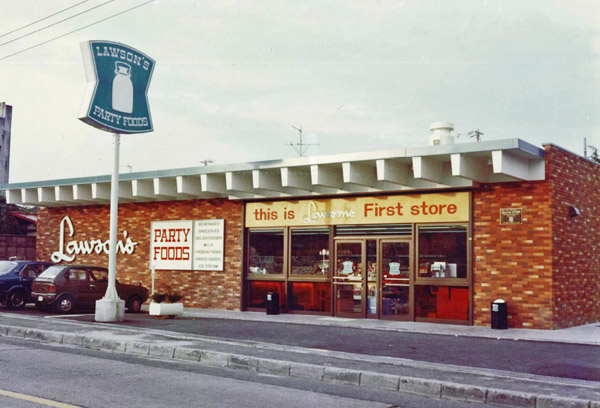
The following year, on June 14, 1975, the first Lawson store, the Sakurazuka branch, opened in Toyonaka City, Osaka Prefecture. But where did the name Lawson come from?
For the answer, Nikkan Gendai (Dec. 22) speaks with a public relations representative from Lawson, Inc. to learn that the brand’s origins are from the United States.
“The logo features a milk can. It’s named after J.J. Lawson, who ran a dairy in Ohio, USA,” said a Lawson public relations representative.
Isao Nakauchi
In 1939, Lawson opened a milk store. The freshness of his milk garnered praise, and “Lawson’s Milk” became a huge hit. Riding this momentum, he founded Lawson Milk Co., Ltd. It began selling daily necessities and other items, becoming a prototype of the convenience store style.
Isao Nakauchi, the founders of Daiei, took notice of Lawson. At the time, Lawson Milk Co., Ltd. was under the umbrella of a major food company. Daiei and this company signed a contract, and Lawson began expanding in Japan.
Lawson’s management eventually left Daiei. Today, Mitsubishi Corporation and KDDI are its major shareholders.
“This year marks our 50th anniversary, and we’re taking on a variety of initiatives,” said the aforementioned representative.
One of these is its food-waste reduction program. Known as “Food Good Smile,” the program uses a next-generation ordering system equipped with AI.
“We place yellow stickers on products approaching their expiration date, displaying the AI-recommended discount amount. We hope this will help reduce food waste,” said the representative.
The company has 14,670 stores nationwide, including its Natural Lawson and Lawson Store 100 brands. The company’s first original product, Unsweetened Milk, introduced 50 years ago, has changed over five decades but remains a popular item, Gendai assures.