
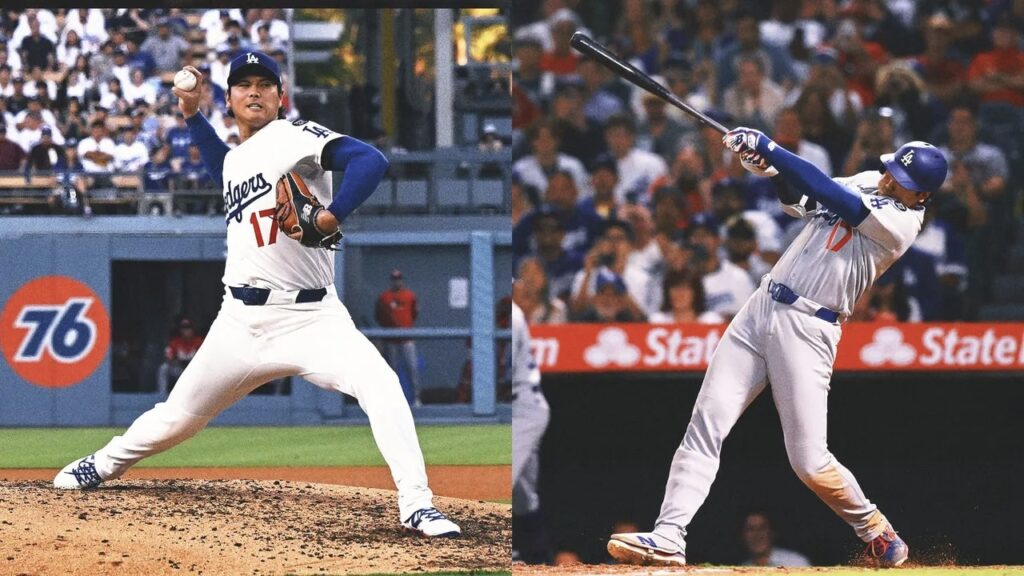
 Shohei Ohtani isn’t just the most gifted two-way player modern baseball has ever marketed without blushing—he’s become a walking, swinging, pitching symbol of Japan’s global presence, turning nightly MLB highlights into something closer to cultural diplomacy.
I. Beginnings
Shohei Ohtani’s story sits at the intersection of elite athletic performance and cultural representation. As a two-way superstar capable of dominating both on the mound and at the plate, Ohtani has transcended the usual limits placed on professional baseball players. His Major League Baseball career is not merely about home runs, strikeouts, or MVP trophies; it functions as a living showcase of Japan’s presence on the global athletic and cultural stage. Every start, every at-bat, and every highlight reel subtly reinforces the idea that baseball can serve as a bridge between nations. This phenomenon, often described as “baseball diplomacy,” reflects how sports shape international admiration, influence perception, and create shared global narratives without the need for official political channels.
Ohtani’s role as a two-way superstar has forced modern baseball to rethink its own structure. A player who can dominate from both sides of the sport’s most specialized roles challenges the very language used to describe excellence. His existence in the league makes traditional categories feel insufficient, underscoring why his influence reaches far beyond box scores.
II. The Rise of a Global Icon
Before Shohei Ohtani became a nightly fixture on American sports broadcasts, he was already redefining expectations in Japan. His professional journey began with the Hokkaido Nippon-Ham Fighters, where he was developed not as a novelty but as a legitimate two-way force. That early commitment to versatility laid the groundwork for a career that would later reshape MLB narratives. Upon arriving in Major League Baseball, Ohtani didn’t adapt by narrowing his skill set; instead, he expanded the league’s understanding of what a single player could be. His rise wasn’t gradual—it was seismic, marked by immediate impact, historical milestones, and global attention that extended far beyond traditional baseball markets.
In Japan, Ohtani was already a headline. In the United States, he became the headline. Crossing leagues without abandoning his identity, he arrived as both pitcher and hitter, quickly proving that his talents were transferable at the highest level of competition.
III. Key MLB Achievements, Records, and Awards
Shohei Ohtani’s statistical record reads like a challenge to the sport’s rulebook. In 2021, he hit 46 home runs, stole 26 bases, drove in 100 runs, and posted a 9–2 pitching record with a 3.18 ERA and 156 strikeouts. The following season, he elevated his pitching to another level, finishing 2022 with a 15–9 record, a 2.33 ERA over 166 innings, only 43 earned runs allowed, and 219 strikeouts. Offensively that same year, he added 34 home runs, 95 RBIs, 30 doubles, six triples, 90 runs scored, 72 walks, 11 stolen bases, and an .875 OPS.
In 2023, Ohtani continued to defy precedent, recording a 10–5 pitching record with a 3.14 ERA across 132 innings, allowing 46 earned runs and striking out 167 batters. At the plate, he produced 102 runs, 44 home runs, 95 RBIs, 91 walks, 20 stolen bases, and an extraordinary 1.066 OPS. These performances weren’t just impressive—they were historically disruptive. Ohtani also became the first player in AL/NL history to record at least 10 wins and 30 home runs in the same season, a milestone that underscores how unprecedented his career trajectory truly is.
IV. Japan’s Soft Power Through Baseball
Soft power refers to a nation’s ability to influence global perception through culture, values, and excellence rather than force. Japan has long exercised soft power through anime, technology, fashion, and design. Shohei Ohtani adds a new, highly visible dimension to that influence. His dominance in MLB functions as a cultural export rooted in discipline, innovation, and relentless preparation. Without speeches or slogans, Ohtani communicates modern Japanese values through performance—precision, humility, and respect for craft. Each outing reinforces the idea that excellence, when paired with restraint, resonates across borders.
Ohtani’s sportsmanship and demeanor amplify this effect. His calm presence, even under intense scrutiny, presents a version of Japanese professionalism that feels both traditional and forward-looking, reinforcing admiration rather than demanding attention.
V. Cultural Comparisons: Ichiro Suzuki, Naomi Osaka, Rui Hachimura
Japan’s global sports identity has been shaped by figures who broke barriers in different arenas. Ichiro Suzuki introduced Major League Baseball to a new standard of consistency and precision. Naomi Osaka transformed tennis by combining elite performance with cultural and personal authenticity. Rui Hachimura helped normalize Japan’s presence within the NBA landscape. Shohei Ohtani builds on that lineage while expanding it. Unlike his predecessors, Ohtani doesn’t simply succeed within an existing framework—he alters the framework itself. His two-way excellence suggests that Japan is not only producing world-class athletes but also redefining the boundaries of elite competition.
This shift matters culturally. When an athlete changes how a sport functions, the nation behind that athlete is perceived as innovative, adaptable, and influential on a global scale.
VI. MLB, Media, and Market Expansion
Shohei Ohtani’s presence has reshaped how MLB is consumed in Japan and beyond. His games are followed in real time across time zones, transforming MLB into a daily fixture within Japanese media. Coverage extends beyond sports pages into mainstream news, entertainment programming, and digital platforms. Merchandise sales, streaming subscriptions, and fan engagement have all benefited from his visibility. This exchange works both ways: MLB deepens its roots in Japan, while Japanese fans gain sustained access to the world’s most competitive baseball stage.
The ripple effect is long-term. Ohtani’s success has normalized the idea of Japanese players starring in MLB, expanding scouting pipelines and encouraging younger athletes to view international careers as attainable rather than exceptional.
VII. The Money, the Contract, and the Message
Ohtani’s financial footprint carries cultural weight as well. His 10-year, $700 million contract with the Los Angeles Dodgers is unprecedented, but the structure is what truly stands out. Ohtani deferred $680 million of the deal, receiving only $2 million per year during the contract term for a total of $20 million, while the deferred amount will be paid from 2034 through 2043 at $68 million per year. This approach allowed roster flexibility for the Dodgers while signaling Ohtani’s long-term confidence in both the organization and his own enduring market value.
The deal reads less like a traditional payday and more like a strategic statement—one that blends competitive ambition with financial foresight, reinforcing his image as a player motivated by legacy rather than immediate spectacle.
VIII. Ohtani in the Numbers Game: Stat
Fantasy baseball offers a lens into how fans quantify greatness, and Ohtani breaks that lens. His two-way production forces fantasy platforms to rethink valuation models originally designed for single-role players. Fans looking to gauge his impact can consult the latest fantasy baseball rankings, where Ohtani consistently occupies top-tier territory due to the sheer breadth of his contributions. His presence reshapes draft strategies, scoring systems, and debates across the fantasy community.
Fantasy Baseball Rankings discussions around Ohtani are rarely about whether he belongs at the top—they’re about how to fairly measure a player who provides elite value in categories that most players never touch.
IX. Beyond Baseball: Endorsements, Fashion, and Media Gravity
Ohtani’s influence extends well beyond the diamond. His global appeal has attracted endorsements that thrive on trust and credibility rather than controversy. His image translates seamlessly across cultures, allowing him to represent not only baseball but a broader vision of modern Japanese identity—technically refined, disciplined, and quietly confident. This reach reinforces a cycle of visibility: performance fuels attention, attention builds brand power, and brand power amplifies every on-field moment into a shared international experience.
Unlike many global celebrities, Ohtani maintains a low-profilepublic presence, which only enhances the authenticity of his influence.
X. The Bigger Picture: A Global Ambassador in Real Time
By 2025, Shohei Ohtani’s influence had become impossible to separate from baseball’s global evolution. That year, he was named the Associated Press Male Athlete of the Year for the fourth time, tying records held by LeBron James, Tiger Woods, and Lance Armstrong. His season included a .282 batting average, a career-high 55 home runs, 102 RBIs, and 146 runs scored across 158 games. These achievements reinforced the reality that Ohtani’s impact is not confined to a single season or award cycle.
He is not simply representing Japan abroad; he is actively reshaping how the world views Japanese excellence in elite sport. His career functions as an ongoing case study in how athletic dominance, cultural identity, and global admiration can intersect—one pitch, one swing, and one historic season at a time.