
OSAKA (TR) – Osaka Prefectural Police have arrested two men, including a judicial scrivener, for impersonating a third man who owns real estate in Osaka City and submitting a false property registration application, reports TBS News (Jan. 15).
In January of last year, Ryohei Matsumoto, a 34-year-old judicial scrivener, and his accomplice are suspected of impersonating the third man, aged in his 80s, who owns a plot of real estate in Nakatsu, Kita Ward.
The pair then submitted a false property registration application stating that ownership had been transferred to a company in Mie Prefecture after a sale.
Matsumoto and his accomplice used a forged identification to submit the false property registration applications. They also made unauthorized changes to registered seals.
Police have not revealed whether the two suspects have admitted to the crime. The investigation is ongoing.
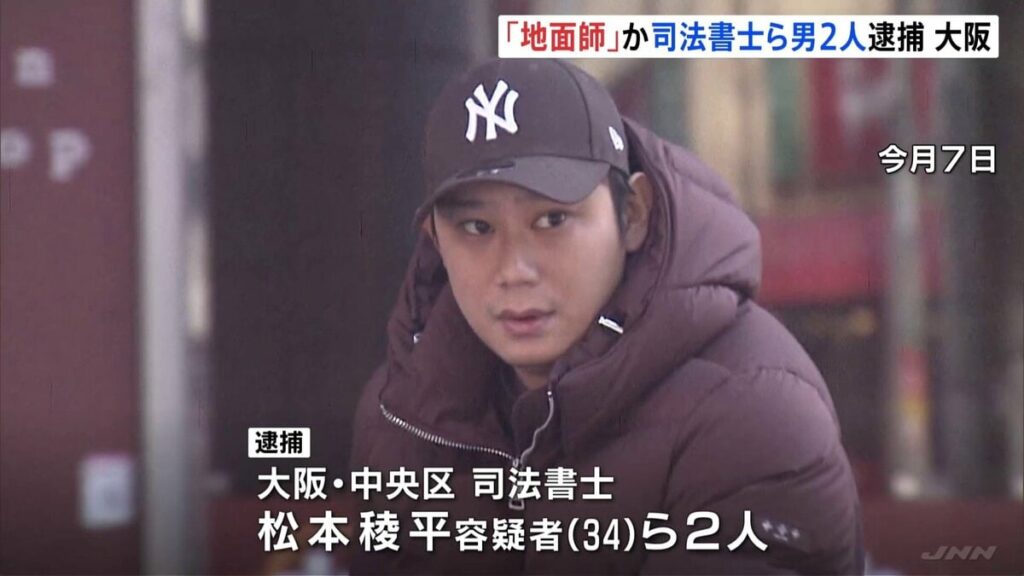
Jimenshi
Nakatsu is close to the Umeda area. In recent years, land prices in Nakatsu have been rising due to redevelopment and other factors.
According to the land owner’s actual attorney, it is likely that Matsumoto and his accomplice were attempting to defraud people by impersonating the owner, a common tactic for a jimenshi (land fraudster) in the buying and selling of real estate, reports the Yomiuri Shimbun (Jan. 14).
The accomplice is Mizuki Ojika, the 33-year-old former representative director of real estate company Netra Check, which was based in Kuwana City, Mie Prefecture before its dissolution.
When Matsumoto and Ojika filed the false application with the Legal Affairs Bureau stating that the male owner had sold the house and land in Kita Ward to Netra Check, they claimed that ownership had been transferred, resulting in the fraudulent registration.
According to land registry records and other sources, the land measures approximately 800 square meters. Two old, two-story wooden houses stand side by side on the same lot. At the time, the male owner lived there.
According to the man’s lawyer and others, Matsumoto was posing as his representative. The man became aware of the situation after being contacted by the Osaka Prefectural Police, who informed him that the title might have been changed. Several real estate agents interested in purchasing the land had contacted the man, asking if the land was really for sale.
Lawsuit
In March of last year, the man filed a lawsuit against Ojika, seeking the cancellation of the ownership transfer registration. The man had never met Oshika.
The court ordered the registration to be canceled in May. The man sold the land to another real estate company in September.
Matsumoto is also believed to have been involved in the ownership transfer registration of two other properties in Osaka City. In both cases, their registrations were ordered to be transferred back to their original states last year.
Felt something was off
A man at a real estate company who was approached by Matsumoto and Ojika about purchasing a property said that while he found the offer appealing, he quickly felt something was off.
“The price kept changing,” the real estate source tells Nippon News Network (Jan. 15). They’d say, ‘This price is fine if we can settle right away.’ It’s strange that they’d offer such a price that was constantly changing.”
When the real estate employee went directly to Matsumoto’s office, the conversation turned to the issue of a certified copy of the land registry, which records the land rights.
“[Ojika], who claimed to be the owner, was acting very suspiciously. He kept glancing at the judicial scrivener next to him, as if asking for help, ask if to ask, ‘What should I say?'”
Matsumoto tried to evade the issue by explaining, “Due to a mortgage issue, I can’t show you the certified copy of the land registry right now.”
The real estate employee continues, “The judicial scrivener had calmed down by now. He was used to it. It made me think he was probably the mastermind.”
The employee then realized he was being scammed. His ultimately did not enter into a contract and was not harmed.
Yasunori Kayama, a judicial scrivener not connected to the case, tells the network, “It is physically possible for a judicial scrivener to prepare documents without ever meeting the seller. As someone with privileges not available to the general public, why would they do something that was solely focused on short-term profits?”