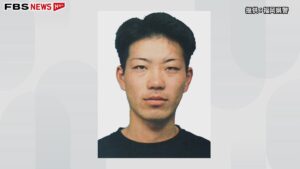
SAITAMA (TR) – During the opening of the trial last week for a man charged with murdering a woman with her consent, it was learned that the defendant has also been accused of killing a second woman.
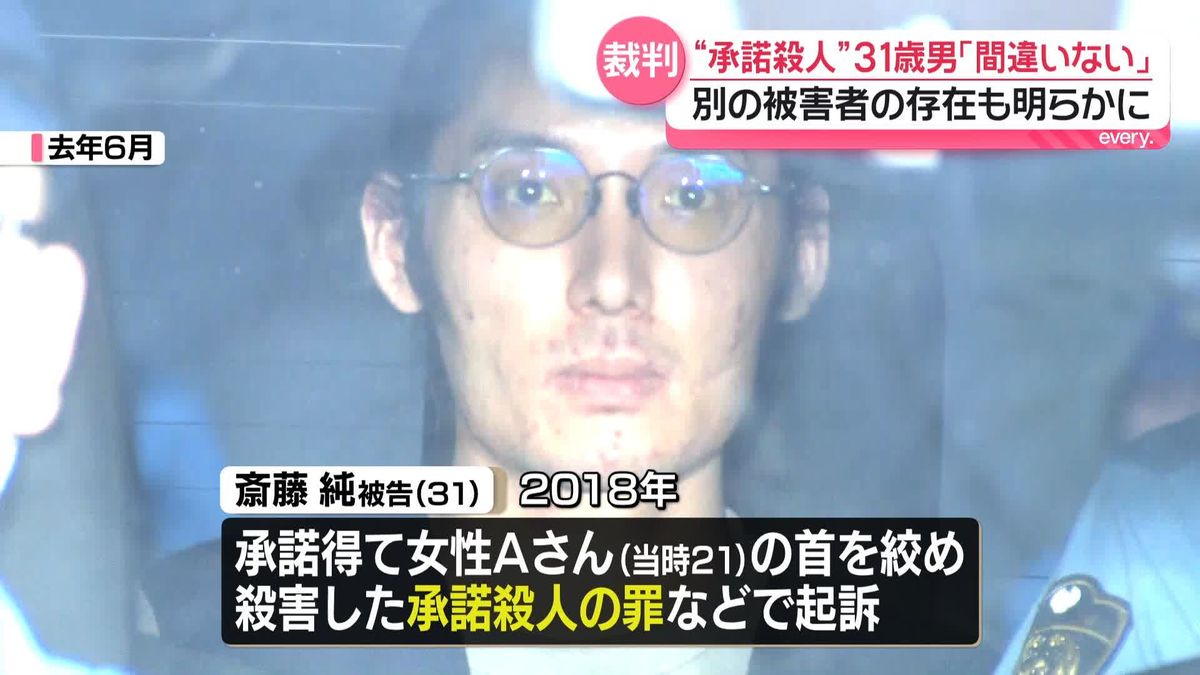
At the Saitama District Court on March 18, Jun Saito, 31, admitted to drugging and strangling the first woman, 21, with her consent at his residence in 2018. He also admitted to murdering the second woman, 22, with her consent three years before.
As the hearing proceeded, grisly details, including acts of cannibalism, emerged about how the defendant carried out the second murder, reports News Post Seven (Mar. 20).
Homicidal desires
Saito, who lives in Omiya Ward, Saitama City, claimed to have had homicidal desires since his youth.
After he contacted the first victim, who had posted online about her suicidal tendencies, he murdered her in 2015. His desires then escalated, leading to the consensual murder of the second woman, 21-year-old Kaho Miyamoto, who lived in Ibaraki Prefecture.
After the first case, Saito tried to confirm the victim’s death by reading local newspapers, but he was unable to find a report in any of them.This lack of confirmation led him to believe that his next crime — which would be the killing of Miyamoto in 2018 — would require more thorough preparation.
In 2017, he saw news coverage of the “Zama murder case,” in which former death row inmate Takahiro Shiraishi murdered and dismembered nine people. This case became his inspiration, the prosecution argued.
Met on social media
Saito met Miyamoto on social media, and, as with the first victim, obtained her consent to commit murder after she took sleeping pills. However, unlike the first victim, he also requested that Miyamoto agree to her body being dismembered.
Afterward, the defendant prepared styrofoam and ice to store the body and searched for recipes for eating her internal organs. The prosecutor read the details dispassionately, unable to understand what drove the defendant to such extremes.
However, prior to the murder, Miyamoto requested to cancel the act. She wrote to him, “I’m sorry, but I’ll not go.” But the Saito wound up meeting her in person and persuaded her to reconsider her decision.
“There’s no turning back”
On the day of the incident, Miyamoto left her home, telling her family that she was going to a live-in job. Upon meeting her, Saito instructed her to reset her smartphone to prevent any location data or other evidence from being left behind.
Furthermore, he prepared laxatives to ensure no feces remained in the body’s intestines. He also had a knife for dismembering the body.
While Miyamoto was writing a suicide note, the defendant attached a rope loop to a ladder. He then gave her sleeping pills. He said, “Once you take this, there’s no turning back. You can go home if you don’t want to.”
Afterward, he allegedly filmed Miyamoto lying in bed and sleeping. After confirming she was asleep, he placed the prepared loop around her neck and pulled for five to 10 minutes, killing her.
Skull discovery
After the murder, Saito dismembered Miyamoto’s body. He severed her head and limbs. Afterward, the victim’s flesh was removed with a knife, leaving only the bones, and the body parts were boiled in water using a heater. The skull was then stored. Other bones were placed in a carrying case.
The crime took place at Saito’s home, but it has not been clarified at this stage of the trial whether this was the home where he lived with his parents.
After that incident, Saito repeatedly stole smartphones from others. He removed the SIM cards from the smartphones to disable GPS features and stored them in the refrigerator at his home.
During a search of the defendant’s home in connection with these thefts, police discovered the skull of Miyamoto, which led to the uncovering of further crimes. It is also reported that hair from the first victim was being stored at the residence.
At the time of his arrest, the defendant was living with his parents. The parents’ statements did not clarify why the skull and other remains were not discovered for such a long period.
Miyamoto’s parents said that they obsessively searched for their daughter after she disappeared. For a year, they distributed posters almost every day. This continued for up to five years, which put them at their physical and mental limits. Every time they saw news of a murder, they couldn’t help but imagine whether the victim was their daughter.
“Wasn’t born to be cut up”
Then, seven years after she disappeared, they received a call from the police saying that bones had been found. They had prepared themselves for the worst, but they were furious to hear that screws were embedded in the bones and that only parts had been found.
“My daughter wasn’t born to be cut up, eaten or to be your toy,” one parent of Miyamoto wrote in a note read in the courtroom. “If I were allowed, I would kill the defendant, dismember him. I want the death penalty. Even if the death penalty is carried out, he will not find peace. The souls of our family are as good as dead.”
Miyamoto’s suicide note was also read aloud. The following is a reconstruction of what was heard: “I’m sorry for being selfish. I had a happy life. There are all kinds of people, you don’t have to understand. Nobody is wrong, I am wrong. I don’t want my parents to have any regrets.”
Miyamoto’s parents had been talking to her about her ongoing problems for one to two months before the murder. As well, her mother contacted her daily around the time of the incident because she was worried about her.
Face-to-face
The first murder took place at the victim’s residence. Afterward, the father met Saito face-to-face. When his eyes met the father’s, he made his hasty escape.
A statement from the father was read aloud. “My wife told me that my daughter had contacted her saying, ‘I’m not going to die, I’m going to be murdered.’ I can never forgive the perpetrator,” he wrote.
As a result, the father strongly believed that the man who fled was the murderer. His frustration at the police’s conclusion that it was a suicide was immeasurable.
In expressing his strong anger towards the defendant, he wrote, “You say there was consent, but this was your plan, wasn’t it? You didn’t hear a convincing reason from her about whether she truly wanted to commit suicide, did you? Give me back my beloved daughter. I want the death penalty.”
The first hearing concluded with the prosecution’s summary of the case and the examination of statements from those involved.
The next hearing will involve questioning the defendant. The focus will be not only on the defendant’s feelings at the time of the incidents, but also on whether he feels any remorse after hearing the cries of the families of the victims.