
TOKYO (TR) – In response to the growing social problem of street prostitution in the capital, the Ministry of Justice on Tuesday held its first meeting to discuss how to regulate the buying of sex, reports the Yomiuri Shimbun (Mar. 25).
The current he Anti-Prostitution Law prohibits both the selling and buying of sex. However, while it has provisions to punish sellers, it does not have provisions to punish buyers.
Last week, Tokyo Metropolitan Police announced that it arrested a more than 112 women and girls for prostitution near Okubo Park in Kabukicho, Shinjuku Ward last year.
On the evening of March 12, Tokyo police conducted a crackdown at the park, with a woman in her twenties being arrested on the spot for violating the law.
According to the Ministry of Justice, more than 300 cases of violations of the law, including soliciting and waiting for customers, are accepted by prosecutors nationwide each year.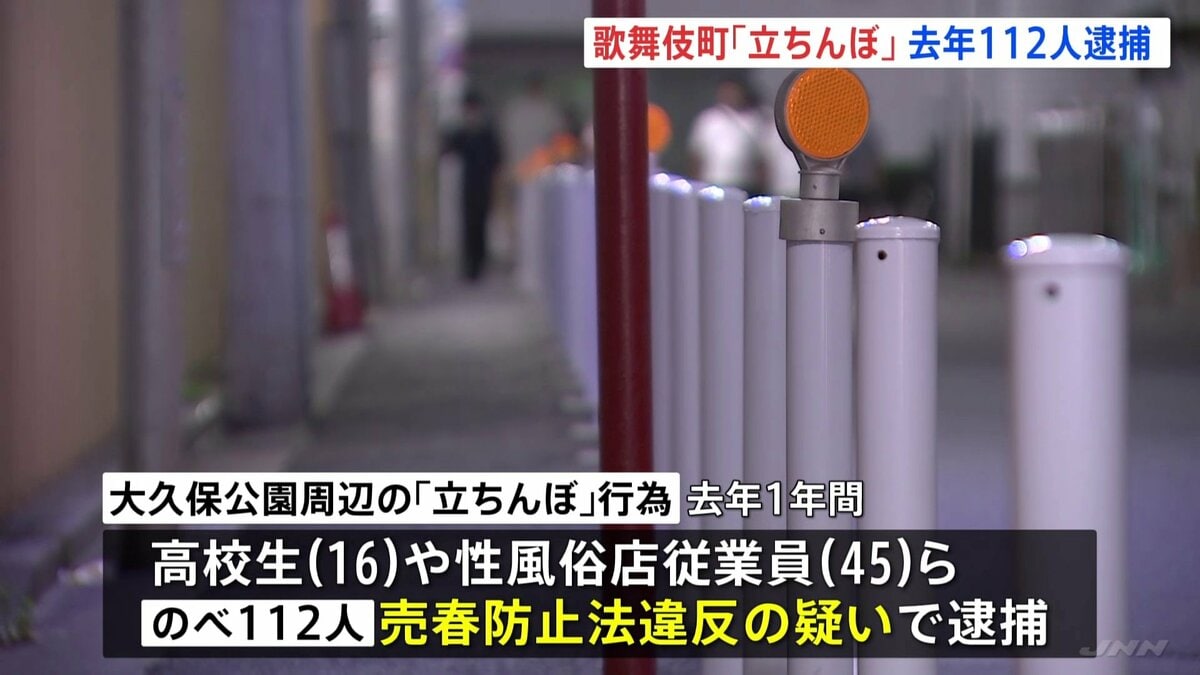
No penalties for buyers
The law defines prostitution as “harming human dignity and disrupting social morals,” and prohibits the act of having sexual intercourse with an unspecified partner for money or other reasons.
If a seller solicits or waits for customers in a public place, they are subject to “imprisonment of up to six months or a fine of up to 20,000 yen.”
However, there are no penalties for buyers, and last year in the Diet, there were numerous voices criticizing the law as “unbalanced.” In November of the same year, Prime Minister Takaichi instructed Justice Minister Hiraguchi to consider a review.
According to Akane Onozawa, a professor of modern Japanese history at Rikkyo University, pre-World War II Japan had a “public prostitution system” in which certain businesses officially sanctioned the sale of sex by women, and red-light districts such as Yoshiwara existed throughout the country.
In 1946, this system was abolished by order of GHQ (General Headquarters of the Allied Powers), which was in the process of promoting Japan’s democratization policies. The enactment of the anti-prostituion law in 1956 clearly prohibited prostitution.
Human rights violations
This law initially did not include penalties for buying or selling sex itself. This was because, during the process of enacting the law, there were concerns that “if state power intrudes into the private lives of men and women, which touch on sensitive matters, there is a risk of human rights violations.”
At the time, there was a strong perception that prostitution was disrupting public morals, and male prostitution was considered normal. Ultimately, a law was enacted that only punished the solicitation of prostitutes, leaving buyers unpunished.
However, many women who sell sex are undergoing serious circumstances, such as poverty, hardship due to abuse, or debts to unscrupulous host clubs.
Professor Onozawa points out that “while punishment of buyers is necessary from the perspective of gender equality in recent years, it is essential to protect and support the independence of those who sell sex without punishing them. The definition of prostitution as referring only to sexual intercourse is also problematic.”
Legal professionals and academics
Amid calls for legal reform and review, the justice ministry has established a study group of experts to discuss how to regulate prostitution.
The study group consists of 11 members, including legal professionals and academics. At the first meeting on Tuesday, members expressed the need to discuss whether solicitation by buyers should also be punished, and whether the statutory penalties are appropriate.
The Ministry is considering submitting a bill to the Diet as early as this autumn. If the debate expands to include whether prostitution itself should be punishable, the discussion could become protracted.