TOKYO (TR) – On February 8, Tadamasa Goto, once an infamous gangster within the Yamaguchi-gumi yakuza syndicate, passed away at a hospital in the capital. He was 83 years old.
The cause of death was aspiration pneumonia, which is a lung infection. A funeral was held on February 17 in his hometown of Fujinomiya City, Shizuoka Prefecture, sources tell the Sankei Shimnbun (Feb. 12).
While known as a “militant and economic yakuza,” Goto’s legacy will also include his impact on the entertainment industry.
“Reasons for becoming a yakuza”
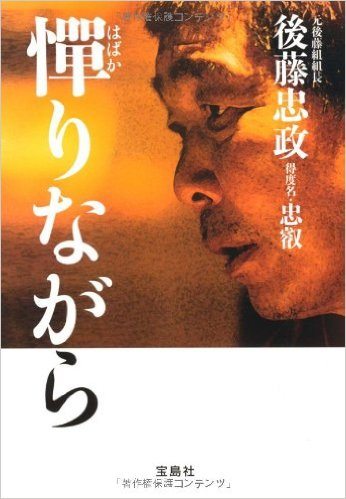
In his best-selling 2010 autobiography, “Habakarinagara (While Hesitating),” he stated, “If I really loved making money, I wouldn’t be a yakuza.”
He added, “Nothing is more unrewarding than being a yakuza. But I stayed in the yakuza because the yakuza lifestyle suited me.” He struggled financially as a child, so he joined the business to survive, and he was desperate to provide for his younger men.
He also wrote that since the majority of “reasons for becoming a yakuza” are poverty and discrimination it’s not uncommon for bosses to be “desperate to make a living for themselves and their subordinates.”
Goto-gumi
According to the autobiography, Goto was born in what is now a part of Shinagawa Ward, Tokyo, in 1942. Due World War II, he evacuated to his father’s hometown of Fujinomiya at the age of two.
He later became a member of a yakuza gang. In 1944, he founded the Goto-gumi, which was an affiliate group of the Yamaguchi-gumi.
Goto was a key player in the “Yama-Ichi War” with the Ichiwa-kai. Spanning from 1984 to 1989, the conflict between the Yamaguchi-gumi and the Ichiwa-kai resulted in the group’s expansion into the Kanto region. The dispute between the two gangs resulted in a total of 29 deaths.
Goto became famous for ramming a truck into a property of an opposing group. After he was credited with the success in the effort, he was appointed secretary under the gang’s fifth Godfather, Yoshinori Watanabe (1989-2005), but such work just didn’t suit his personality. He quit about a year later.
Juzo Itami
“He was also financially successful,” a source tells the site for weekly tabloid Flash (Feb. 18).
Indeed. In 1990, Goto made headlines by becoming Japan Airlines’ largest individual shareholder. He also caused turmoil in the entertainment industry.
“When Aum Shinrikyo established its headquarters in Fujinomiya City, it was rumored that the Goto-gumi was behind it,” the same source says. “With his abundant financial resources, he also had extensive connections in the entertainment industry.”
In 1992, one of his subordinates was arrested for attacking director Juzo Itami in protest of the director’s film “Minbo no Onna,” which is a satire of the criminal underworld.
After being expelled from the Yamaguchi-gumi in 2008, Goto announced his retirement and disbanded the syndicate.
According to police sources, one reason for his dismissal included a weekly magazine report about a birthday party of his that included celebrities on the guest list. Entertainers who were reported to have attended the party were later barred from appearing on public broadcaster NHK.
Liver transplant
In 2001, he traveled to the United States for a liver transplant. Although he was initially barred from entering the country due to his criminal record, he provided information about the Yamaguchi-gumi to the F.B.I., which facilitated the transplant, according to U.S. media reports. He reportedly donated 100,000 U.S. dollars to the University of California, Los Angeles Hospital, where the surgery was performed.
In his late years, Goto became a monk at a temple in Kanagawa Prefecture and received the Buddhist name “Chuei.”
In 2011, he moved to Cambodia, where he ran a chicken farm and contributed to the construction of schools. “When I was covering a Cambodian fraud ring, I heard from several people involved that Goto was the one in control,” says former Kanagawa Prefectural Police detective and crime journalist Taihei Ogawa. “Based on these testimonies, I suspected that the ring was also relying on Goto. I even requested an interview with Goto to find out the truth. He replied, ‘If the timing was right, I’d be happy to do so.'”
Goto is believed to have returned to Japan in 2016 due to illness.