TOKYO (TR) – “My wife doesn’t know.”
That was the desperate plea of a seemingly ordinary corporate employee when Tokyo detectives raided his pristine, suburban home a decade ago.
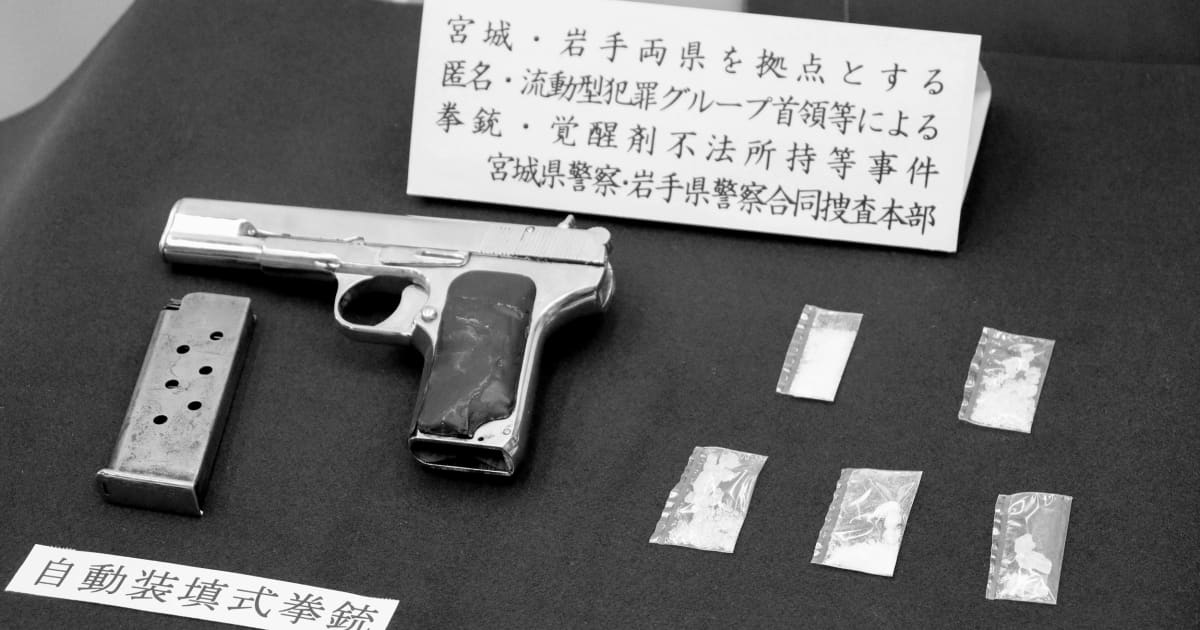
While his bewildered wife was ordered to wait in another room, investigators bypassed the meticulously clean house and headed straight for the backyard. Behind a road bike hung on a wall, they found a cheap aluminum shed secured with a padlock. Inside sat a duralumin attaché case containing a Glock and a state-of-the-art M1911 handgun, known by the nickname “Colt Government.”
The homeowner was a teko — an unaffiliated civilian runner paid by yakuza syndicates to stash illicit weapons away from the prying eyes of rival gangs and police.
The raid was just one of countless operations conducted by Fumitaka Kohiruimaki, 52, a former Assistant Inspector with the Tokyo Metropolitan Police. Over a 30-year career dedicated to dismantling organized crime and drug rings, Kohiruimaki has seen firsthand the lengths Japan’s underworld will go to conceal their deadly arsenals, reports Friday (May 27).
Exploit syndicate infighting
According to the veteran detective, the hunt for illegal firearms in Japan relies heavily on cold, hard cash and underworld grudges.
“Police budget for information. We’ll pay 50,000 yen as a down payment for a good tip, and sometimes hundreds of thousands of yen in total,” Kohiruimaki explained. Detectives routinely exploit syndicate infighting, targeting gangsters who have been cheated out of money or caught in love triangles.
Knowing that betrayal is a constant threat, seasoned yakuza employ deceptive tactics to avoid prison. Some keep realistic model guns at home to hand over during a raid, feigning ignorance while their genuine firearms are safely stashed at the homes of paid civilian teko.
Smuggling networks
When real guns are needed for underworld hits, high-end models like Glocks and Berettas are cast aside. Instead, syndicates favor cheap, disposable Russian or Chinese-made Tokarevs and Makarovs. The Chinese Tokarev copies — known by the street name “Black Star” due to the markings on their grips — are overwhelmingly the weapon of choice for assassinations, as they can be easily discarded after a job.
Getting these weapons into Japan requires immense smuggling networks. While some guns are slipped through airport customs, Kohiruimaki notes that the vast majority are smuggled inside massive trade shipping containers. In one major bust, a customs officer noticed suspicious welding marks on a container. An X-ray scan revealed hundreds of rusted handguns meticulously lined inside the false walls.
Yet, despite high-tech scanners, Kohiruimaki says a detective’s sheer intuition remains the greatest weapon.
He recalled a raid early in his career on a suspect’s apartment. While Kohiruimaki pondered searching behind dressers and inside drawers, a senior detective walked straight over to a pet tarantula’s glass cage. Ignoring the venomous spider, the veteran dug into the soil at the bottom of the tank, pulling out a plastic bag containing a hidden revolver.
The smelter
Japan’s notoriously strict zero-tolerance gun laws mean that every seized weapon faces the exact same fate: the smelter.
This strict protocol applies even to so-called “heritage firearms” — antiques discovered by citizens cleaning out old family storehouses. Kohiruimaki recalled an elderly woman turning in a U.S.-made Schofield revolver that belonged to her ancestor, a Meiji-era police superintendent who likely received it from a foreign dignitary.
Despite its immense historical value and mint condition, the antique weapon was legally processed as a firearms violation and unceremoniously melted down into scrap metal.
“Detectives risk their lives”
While the seizure of forgotten antiques is routine, confronting armed suspects is a harrowing ordeal for Japanese police. Kohiruimaki recounted instances of detectives facing down suspects firing tracer rounds that illuminated the air as they flew past officers’ heads, resulting in bloody shootouts.
In one tragic case, a senior officer was forced to fatally shoot an attacker who had nearly severed the officer’s thumb during a violent struggle. The officer carried the trauma of taking a life until his retirement.
“A gun can destroy lives in an instant,” Kohiruimaki said. “Unlike drugs, which are consumed, a well-made gun can last 100 years. If we don’t seize them, the numbers — and the tragedies — will only multiply. That is why detectives risk their lives to head to the scene.”