Reading crypto market signals 2026 requires new approaches as institutional adoption reshapes traditional patterns. Today’s traders face unprecedented complexity across multiple chains, asset categories, and cross-market correlations.
The question isn’t whether crypto market signals 2026 will provide opportunities—it’s whether traders can spot and act on the right signals fast enough.
The Evolution of Crypto Market Dynamics in 2026
New Volatility Patterns and Market Maturation
2026’s crypto landscape presents a fascinating paradox. Institutional adoption has stabilized major assets like Bitcoin and Ethereum, yet volatility has intensified in emerging sectors. Bitcoin’s price movements now correlate more closely with traditional markets during global events.

Advanced platforms like BYDFi — now entering its sixth year of operation in 2026 — have become essential for traders seeking to capitalize on these evolving patterns. That longevity matters: in an industry where exchanges routinely fail or exit markets, a six-year operational track record signals the kind of institutional resilience that serious signal traders require. The platform’s sophisticated signal interpretation tools help traders navigate the complex interplay between mature and emerging crypto segments.
AI tokens, meme coins, and ecosystem-specific assets? They’re still exhibiting the explosive volatility patterns that originally defined crypto markets. This maturation created distinct signal categories that successful traders must read across both mature and emerging segments simultaneously.
Institutional Impact on Volume Distribution
Institutional participation fundamentally altered volume patterns and liquidity distribution. Large institutional moves often precede retail recognition by hours or days, creating opportunities for traders who can identify these early indicators.
Professional trading platforms now integrate multiple data streams to help traders spot these institutional movements early. The sophisticated analytics tools available on modern exchanges allow traders to correlate institutional activity with retail sentiment, creating more comprehensive signal interpretation frameworks.
The explosion of AI tokens, meme coins, and ecosystem-specific assets has fragmented signal interpretation across multiple categories:
| Asset Category | Key Signal Sources | Volatility Characteristics |
| AI/Tech Tokens | Development updates, partnerships | High volatility around news events |
| Meme Coins | Social sentiment, endorsements | Extreme volatility, trend-driven |
| Ecosystem Tokens | Network adoption, TVL changes | Moderate volatility, utility-based |
Essential Crypto Market Signals 2026 Traders Should Monitor
Volume Indicators and Liquidity Patterns
Reading crypto volatility in 2026 requires understanding volume beyond simple trading numbers. Smart money often moves through dark pools and OTC desks before appearing in public order books.
Unusual volume spikes in specific trading pairs often signal impending price movements 2-6 hours before they become obvious to broader markets. However, distinguishing between genuine accumulation and wash trading requires sophisticated analytics tools.
On-Chain Analytics and Real-Time Data
On-chain data has become crucial for crypto trading volume analysis. Whale wallet movements, exchange inflows/outflows, and staking patterns provide signals that traditional technical analysis misses.
Modern trading platforms now integrate on-chain analytics directly into their interfaces, allowing traders to correlate traditional price/volume signals with blockchain activity. This integration has shifted from nice-to-have to absolutely essential.
Cross-Chain Trading Signals
The proliferation of Layer 1 blockchains and Layer 2 solutions created arbitrage opportunities and signal transmission delays between ecosystems. Cross-chain bridge volumes provide leading indicators for broader market movements.
Advanced Tools for Signal Interpretation
Automated Trading Strategies
Manual signal interpretation becomes impossible in highly volatile markets where opportunities appear and disappear within minutes. Automated trading systems now handle the bulk of signal-based execution, with traders focusing on strategy configuration.
Grid trading strategies automatically capitalize on volatility ranges, while DCA bots help traders benefit from long-term signals without timing stress.
| Bot Strategy Type | Best Conditions | Risk Level | Use Case |
| Spot Grid | Range-bound markets | Medium | Automated swing trading |
| Futures Grid | High volatility | High | Amplified range trading |
| DCA Bots | Long-term accumulation | Low | Position building |
Copy Trading and Social Signals
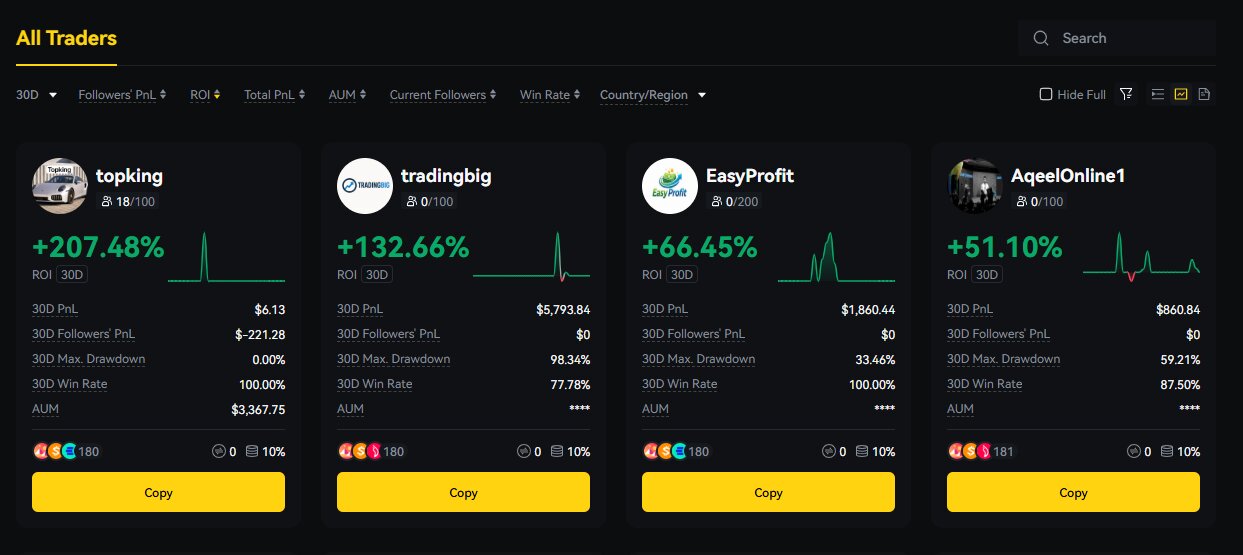 Social trading has evolved beyond simple copy strategies. Advanced copy trading systems now analyze trader performance across different market conditions, allowing followers to automatically adjust position sizes based on current volatility.
Smart copy trading algorithms can identify when successful traders are positioning for major moves, effectively turning top performers into signal sources.
Demo Trading for Signal Validation
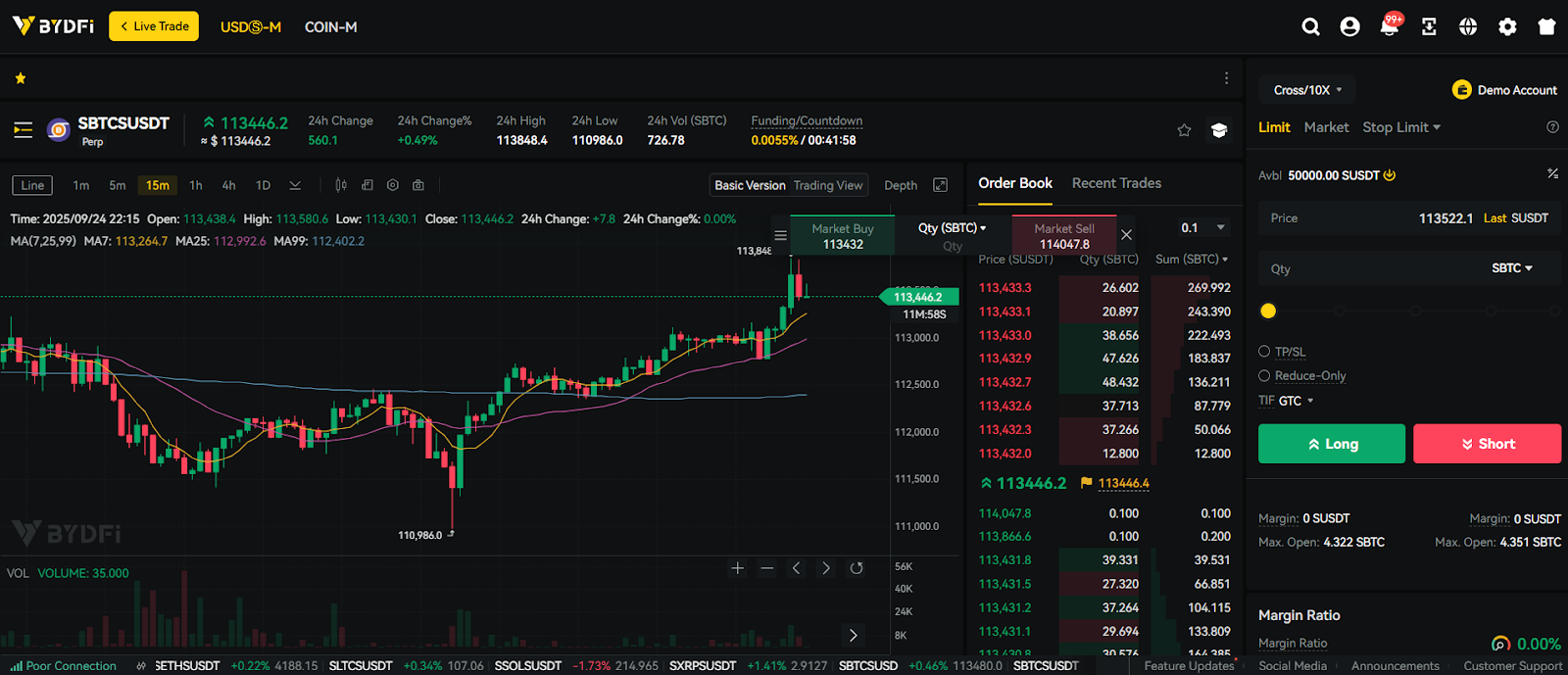 Before committing real capital to new signal interpretation strategies, experienced traders test approaches using demo accounts with realistic market conditions. Platforms offering substantial demo balances allow comprehensive strategy validation across various scenarios.
Leveraging High-Volatility Opportunities
Futures and Derivatives
Bitcoin market opportunities in volatile periods often require leveraged exposure to generate meaningful returns on smaller account sizes. For traders seeking sophisticated derivatives exposure, platforms like BYDFi futures trading provide access to advanced leveraged instruments with comprehensive signal integration capabilities.
Experienced leveraged traders consider position sizing relative to signal strength and stop-losses that account for crypto’s inherent volatility.
Grid Trading for Market Fluctuations
Range-bound volatile markets create ideal conditions for automated grid strategies. These systems place buy and sell orders at regular intervals, profiting from volatility without requiring directional predictions.
Grid strategies work particularly well when combined with signal-based adjustments. When signals suggest upward trends, traders adjust grid parameters to favor long positions.
Risk Management Protocols
High-volatility signal-based trading demands robust safety measures. Beyond traditional stop-losses, traders in 2026 require platforms with strong security practices and protection funds.
Effective risk management also includes diversification across signal types, asset categories, and trading platforms. Concentration risk becomes particularly dangerous when chasing volatile opportunities.
Traditional and Crypto Market Signal Integration
TradFi Correlation Analysis
Major crypto movements increasingly correlate with stock market volatility, forex fluctuations, and commodity changes. Forward-thinking platforms now offer integrated access to stocks, forex, and commodities alongside crypto markets.
When S&P 500 futures gap down overnight, it often predicts Bitcoin’s opening direction. Simple but actionable for prepared traders.
Multi-Asset Portfolio Signals
Diversification across asset classes provides more reliable signal interpretation than crypto-only analysis. Exchange volume analysis indicates that platforms supporting both crypto and traditional assets are gaining traction.
Modern 2026 strategies diversify across asset categories, geographic exposure, market types, and signal sources rather than simple asset allocation.
Building Trading Infrastructure
Platform Selection for Signal Trading
Effective crypto market technical analysis requires platforms that integrate multiple data sources and execution capabilities. Essential features include real-time on-chain analytics, cross-chain trading access, and automated strategy execution.
Interface responsiveness becomes critical during high-volatility periods when signals require immediate action.
Real-Time Analytics and Safety
Modern trading platforms integrate safety indicators alongside price and volume data. These include exchange reserve ratios, on-chain security metrics, and market manipulation warnings.
| Safety Indicator | Purpose | Signal Impact |
| Exchange Reserves | Platform solvency | Affects execution risk |
| On-Chain Activity | Organic vs artificial volume | Affects signal validity |
| Market Depth | Liquidity assessment | Affects slippage risk |
Security Considerations
As traders increasingly rely on platform-integrated signals and automated strategies, platform security becomes part of the trading strategy itself. Exchanges providing proof of reserves offer safety layers that enable more aggressive signal-following strategies.
Leading exchanges maintain substantial protection funds, exemplifying the security infrastructure that serious signal traders expect.
Conclusion
Reading crypto market signals in 2026 demands a multi-faceted approach combining traditional technical analysis with on-chain analytics, social sentiment tracking, and traditional finance correlations. The most successful traders build comprehensive infrastructures capable of processing multiple signal types while maintaining strict risk management.
The democratization of advanced trading tools through automated strategies and integrated analytics platforms has leveled the playing field significantly. However, signal interpretation complexity means continuous learning remains essential.
As crypto market sentiment indicators continue evolving throughout 2026, traders who master reading multiple signal types while maintaining disciplined execution will find themselves well-positioned to capitalize on volatility and emerging opportunities.