SAITAMA (TR) – A taxi company here has released shocking dashcam footage of its drivers being assaulted and threatened.
As Fuji News Network (Sep. 30) reports, the incident sheds light on the harsh reality of “customer harassment” as a new national mandate requiring businesses to protect employees goes into effect.
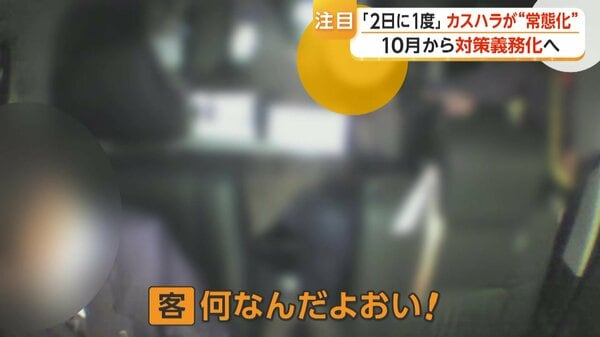
In one dashcam video captured shortly before 9 p.m., two arguing men enter a taxi. When the driver asks for their destination, one of the men lashes out, refusing to give an address before violently kicking the driver’s seat and shattering the acrylic security partition.
“What the hell is your problem?” the passenger yells.
When the driver warns he is calling the police, the drunk man barks, “Go ahead and call them!” Police arrived five minutes later and apprehended the passenger, who later visited the taxi company to apologize and pay for the damages.
Common problem
At Heiwa Jidosha, the Saitama-based taxi operator where the footage was recorded, such abuse is disturbingly common.
“We get reports of this kind of behavior once or twice a week,” said managing director Shinokazu Nishizawa. “Passengers kicking seats, threatening to ‘kill’ drivers, or pulling out their phones and threatening to post videos on social media is our everyday reality.”
The relentless abuse is taking a severe toll on the workforce. Out of the company’s 120 drivers, five are currently on forced leave due to psychological distress caused by abusive customers.
Ride-hailing apps are also increasingly sparking violent outbursts. In August, a male passenger berated a female driver after a GPS glitch caused a mix-up at the pickup location. After initially calming down and attempting to hand her a tip with a superficial apology, the man snapped again when she refused the money.
He aggressively blocked the vehicle’s path, screaming for her license plate number. When the driver honked her horn, he thrust his arms through the open window, wildly waving a lit cigarette near her face while shouting obscenities.
Safety seminars
To combat the crisis, Heiwa Jidosha holds monthly safety seminars using real dashcam footage to analyze how drivers should respond. Drivers are issued manuals outlining escalation protocols —from verbal warnings to immediate police intervention — and are instructed to leave their windows rolled down if they exit the vehicle so dashcams can capture audio of any threats.
“In an industry already facing severe labor shortages, we cannot afford to lose our valuable workforce to this. We have to take action,” Nishizawa explained.
Starting October 1, a revised law mandates that companies across Japan establish consultation desks and implement concrete measures to protect staff from customer harassment, known domestically as kasuhara.
Safety seminars
As the law takes effect, the public remains divided on where to draw the line between a legitimate consumer complaint and harassment.
According to lawyer Masaki Kamei, the legal boundary often comes down to “time restraint” and “continuity.”
“If a customer restrains an employee for an extended period, stealing their time, or repeatedly returns to a business to aggressively make the same demands, it likely crosses the line into customer harassment,” Kamei said.