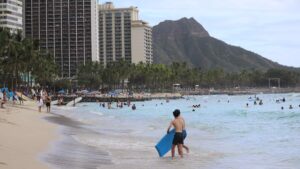
UNITED STATES (TR) – A viral video capturing a Japanese woman being handcuffed by U.S. customs officers at Honolulu’s Daniel K. Inouye International Airport has sparked a heated debate regarding the reality of Japanese women traveling abroad for illicit “under-the-table” employment, reports Shueisha Online (Nov. 10).
The footage, recently aired as part of the documentary series “Airport Security: USA,” shows the woman — who identified her profession as a “hostess” — resisting officials and shrieking for help after being asked to move to a secondary inspection room.
“I am not a prostitute!” she screamed at one point.
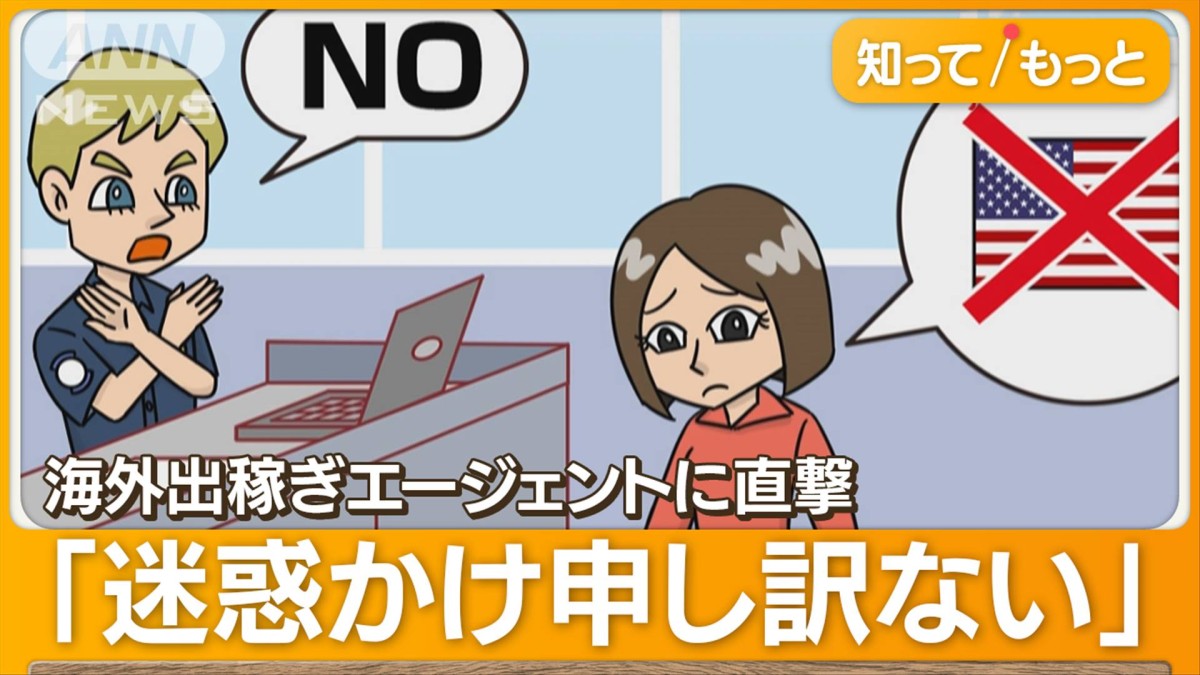
According to reports, the woman was denied entry after she failed to provide adequate answers regarding her travel arrangements. It was revealed that her flight and hotel accommodations were paid for by a man she was not traveling with, leading authorities to suspect potential links to organized crime or illicit work. She was ultimately placed on a return flight to Japan.
The clip has drawn sharp criticism online. Japanese internet personality Hiroyuki noted that resisting border agents is a guaranteed way to be denied entry, while others pointed out that in the U.S., “hostess” work is frequently conflated with sex work in the eyes of immigration officials.
Without proper legal authorization
While the specific woman’s intentions remain unconfirmed, insiders claim that the practice of Japanese women traveling abroad to work in nightclubs under the guise of tourism is a long-standing trend.
A woman going by the name Mana, aged in her 30s, is a Japanese woman who holds a U.S. permanent resident card (green card) and lives in the United States. She shared her perspective after watching the video:
“In the U.S., immigration screening tends to be strict, especially for women traveling alone or those visiting a partner in a long-distance relationship. If someone cannot even provide coherent answers to questions at the airport, it is only natural for officials to suspect that the person might have someone in the U.S. providing them with support.
Furthermore, it is not uncommon in the U.S. for people to end up in handcuffs if they resist or defy a police officer. That said, as long as a traveler has a clear place to stay and can demonstrate a genuine intent to return home, I don’t believe one’s occupation alone would be grounds for being denied entry.”
The “Under-the-Table” Trade
Mana also noted that, during her time living in the U.S., she has occasionally heard stories about Japanese women working without proper legal authorization.
“In reality, I have heard of Japanese women working ‘under the table’ — for instance, as strippers or in the nightlife industry. Even when enforcement tightens, these types of jobs rarely disappear. If immigration authorities determine there is even the slightest possibility that someone might engage in prostitution, I think it’s understandable that they would be denied entry.”
An unnamed man, aged in his 40s, who worked as a waiter in a Japanese-oriented nightclub in the U.S. about a decade ago, explained that illicit recruitment websites have existed for years. These sites allegedly entice women with promises of “no English required” and “sightseeing while making extra pocket money.”
“We were often instructed to have the girls delete their Line message history before arriving,” the former waiter revealed. “If a girl didn’t show up at the airport, we’d often hear later that she had been deported. To the club management, it was just a matter of ‘bad luck’ if they got caught.”
“Act like a customer if the police arrive”
Another former hostess, going by the name Kasumi, aged in her 40s, who worked in Hawaii using an ESTA (Electronic System for Travel Authorization) in the 2010s, confirmed that the work environment was far from legal.
“We were told to delete all communications with the parlor before landing and pretend we were just tourists,” Kasumi said. “During shifts, if the police came for a surprise inspection, we were instructed to stop serving drinks and act like regular customers.”
Kasumi recalled a colleague who was strip-searched and forced to perform squats by authorities looking for drugs during a failed entry attempt. “It was humiliating,” she said.
A tarnished reputation
Immigration experts emphasize that entering the U.S. as a tourist while intending to work — even in non-sexual hostess roles — is a direct violation of U.S. immigration law.
The viral video has reignited concerns about the impact of these “overseas side jobs” on Japan’s international reputation. Critics argue that the behavior of those who try to bypass legal work visas not only puts the individuals at risk of deportation but also threatens the integrity of the Japanese passport and the trust afforded to Japanese travelers globally.
As of now, the woman in the viral clip has been sent home, leaving behind a cautionary tale that the days of easily bypassing strict U.S. border controls with “tourism” excuses are long gone.