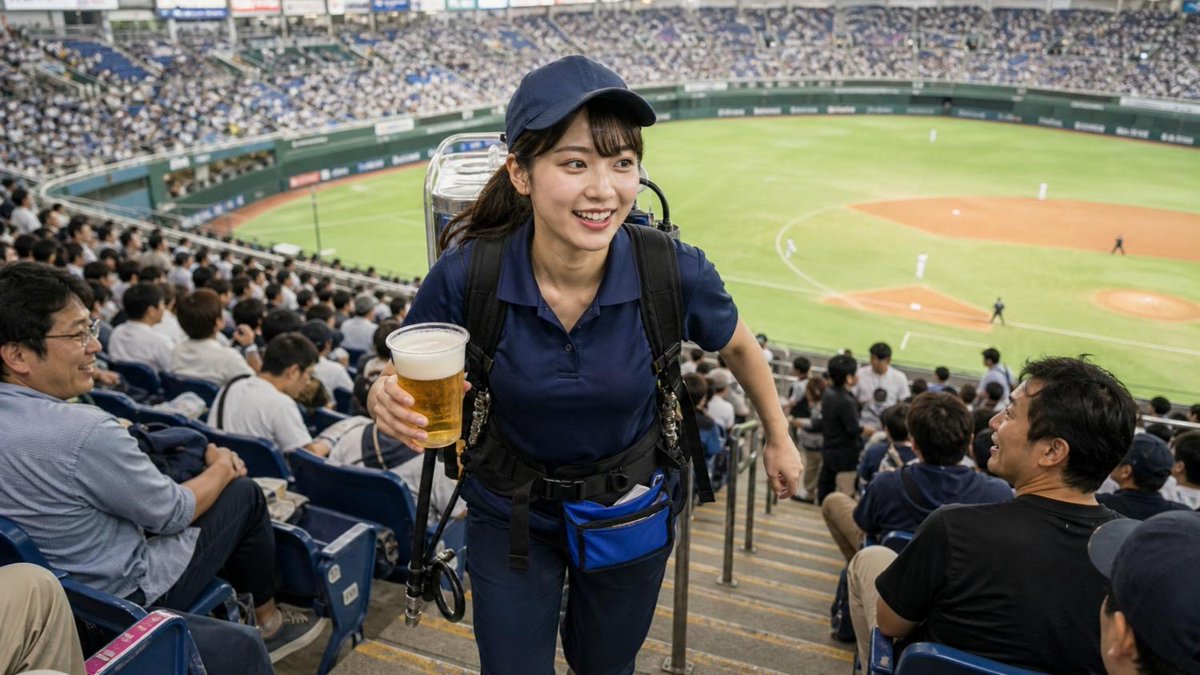
TOKYO (TR) – While it may not be obvious to fans at Tokyo Dome, beverage sales by so-called “beer girls” are based in a highly calculated, cutthroat hustle designed to drain the wallets of middle-aged men.
These young stadium idols, each carrying a heavy keg, are locked in a fierce turf war, armed with predatory sales tactics to maximize their commissions.
Haruka Sasaki, a pseudonym, is a former top-tier vendor who once slung up to 300 cups in a single shift during a three-year stint. In speaking to Spa! (July 12), she sheds light on the intense behind-the-scenes battles between vendors hired by Japan’s four major breweries: Suntory, Asahi, Kirin and Sapporo.
“Wealthy, older men”
According to Sasaki, a strict hierarchy dictates the stadium aisles. Top-selling staff are assigned the lucrative beer kegs, while lower-tier workers are relegated to selling chuhai, highballs, and soft drinks.
Positioning is also a heavily calculated science. While the loud outfield sections provide the high volume needed to move product, the premium seats behind home plate are a goldmine for repeat business.
“The back net area is filled with season ticket holders — mostly wealthy, older men,” Sasaki said. “Vendors who wear less makeup and naturally appeal to middle-aged men are specifically deployed there to secure regular clients.”
Nonoka Ono
This section is notably where former beer girl turned TV personality Nonoka Ono first made her name by building a loyal customer base.
Sasaki, who worked for the brewery with the lowest market share at the time, said her record-breaking sales had little to do with looks and everything to do with “vendor vision” — the ability to instantly profile and target lucrative marks.
Families, she noted, are essentially dead weight, often buying just a single round. The real cash cows are corporate workers.
“If you spot a group of five salarymen in suits wandering to their seats empty-handed, you pounce. You can sell five cups instantly,” she explained. “Because they want to keep up appearances, if you smile and say, ‘Please buy from me again later,’ they almost always will. That’s another five cups an hour later.”
Commission structure
This relentless hustle is driven by a lucrative commission structure. During Sasaki’s tenure, when a cup of beer cost 800 yen, vendors earned a base wage plus a 34-yen commission per cup. Hitting specific sales quotas triggered escalating “achievement bonuses.”
Brewery rivalries also fuel the fire. At the end of the day, vendors are judged on their “stadium share” versus the brand’s national market share. Vendors who significantly outperform the market average are rewarded with cash bonuses and shopping vouchers.
“If you see a vendor rushing around frantically in the late innings, they are likely just inches away from hitting their bonus quota,” Sasaki added with a laugh. “If you find a girl you like, keep drinking to support her.”