
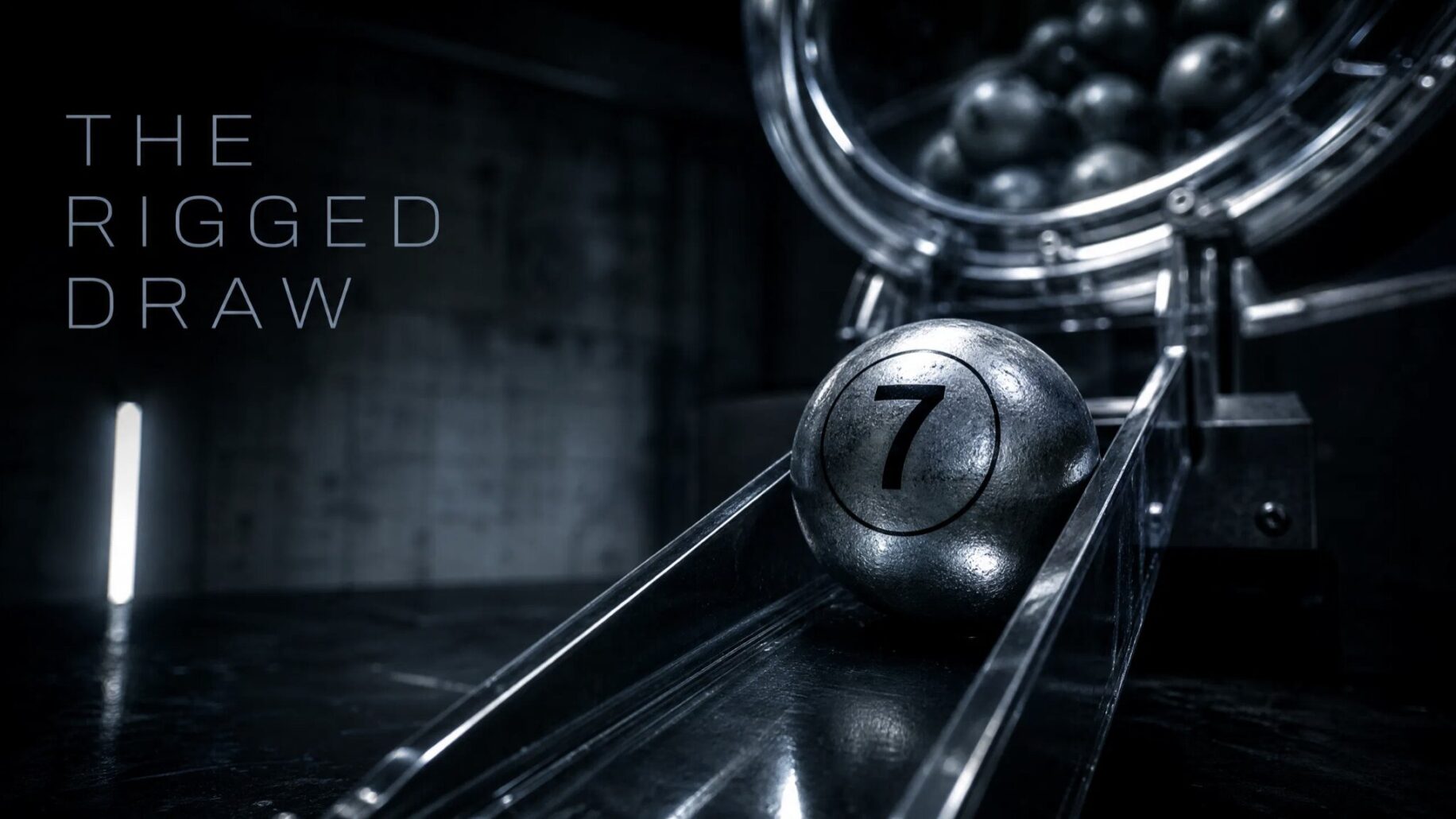
 It’s April 1980. Shocking thousands of viewers, the Pennsylvania Lottery’s nightly televised draw was fixed live on air in a scheme that became known as the Triple Six Fix.
The method was almost stupidly simple where conspirators injected most of the numbered balls with white latex paint, leaving only the 4s and 6s at their normal weight, so those were the only balls light enough to get sucked up in the air machine. The draw came up 666, the crew had bought tickets blanketing every combination of 4s and 6s, and the night produced a record $3.5 million payout.
But as it was very stupid, one sole reason led to them getting caught. The organisers had also placed side bets with illegal bookmakers, and one of those bookmakers furious at being fleeced tipped off the authorities about the abnormal flood of money on a single number pattern.
That case is famous because it got caught, but the unsettling reality is that hundreds of such cases do not get caught.
The numbers game has always attracted this, and not by accident. Any system where strangers hand over money against a random draw is only as honest as the people running the draw and for most of history the people running the draw answered to nobody.
That is the whole story of why gambling regulation exists, and it is worth knowing before you assume the modern version carries the same rot.
When the house was the crook
Long before state lotteries, the numbers racket ran the same con on a smaller, dirtier scale. Through the early twentieth century, in American cities, illegal “policy” games let poor neighbourhoods bet pennies on a daily three digit number. The racket was enormous, pulling in fortunes for the organised crime outfits that ran it.
The draw was supposedly tied to something public and unriggable like racetrack totals or stock exchange figures, precisely because players already assumed the operators would cheat if given the chance. They were right to assume it because operators still found ways to fix which number “won” when the payouts threatened to hurt.
Japan has its own long shadow here. Illegal gambling parlours and the syndicates behind them turned games of chance into reliable income streams. The reliability came from control, because a draw you secretly steer is not gambling at all, it is just collection with extra steps. The mob did not love gambling because it was run crookedly not because it was exciting and within no time, it was one of the most dependable businesses on earth.
The pattern repeats across a century and several continents. Unregulated numbers game, trusting players, an operator with both the means and the motive to rig the outcome, and no authority watching closely enough to stop it. The temptation did not change, only technology did.
The computer-age version
You might assume modern technology closed the door on all this. It mostly did, but not before someone proved how bad an inside job could get.
Eddie Tipton, the security director of the Multi-State Lottery Association in the United States, spent years rigging the very random number generators he was paid to protect. He buried self-deleting code in the systems that narrowed millions of possible outcomes down to a tiny predictable set on a few specific dates each year, then had family and friends buy the winning tickets. It became the largest lottery fraud in American history, and the man who pulled it off was the man trusted to prevent exactly that crime.
The threat was the insider with privileged access and nobody independent checking his work rather than a stranger breaking in. That is the same vulnerability the ball-painters exploited in 1980, just moved into software.
This is the crux of why the entire apparatus of modern gambling licensing exists. Independent testing of the draw mechanism, audited random number generators checked by parties who do not profit from the result and there are regulators who can pull an operator’s licence and freeze its accounts overnight. All of it is a direct response to a century of people painting balls and burying code to steer “random” outcomes toward themselves.
Something like playing keno online through a licensed operator is a genuinely different animal from the back-room policy racket it descends from. The draw is generated and tested by outside parties, the operator answers to a gaming authority, and the payout rules are locked in advance rather than adjusted on the fly when a number gets too popular.
None of that is thrilling, and that is exactly the point. The old games carried the quiet danger that the whole thing was crooked, and regulation’s unglamorous achievement is making that danger boringly unlikely.
The Pennsylvania crew got greedy and got caught. Tipton got caught too eventually by an anonymous ticket claim that did not smell right. The smarter operators across the unregulated century never were. The only reliable defence ever invented against a rigged draw is someone independent checking it, which is the boring machinery now sitting behind the legal version of a very old game.