HOKKAIDO (TR) – A woman who attended a private high school here filed a lawsuit in 2022 against a former male instructor, alleging that she was repeatedly forced into sexual acts while she was still in school.
On February 20, the Sapporo District Court handed down a judgment ordering the defendant to pay 11 million yen in damages. She had sought 20 million yen.
The plaintiff, who is now in her 20s, also filed a claim for damages against the school corporation based on employer liability, but this was dismissed on the grounds that the sexual acts took place at times and in places unrelated to classes, reports the Mainichi Shimbun (Feb. 20).
Presiding judge Osamu Moriyama criticized the defendant: “The man was older than her and in a student-teacher relationship. He took advantage of her immature judgment and forced her to satisfy his sexual desires.”
“I didn’t mean to scare you”
The plaintiff entered the Hokkaido Arts High School Sapporo Satellite Campus, which is run by corporation Kyokei Gakuen, in April 2016 at the age of 15.
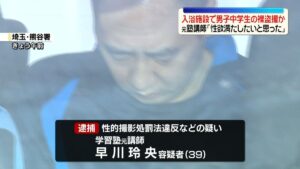
The defendant, who also works as a manga artist, was a drawing instructor in charge of the plaintiff’s classes. He is 30 years older than the plaintiff.
According to the ruling, the plaintiff took classes from the teacher, and was groped in a car during her first year. She was also frequently forced to engage in sexual acts in hotels and other locations before graduating, resulting in her developing PTSD.
“I didn’t mean to scare you”
During breaks in class, he said things like, “I’ll tell you about manga.” He also said, “I’ll tell you some behind-the-scenes stories.” Later, the two exchanged contact information on the chat app Line.
One day during her first year of high school, the defendant offered to take her home after she was working on her homework late, but instead drove in a different direction. He stopped in a deserted area and engaged in lewd acts, including groping her.
After the plaintiff returned home, she sent him a Line message. She wrote, “I was scared, but thank you for giving me a ride.” He replied, “I didn’t mean to scare you, I’m shocked.”
At a press conference, the attorney representing the plaintiff explained, “By showing a negative reaction to the student who told him she was scared, the plaintiff gradually entered a psychological state whereby she could not resist the defendant.”
“I’m 16”
The plaintiff alleges that from around winter of the same year, the defendant began to contact her outside of school repeatedly, eventually taking her to a hotel where they had sexual intercourse. Despite the plaintiff’s refusal — “I’m 16, [you] can’t penetrate me. It would be wrong as a teacher and student,” she said — the defendant ignored her.
After that, the defendant continued to accompany her to hotels once or twice a month, and the sexual acts gradually escalated, the lawsuit stated. He allegedly committed multiple lewd acts, including forcing her to eat feces, having sex with her while feces was smeared on her face, forcing her to walk naked outside, and photographing her with words like “slave” and “pet” written on her body.
“State of dissociation”
In her statement, the plaintiff said: “I used all my senses during the acts. It was so painful that I felt like I was going crazy. So I tried to distance myself as much as possible so I wouldn’t feel anything. As I repeated this, I developed a habit of pushing myself out of my mind, and I began to fall into a state of dissociation.”
These acts continued until the plaintiff graduated from high school in March 2019. Even after she moved outside of Hokkaido, the defendant continued to request images of her breasts and genitals, and the contact continued until July of the same year, the plaintiff claimed.
“Serious relationship”
Meanwhile, the defendant maintained that these acts “were carried out with the plaintiff’s consent in the context of a serious relationship.”
The defendant maintained that they were in a serious relationship and denied any causal relationship between the sexual acts and her PTSD. However, the ruling stated, “It is recognized that the nature of the sexual acts caused PTSD, and that they could have harmed her both physically and mentally.”
It went on, “While the decision to engage in sexual acts is a woman’s responsibility and a free decision, she was a minor at the time and it cannot be said she means to make a sufficient judgment.”
The defendant also argued that the medical certificate providing evidence that the plaintiff had suffered from PTSD due to the defendant’s actions was unreliable, citing it as having been prepared at the direction of the plaintiff’s attorney.
The court rejected the defendant’s arguments.
Regarding the PTSD diagnosis, the court ruled that “it was the doctor, not the plaintiff’s attorney, who first suggested the possibility of PTSD, and that the diagnosis was based on medical history prior to that,” and that “it is reasonable to conclude that the series of sexual acts with the defendant was a traumatic experience that led to the PTSD.”
“Not closely related to the corporation’s business”
The court ordered compensation of 11 million yen, including 10 million yen in psychological damages and 1 million yen in attorney’s fees.
In February 2020, the defendant was given a summary order to pay a 300,000 yen fine for violating the Child Pornography Prohibition Act.
Meanwhile, the court denied the corporation’s liability as an employer, stating, “The man’s illegal acts were committed at a time, place, and unrelated to classes, and are not closely related to the corporation’s business.”
At the press conference, the plaintiff said, “I want all teachers to understand that it is wrong to lay hands on someone. I wanted a sincere apology.” Her attorney stated, “The psychological damage that will continue to occur has been evaluated.” The attorney went on, “While employer liability was not recognized, the school has not provided any guidance to the teacher who committed the offense.”
The defendant’s lawyer indicated his intention to appeal. The lawyer said, “The court’s impression seems to be different from the evidence we submitted. We would like to seek a new judgment.”