
TOKYO (TR) – It is probably not what Japan’s government had in mind when it started promoting the concept of “Womenomics” more than a decade ago.
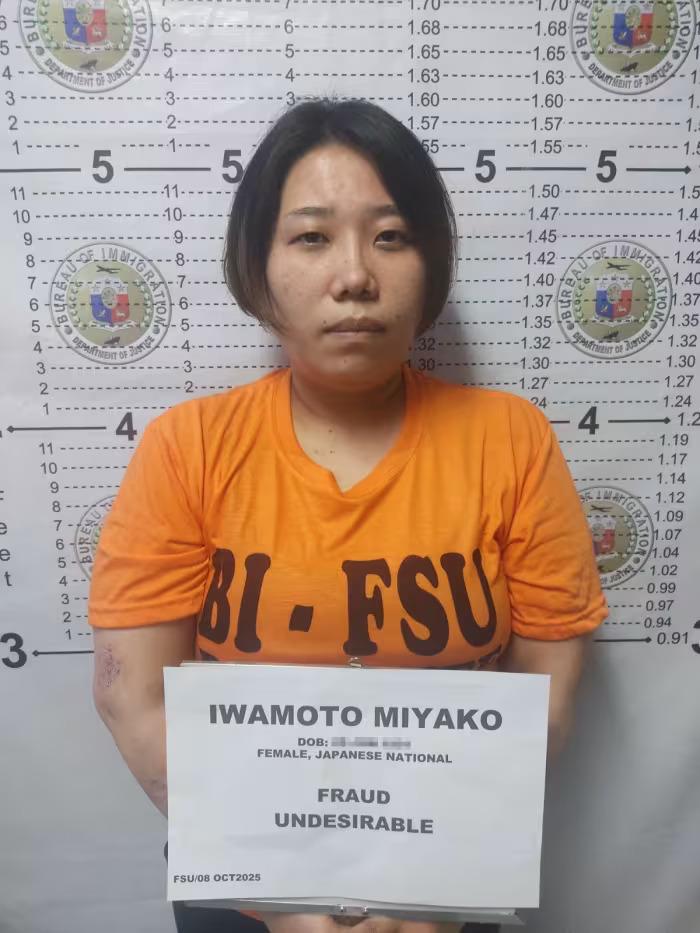
On the night of October 7, immigration officials and police officers stormed into a two-story house in Candelaria, a rural town about 100 kilometers south of Manila, the capital of the Philippines.
Law enforcement wound up rounding up five men and women inside. All were Japanese members of the same fraud group.
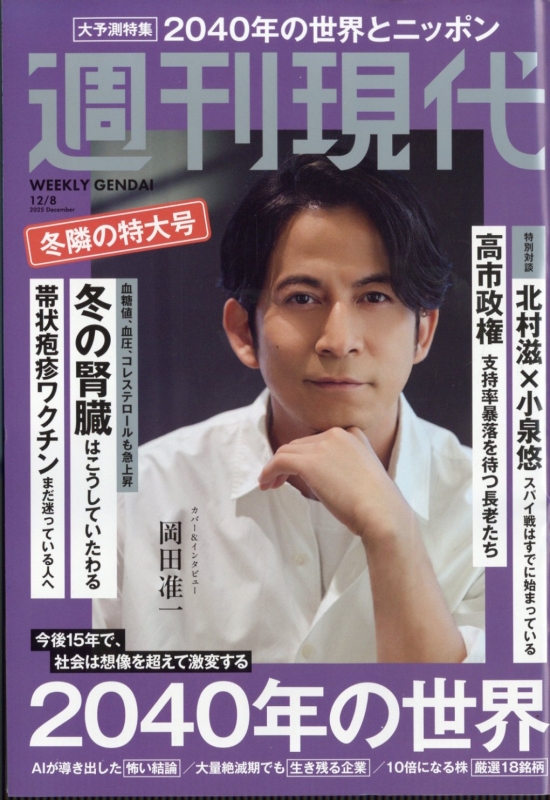
In footage of the arrest obtained from immigration by weekly tabloid Shukan Gendai (Dec. 8), one woman appeared to have a frustrated expression on her face. This woman was none other than Miyako Iwamoto.
Known locally as “Asuka,” Iwamoto was the leader of the ring, which specialized in tokushu sagi (specialized fraud).
According to Gendai, those who knew Iwamoto said that she not only managed the ring but also served as one of its key players in deceiving victims, labeling her as a “fraud genius.”
Ukeko
Perpetrators of specialized fraud target a victim over the telephone and impersonate an authority figure or relative to defraud money from them.
“I’ve been watching callers for a long time, but I’ve never seen anyone with as much talent as [Iwamoto],” one person connected to the ring tells the magazine. “It was common for one person to make 50 million yen a month. In a month when she worked hard, she could make over 100 million yen.”
Iwamoto, 34, is from Shizuoka Prefecture. Her whereabouts through her mid-20s are not known. However, in 2018, she began working as a ukeko — or receiver, meaning a person charged with collecting money from victims — for a fraud ring in Japan.
“[Iwamoto] is just under 160 centimeters tall, but weighs nearly 100 kilograms,” the same source says. “[Given her physical presence] she made quite an impact. She had a shady aura and a tough personality. She said, ‘I’ve never been able to find work since I was young.'”
Traveled alone to the Philippines
While working as an ukeko, Iwakmoto received an offer to work as a kakeko — or caller, meaning a person who poses on the telephone as an authority figure — from the Philippines.
Despite the fact that she was highly skilled in serving as an ukeko (the brazen lies she could tell when went to collect money from victims’ homes were deemed among the best in the business) Iwamoto decided to travel alone to the Philippines to change her role.
Upon arrival, she was immediately assigned to a group affiliated with the Japanese criminal organization JP Dragon. Until his arrest in June, Ryuji Yoshioka, 55, was the boss of JP Dragon, which is comprised of multiple groups.
Each group has an office known as a hako (box), where between three and six kakeko members are employed. Iwamoto was assigned to work at a box headed by a man going by the name “Yamada.”
“Lie with confidence”
As soon as she began her job, Iwamoto put her skills on full display. She easily elicited information from even the most suspicious victims, including those whose grip on their cash card PIN numbers would have caused normal fraudsters to give up.
“There are manuals for callers, but the success of callers depends on the individual’s skill. [Iwamoto] not only possessed amazing skills but she was also fast and unflinching. And she could lie with confidence. She was a genius,” a JP Dragon insider says.
Iwamoto quickly became the group’s top earner and made a name for herself throughout the organization.
No honor among thieves
Living in an all-Japanese group at an overseas base, it’s only natural that romantic feelings will develop. Iwamoto fell in love with Yamada. The leader of the group, Yamada was around her age.
“Yamada had many young Filipina girlfriends,” the JP Dragon source continues. “Even so, he and Iwamoto fell in love, perhaps because she was responsible for the team’s sales. However, the two kept their relationship a secret and didn’t tell anyone.”
No honor among thieves
Eventually, Iwamoto became pregnant. As her belly grew, she quietly returned to Japan and gave birth to a baby boy in August 2019. She did not return to the Philippines, but instead lived in Japan with Yamada’s support.
The following year, around February 2020, her phone suddenly rang. It was a JP Dragon executive, who told her that Yamada had committed suicide by ingesting poison. “We were unable to contact Yamada, so we went to his home and discovered his body,” the executive told her. “An autopsy revealed that he had taken poison.”
The executive had looked at Yamada’s smartphone and learned that he was in a relationship with Iwamoto.
“Yamada’s profits from the ring had been skimmed off by other members, and he was unable to pay his subordinates,” the insider says. “He was driven to the brink of mental breakdown and apparently took the poison himself.”
After hearing this, Iwamoto returned to the Philippines with her child, who was about six months old at the time. Iwamoto was never been able to let her child see his father’s face in person.
But she remained unfazed, deciding to stay in the Philippines and continue her career in fraud as a single mother.