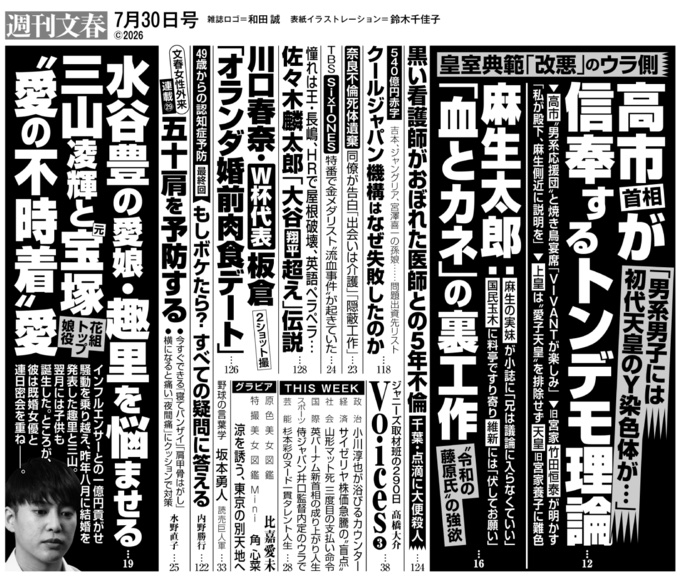
TOKYO (TR) – The government-backed “Cool Japan Fund,” launched to promote Japanese culture and goods overseas, is on the verge of a catastrophic collapse after racking up a staggering 54 billion yen in accumulated debt, reports weekly tabloid Shukan Bunshun (July 30).
With the deficit reaching critical levels as of June, the government plans to establish an investigative committee this month to discuss the consolidation or complete abolition of the fund, aiming for a final resolution by the end of the year.
“I told the staff so many times that doing things this way would lead to failure,” a frustrated former director lamented.
Dubai investment
A glaring example of the fund’s mismanagement — now referred to as its “dark history” — is a disastrous investment project in Dubai, which ended with a local business partner vanishing into thin air.
The Cool Japan Fund pumped approximately 300 million yen into a joint venture with a Dubai-based investment firm, proudly announcing the establishment of a local entity dubbed “Chiffa Nippon.”
The ambitious project was meant to spearhead the Middle Eastern expansion of popular Japanese restaurant franchises, including Korean BBQ chain Gyu-Kaku, takoyaki chain Tsukiji Gindaco, and ramen chain Tonchin.
Instead, every single plan crashed and burned.
According to Foodex Holdings, the company operating the Tonchin ramen chain, it was the Cool Japan Fund that personally introduced them to the Dubai partner. The Japanese companies agreed to the deal after being assured that the representative’s family had direct ties to the founding of Dubai, and that he was already successfully importing Japanese beef.
Three Japanese representatives traveled to Dubai, conducting market research and holding menu development meetings. But when they returned to Japan in 2017 to begin finalizing property leases, the trail suddenly went cold.
“We suddenly lost contact with the representative of Chiffa,” a spokesperson for Foodex said. “We checked with the Cool Japan Fund and had the local embassy investigate, but his whereabouts remain completely unknown to this day.”
The string of high-profile blunders has destroyed the fund’s reputation in the domestic corporate world.
“In the early days, companies flocked to them for consultations, thinking that receiving government funding would add prestige to their brand,” revealed a representative from a company that previously considered taking their money. “But as the failures piled up, people started whispering that it’s actually better not to accept their investments.”