HYOGO (TR) – Nationwide, there are numerous companies that provide a very select service: cleaning up so-called “garbage houses,” which are domiciles so packed with trash that their owners have been rendered helpless.
Sukkirin Co., Ltd., based in Nishinomiya City, is a unique player in the Kansai market in that it posts documentaries featuring its clients on YouTube and Instagram — all with permission — to give a before-and-after look at how the residence went from trash heap to clean space.
The cases can be grim. The company receives at least 10 requests per month to collect items left behind at the scene of solitary deaths. And the situations are often truly unique, such as the encountering of cockroach corpses clogging a bathroom, seeing a dusty house where rabbits are allowed to roam freely, viewing the aftermath of a suicide via charcoal briquettes and entering a house where the residents tamed the heaps of rubbish by trampling them down so as to allow for living space.
“The videos released are only a small part of the story,” assures the company’s representative director, Takumi Nishioka. “For example, at sites where pet waste has been left untreated for a long time, the summer heat releases gas from the waste, making your tongue numb and your throat hot just by entering the room.”
With Japan ageing rapidly, such discoveries are on the rise, government data shows, meaning that the services of company’s like Sukkirin are going to be in strong demand for the foreseeable future.
Sadly, human corpses are also among the discoveries. Last December, a Sukkirin clean-up crew found the body of a man’s mother in a trash heap some 10 years after she went missing. The company posted a video on the case on August 9. (After that, it received a tremendous number of views and it was deleted.)
As reported in Maid on News (MON), Sukkirin’s representative director, Takumi Nishioka, and site manager, Shogo Inoue, describe what transpired in that particular case and how the company works.
“The house was a garbage dump”
A male client in his 20s from Kyoto Prefecture requested that Sukkirin collect all of his unwanted items from his home as he was moving away for work.
“Originally, it was a four-bedroom family home where a family of four lived, and at the time of the request, he was living alone,” says Nishioka. “The house was a garbage dump with trash spread over the floors of every room.”
Eight staff members then went to work, which was expected to take seven hours. But it didn’t turn out that way.
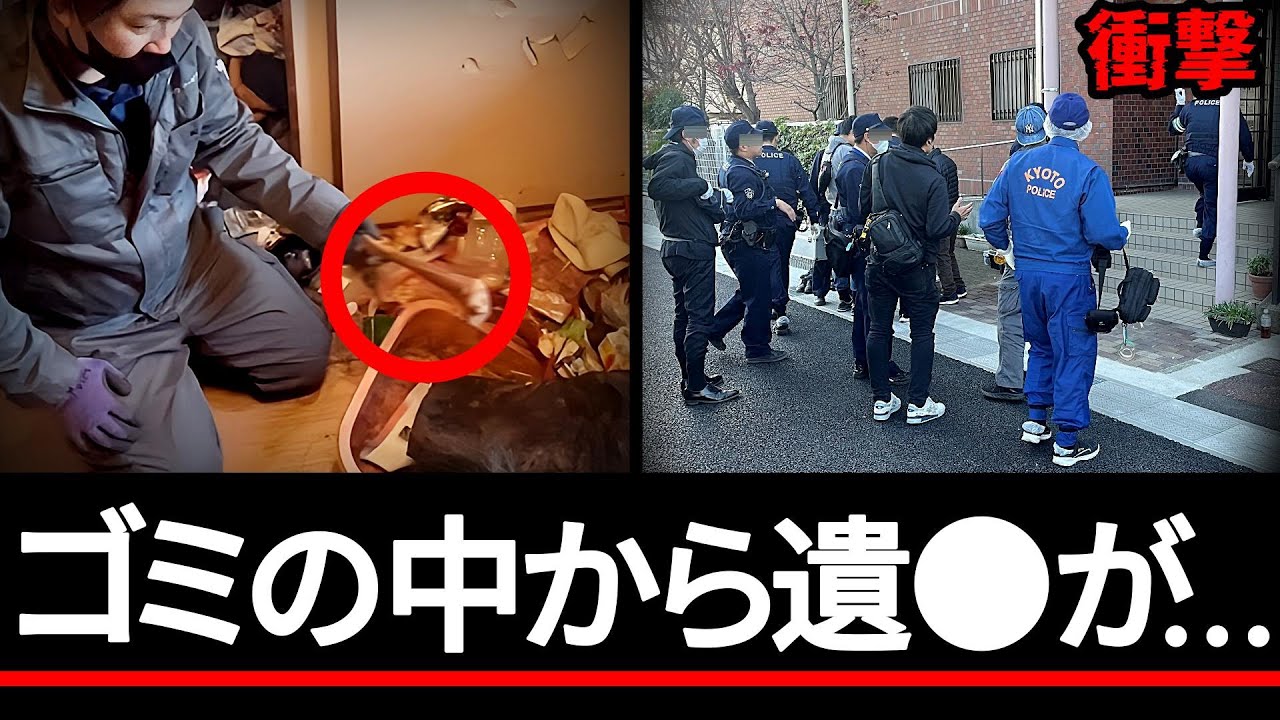
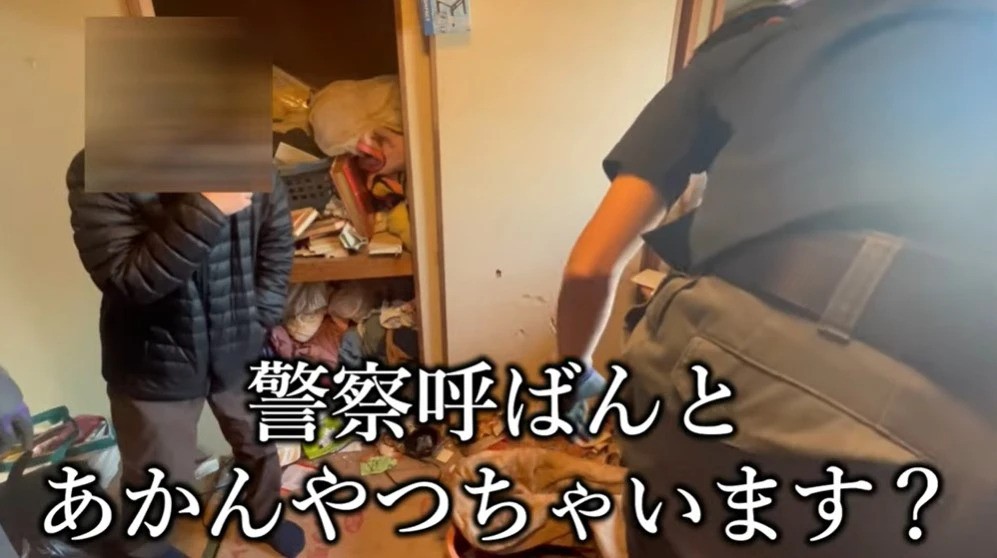
“While they were using a tool called a temi to scoop up the garbage from a Japanese-style room that had been unopened for 10 years, the staff found what appeared to be human bones on the floor when they turned over layers of futons and blankets,” Inoue says.
The staff initially thought it was a model skeleton from a science lab.
“But they were later convinced that it was human bones and stopped working,” Inoue says. “When we immediately showed it to the client, he said, ‘It might be the mother who disappeared 10 years ago.'”
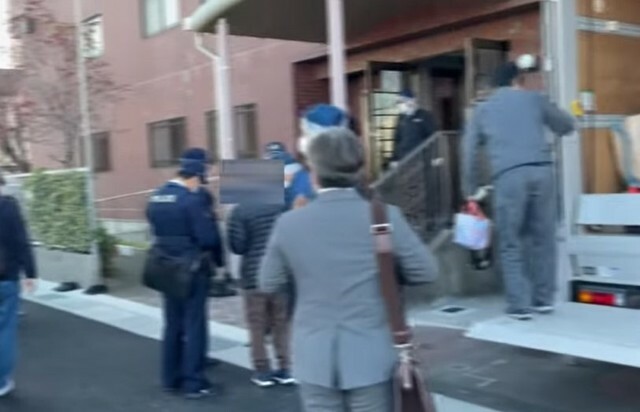
After the Kyoto Prefectural Police were called, twenty officers arrived at the scene. The client and staff were questioned.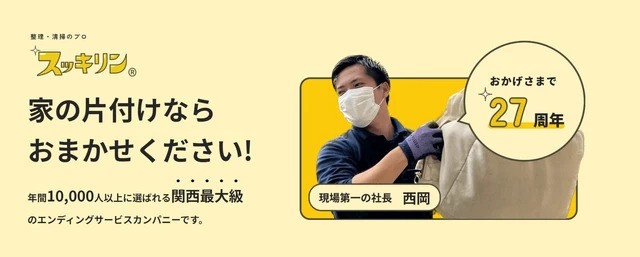
“Sat quietly in shock
The Sukkirin crew was stunned.
“When we discovered it, we were so surprised that we couldn’t speak,” Inoue recalls. “Even after confirming that they were human bones, everyone was in a commotion, saying, ‘What! Wait, it’s scary!’ After sorting out the situation, everyone sat quietly in shock.”
Obviously, the client was upset as well.
“At first, he was shocked and speechless, and seemed confused,” Nishioka says. “After that, he tried to recall old memories, but after he realized that the bones were indeed those of his mother’s, he became clearly shaken.”
“Strange smell of his mother’s body”
Around the time she was last seen, some 10 years ago, the client’s mother would often run away from home and not come back for a few days. In 2013, police officers visited the residence but she was nowhere to be found.
“‘I’ll come back in a few days,’ she would say,” Inoue says. “To begin with, the family relationship was not very good, and even when she came back, the mother would stay in the Japanese-style room and there was no particular conversation. Both parents were originally not good at cleaning, and it seems that the client had been living in a chronically trashed house since childhood.”
His father passed away three years ago.
“And his older sister left home to get a job,” Nishioka says, “so he was living alone in a trashed house. He did not notice the strange smell of his mother’s body, and it was discovered during this work.”
Increasing number of bodies in homes nationwide
The discovery is part of a trend whereby authorities are finding an increasing number of bodies in residences nationwide.
According to the Ministry of Land, Infrastructure, Transport and Tourism’s “Statistical Data by Cause of Death,” the number of persons being found dead at home has increased by about 50,000 over the past two decades, from around 134,000 in 2000 to about 188,000 in 2019.
Not surprisingly, the largest number of bodies are found in administrative districts with high populations, with Tokyo and Osaka at the top.
After that first collection was halted, Sukkirin kept in contact with the client. In the end, he requested a second collection, which they completed successfully in February of this year.
“We are very grateful for that”
The initial cost estimate was 400,000 yen, which included labor and truck fees. However, that total was revised to 500,000 yen for the second collection to account for the added costs for dealing with the incident.
But a third collection wound up being necessary.
“When collecting items, we ask the client to let go of things they don’t need and keep what they do need, but this particular client was a person who takes great care of things, and he left about one-room’s worth of belongings with him,” Nishioka says. “However, it seems he was unable to take everything with him to his new home, so he said, “I’ll get rid of this after all,” and we went ahead with the third collection.”
“Since they called us for the third time, we think we had built a relationship of trust. We are very grateful for that,” Nishioka says.
“Strong attachment to each and every item”
Clearly, these homes are — at a minimum — unsightly and uncomfortable. Worse, they are health hazards. Why then can’t the occupants dispose of rubbish in a timely manner?
“People who have a much broader category of ‘memories’ than the average person find it difficult to ‘deal with things,'” says Nishioka. “I get the impression that they have a strong attachment to each and every item, so it’s difficult for them to throw things away.”
Nishioka feels that Sukkirin is contributing to society through its work.
“It is a difficult job, but we often have the opportunity to directly interact with the clients,” he says, “and they directly express their gratitude to us, and we can directly feel the clients’ joy and relief, so it is a job that is more rewarding than anything else.”