FUKUOKA (TR) – Lawyers for a man executed for the 1992 kidnapping and murder of two young girls here are preparing a third request for a posthumous retrial, citing new evidence that the DNA tests used to send him to the gallows were fundamentally flawed.
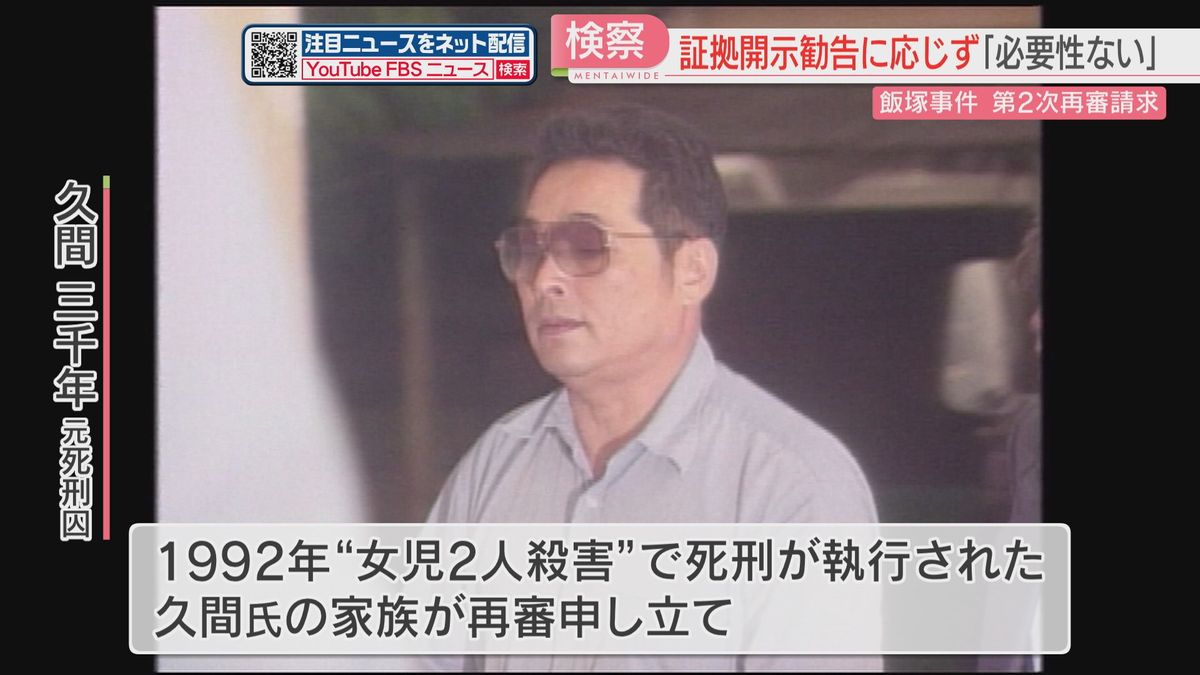
In 1992, two first-grade girls disappeared in Iizuka City and were found dead the following day. Police arrested Michitoshi Kuma, who adamantly maintained his innocence until his death. He was convicted and sentenced to hang based heavily on an early DNA profiling method known as MCT118. He was executed on October 28, 2008.
However, a recent NHK investigative documentary has reignited national outrage over the “Iizuka Incident,” exposing missing evidence, alleged police coercion, and a highly suspicious timeline surrounding Kuma’s execution, reports the site for weekly tabloid Shukan Bunshun (Oct. 6).
MCT118 DNA method
Kuma was executed just 12 days after it was publicly announced that DNA evidence in a similar case — the 1990 “Ashikaga Incident” — would be re-tested.
In the Ashikaga case, five young girls were kidnapped and murdered within a 10-kilometer radius spanning Tochigi and Gunma prefectures between 1979 and 1996. All five cases remain unsolved.
Both cases relied on the same notorious MCT118 DNA method. The Ashikaga re-testing eventually proved the police had the wrong man, leading to an exoneration.
Kuma pleaded for his own DNA to be re-tested before his death, but police claimed the original samples had been “used up.”
Unable to test the physical samples, Kuma’s defense team recently commissioned Dr. Katsuya Honda, a forensic expert instrumental in the Ashikaga exoneration, to examine uncropped photo negatives of the original DNA test results. These full negatives were not shown during the original trial.
Upon analyzing previously obscured traces of DNA on the film, Honda concluded that the killer’s DNA clearly did not match Kuma’s profile. Armed with this finding, Kuma’s defense team announced on September 24 that they will submit the analysis as “new evidence” in a third bid for a retrial.
Police cover-up
The case has also been marred by allegations of a massive police cover-up.
According to earlier investigations by the Nishi-Nippon Shimbun, prosecutors had asked a second university expert to test the DNA prior to the trial. When that expert found no match to Kuma, a top-ranking official from the National Police Agency allegedly visited the expert and pressured him to suppress the findings.
“We believe he is the culprit, so it would be highly problematic if your results come out. Please compromise,” the official allegedly told the expert, adding, “We aren’t here to talk about science.”
Documents “non-existent”
When the defense team later demanded the original laboratory notes, experimental data, and photographs to verify the state’s claims, authorities reported that almost all documents were “non-existent” or had been destroyed, claiming they were merely the technicians’ “personal items.” Police also claim that early investigation reports containing witness statements cannot be found.
The Fukuoka District and High courts have rejected Kuma’s previous retrial requests. Now, with fresh forensic evidence and growing public scrutiny, the defense is challenging a justice system that carried out an irreversible execution while allegedly burying the evidence.