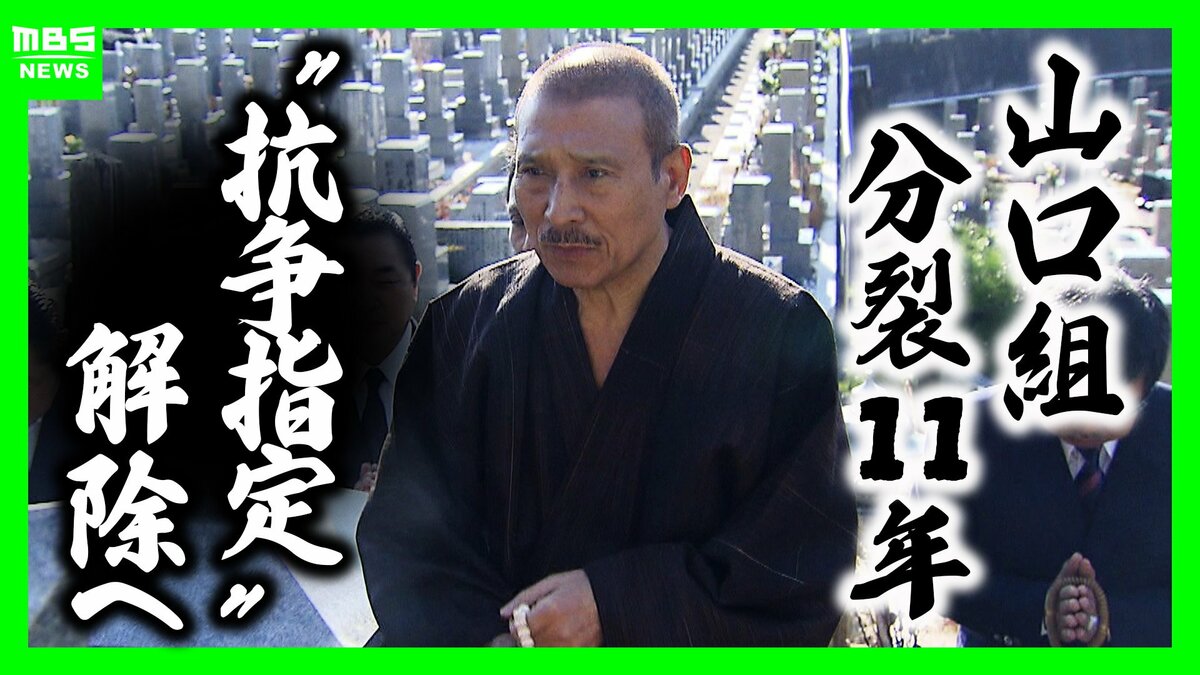
HYOGO (TR) – A prefectural public safety commission on Monday announced that it is set to lift the draconian “designated conflict syndicate” status imposed on Japan’s largest yakuza group, the Yamaguchi-gumi, and its rival splinter factions.
Authorities cited a massive decline in underworld manpower and a prolonged lull in violence, reports Mainichi Broadcasting System (Sep. 8).
The Hyogo Prefectural Public Safety Commission said it will allow the strict designation to expire on Monday for the Yamaguchi-gumi and the Ikeda-gumi. A similar designation applied to the Yamaguchi-gumi and the Kizuna-kai faction will not be renewed after September 20.
Police sources revealed that the decision comes after a noticeable absence of gangland hits. Furthermore, the Yamaguchi-gumi recently submitted a written oath declaring an end to the conflict, and investigators have confirmed through hearings that none of the involved factions intend to reignite a turf war.
“Designated conflict”
The underworld conflict erupted 11 years ago in 2015 when the massive Yamaguchi-gumi splintered, spawning the Kobe Yamaguchi-gumi, which later fractured further into groups like Kizuna-kai and Ikeda-gumi.
Escalating violence, including a string of fatal shootings of gang bosses in 2019, prompted authorities across six prefectures to slap the syndicates with the “designated conflict” label in 2020. The designation was later expanded to include Kizuna-kai and Ikeda-gumi in 2023 after a Yamaguchi-gumi boss, who was running a ramen shop in Kobe, was gunned down by a Kizuna-kai hitman.
The special designation served as a stranglehold on gang operations. Under the law, members were banned from entering their own offices or gathering in groups of five or more in designated warning zones. Violators faced immediate arrest under the Anti-Organized Crime Law, a measure that severely crippled the syndicates’ ability to hold meetings or maintain gang unity.
Power collapse
However, the primary reason for the lifted restrictions is the sheer collapse of yakuza manpower. Experts note that the aging syndicates simply lack the strength to sustain a war.
According to National Police Agency data, the number of gang members nationwide has plummeted by half over the past decade, dropping below 20,000. The Yamaguchi-gumi has shrunk from nearly 6,000 members in 2015 to around 3,100 today. Splinter groups have fared far worse: Kizuna-kai has dwindled from its initial 460 members to a mere 50, while the Ikeda-gumi has been reduced from roughly 80 members to just 30.
Analysts attribute this death spiral to strict Yakuza Exclusion Ordinances enforced nationwide. Underworld figures are now social pariahs, legally barred from opening bank accounts, obtaining credit cards, signing cell phone contracts, or even checking into hotels. Combined with a younger generation unwilling to endure the strict, antiquated yakuza hierarchy, the syndicates have been starved of fresh recruits.
Filling the void
But as the traditional yakuza fade, a new criminal element is stepping into the void.
Police are increasingly struggling with the explosive rise of hangure (quasi-yakuza) and tokuryu syndicates, whose members communicate anonymously via smartphone apps. Tokuryu arrests reached a staggering 12,178 in recent data, highlighting a severe shift in Japan’s criminal landscape.
Unlike heavily monitored yakuza families, these shadowy networks are extremely difficult to track until after a crime is committed. Yet, police warn that the old and new underworlds remain deeply intertwined, with modern fraud rings frequently kicking up illicit profits to traditional yakuza syndicates as tribute or protection money.
Authorities say they will maintain strict surveillance on the yakuza even after the conflict designation is lifted.