FUKUOKA (TR) – Yuko Takahashi, once a popular hostess bar owner in Fukuoka City’s bustling Nakasu red-light district, remains behind bars serving a life sentence for the murders of two of her husbands to collect lucrative life insurance payouts.
Born into a wealthy family and nicknamed “Snow White” in her youth, Takahashi’s path from a classically trained pianist to a convicted serial killer shocked the nation two decades ago.
She was a pampered beauty who called herself a prize turned ice-cold killer when her men stopped providing. As court records show, she drowned and stabbed her second and third husbands over a period of six years before Fukuoka police finally closed in.
Husband number two
Fukuoka Prefectural Police arrested Takahashi, then 48, on suspicion of extortion in July 2004, before charging her with the murders of two former husbands she had killed for insurance payouts totaling nearly 190 million yen.
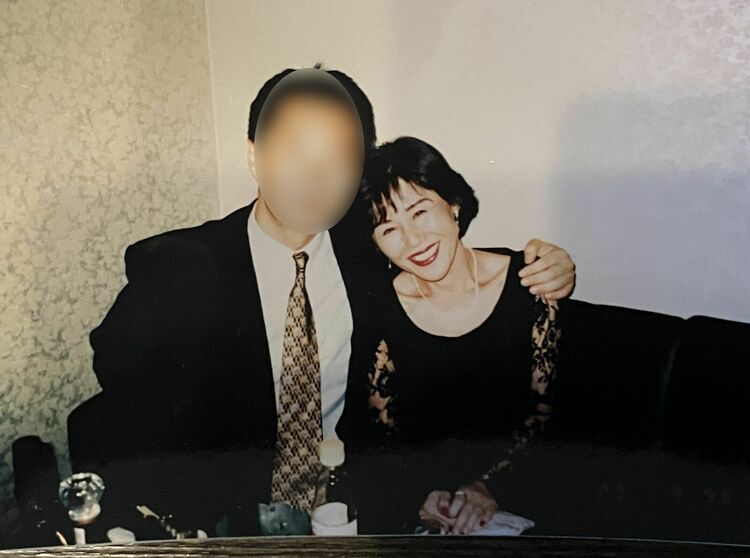
The first victim was her second husband, Yuji Nomoto, 34, a one-time housing salesman turned licensed architect who had abandoned his pregnant wife to marry Yuko in 1987. Together the couple built a three-story mansion in Kasuya-gun Shimemachi. Nomoto established his own design firm, Tsukasa Kenchiku Kobo, in Fukuoka City’s Minami Ward. In the Noda household, in addition to the couple, there was a 13-year-old daughter, a 10-year-old eldest son, and a 1-year-old second daughter.
Takahashi installed herself as company president. But as Japan’s “bubble economy” deflated in the early 1990s, the firm buckled under debts of 130 million yen.
Bankruptcy
By March 1994, Yuko had begun converting various household items of value into cash — stashing the proceeds at her parents’ home — as she prepared to file for bankruptcy.
Yuko took her children and moved into a luxury apartment in Chuo Ward, Fukuoka City, in May. Around the same time, she approached her former housekeeper, who at the time also ran a “snack” bar, which is a modest hostess club. Yuko she asked if she could work there.
“She had no experience, but she was good-looking, so I decided to hire her at an hourly wage of 1,000 yen,” the former housekeeper told Friday (May 14, 2019).
Yuko began working at the bar, and according to the former housekeeper, she quickly became popular — thanks to her beauty, charm and music talent gained during her stint at Musashino Academia Musicae in Tokyo.
“She always wore mini-skirts that ended above her knees, and with her great figure and gentle, pleasant demeanor toward customers, I thought she was well-suited for the nightlife industry. When she sang karaoke, she often chose songs like Teresa Teng’s ‘Tsugunai’ or Chisato Moritaka’s ‘Watashi ga Obasan ni Nattemo’ (‘Even If I Become an Old Lady’).”
Yuko showed up for work diligently for about a month, but then her shifts began to decrease. Eventually, she started returning to the establishment — not as an employee, but as a customer, accompanied by a man.
“I later learned from her that during the time she stopped coming to my place, she had actually been working at a club in Nakasu, Fukuoka City, run by the mother of one of her daughter’s friends,” the former housekeeper said.
Kyushu graduate student
Hooked on host clubs and pachinko in addition to luxury cars and a designer wardrobe, Yuko then turned on her husband over the debt. Her solution, which she repeated to him daily according to court testimony: “If you die, the insurance will pay off the debt.”
Nomoto attempted suicide twice by carbon monoxide poisoning; both times he survived. Each time, Takahashi greeted his survival not with relief but with fury. “Why didn’t you die? How are we going to pay the debt?” she demanded, police said.
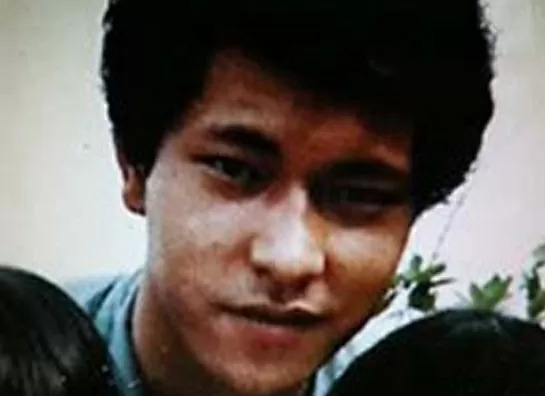
By this point Yuko had taken up with Kenichi Ide, a Kyushu University graduate student she had hired as a tutor for her son. Besotted, the student reportedly researched killing methods using a commercial suicide manual and proposed injecting benzene-laced whisky into Nomoto’s glass. When the smell proved too strong, he devised a second plan: a deep stab wound to the abdomen to puncture an artery, the blade withdrawn immediately.
On the night of October 22, 1994, Yuko mixed sleeping pills into Nomoto’s whisky, waited for him to lose consciousness, pulled on work gloves, and drove a kitchen knife into his abdomen and lower back. She then called the graduate student to help confirm death and clean the scene. Nomoto was found in the tatami room of his home surrounded by scattered loan documents, the wound passing clean through to his back.
“She called out of the blue and said, ‘My husband has passed away.’ Even though he had actually been killed in their own home, she claimed, ‘He committed suicide at a friend’s place. He left behind individual suicide notes for me and for each of our children,'” the former housekeeper said.
Police initially ruled the death a suicide by debt distress, a conclusion supported by two previous attempts and a note Nomoto had written earlier. The ruling allowed Yuko to collect 160 million yen in life insurance.
After selling the property for roughly 50 million yen and repaying the debts, she walked away with close to 100 million yen in hand, police said.
Nomoto’s mother later told investigators that her son’s voice had been found on her answering machine. The message, fragmented and barely audible, appeared to say: “I was… done…”
Luring customers into affairs
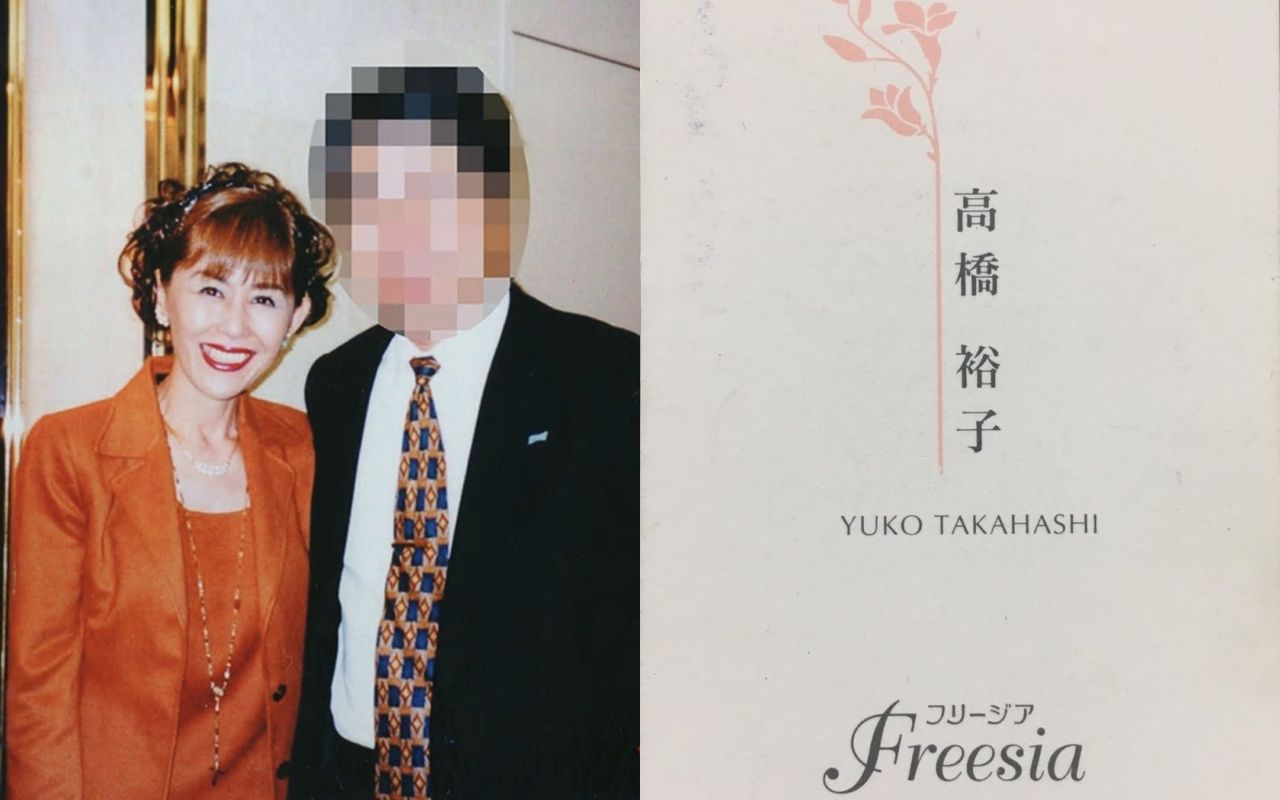
Flush with insurance money, Yuko reaffirmed her position in Nakasu, opening up her own snack bar, Freesia, in the Nakasu Daiichi Building at the age of 40.
With her charm and looks, she quickly built a loyal clientele among older male patrons. She parlayed that loyalty into a second income stream, luring customers into affairs and then, with her lover Fumio Aoki, threatening to expose them to their wives unless they paid, police said.
According to the former housekeeper, she managed to osecure “high-value” clients, such as bank executives. She even confided to the former housekeeper that she had engaged in makura eigyo —trading sexual favors for business — with some of these men.
“There was a customer of ours and Yuko told me he had visited Freesia. She spoke quite nonchalantly about having had a sexual relationship with him. Later, when I casually brought him up in conversation, Mr. A confessed that he had lent her 400,000 yen — money that was never paid back,” the former housekeeper said.
Nine victims were extorted in total; losses exceeded 10 million yen.
Husband number three
In 1999, a regular at Freesia, Takayuki Amano, divorced his wife of 27 years to marry Takahashi. An executive posted at the time as general manager to a well-known inn in Aomori Prefecture, Amano took Yuko’s surname and entered her family register as Takayuki Takahashi.
A dispute with a former lover of Yuko’s led to Amano being transferred to a hotel in Fukuyama City, Hiroshima Prefecture. Yuko had closed Freesia upon getting married, but Amano — who had been demoted — ended up resigning due to the stress of an unfamiliar work environment.
Left with no other choice, Yuko had Amano sign the lease for the premises and reopened Freesia with him serving as the manager. However, no matter how much Yuko tried to lean into her own sex appeal, a bar where her husband was also present in the room stood no chance of becoming popular.
As a result, the bar struggled; Amano, stressed and out of his depth, eventually quit his job entirely. Without a salary coming in, Yuko’s patience expired. “No job, no use. Go and find some money,” she told him, according to prosecutors. She subjected Amano to sustained psychological pressure and, at times, physical violence.
Drowned in bath
Less than eighteen months into the marriage, on November 12, 2000, at around 4 a.m., Amano drank beer and whisky laced with two types of prescribed sleeping medication and lowered himself into the bath. Yuko held his shoulders beneath the water until he drowned. He was 54. Because Amano had a legitimate prescription for the sedatives, police recorded no suspicion of foul play.
A month before his death, Yuko had taken out 138 million yen in life insurance on Amano. The insurer refused to pay after discovering he had not disclosed his diabetes. Yuko collected only 27.4 million yen from a postal savings policy.
Freesia closed nine months after Amano’s death, by then notorious in Nakasu for rolling clients and robbing them. Yuko sued the insurer in Fukuoka District Court for the 80 million yen she believed she was owed. The court dismissed her claim.
“I accept all charges”
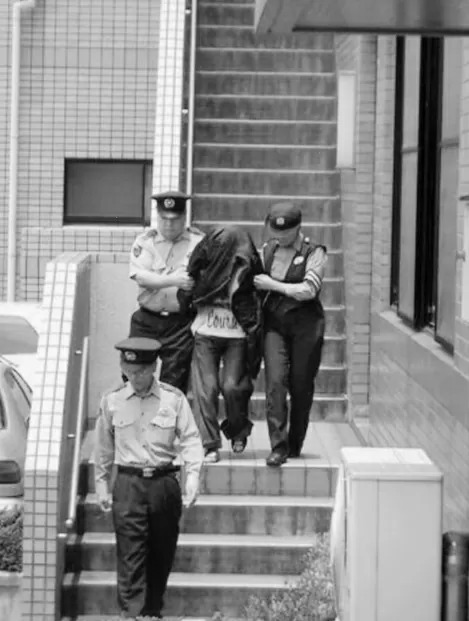
In the autumn of 2003, Fukuoka Prefectural Police’s First Investigative Division, reviewing cold suspicious-death files, surfaced the name of a woman who had collected insurance on two successive husbands. Plainclothes officers spent months canvassing Nakasu’s bars, where the story of a snack-bar mama who had killed for insurance was already an open secret. On July 22, 2004, Yuko was arrested on extortion charges, the pretext police used to bring her in for questioning about the murders. Under polygraph examination she admitted her involvement in both deaths, police said.
The first criminal trial opened at Fukuoka District Court on December 13, 2004. Yuko faced two counts of murder, two of extortion, three of insurance fraud, and one of attempted fraud. In her opening statement, weeping, she said: “I accept all the charges. I don’t mind if I receive the death penalty.”
Two months later she reversed course, claiming Ide, the graduate student, had acted on his own initiative and that she had never asked him to kill Nomoto.
The court was unmoved. The presiding judge said her shifting account reflected a transparent effort to reduce her own culpability and shift blame onto a man for whom she had romantic feelings, and found it unreliable.
On the killing of Nomoto after his two failed suicide attempts, the judge said her conduct was “outrageously selfish and self-centered, leaving no room whatsoever for leniency.” Prosecutors described her to the court as a queen bee demanding her drones sacrifice themselves for her.
“Leave me alone”
On July 19, 2007, Fukuoka District Court sentenced Yuko to life imprisonment. The killing of Amano was classified as solicited murder on the finding that Amano had, by that point, a genuine intention to die and hand his insurance to Yuko.
The Fukuoka High Court dismissed her appeal on December 18, 2007. On April 26, 2011, the Supreme Court rejected her final appeal, making the life sentence final. She was 55. She is currently serving her sentence at Fumoto Prison, Kyushu’s only women’s correctional facility.
Ide, the graduate student, was tried separately. He was convicted at first instance of aiding and abetting murder and sentenced to three years and six months. Prosecutors had demanded imprisonment of 12 years.
On April 22, 2008, the Fukuoka High Court overturned the conviction on grounds of insufficient evidence and acquitted him. “I just want them to leave me alone,” he said in a comment released by his legal team lawyer after the high court ruling.
Prosecutors did not appeal. He had been living in Kobe City with his wife and two children at the time of the appeal judgment.