
TOKYO (TR) – The Tokyo District Court this month handed a 24-year-old man a suspended term for upskirting, rejecting a bizarre legal defense that “inner pants” do not constitute underwear, reports the Asahi Shimbun (Sep. 14).
On September 14, the court sentenced the unnamed man to three years in prison, suspended for six months, for violating the Law Banning the Taking of Sexually Explicit Photographs and non-consensual indecency. Prosecutors had originally sought a five-year prison term.
According to the ruling handed down on September 14, the defendant committed seven tosatsu (voyeur) filming offenses — including one attempted case — at commercial facilities and on the streets of Tokyo between July 2024 and April 2025.
He was additionally charged with two counts for groping women on the street, one of which resulted in injury.
Function exactly as underwear
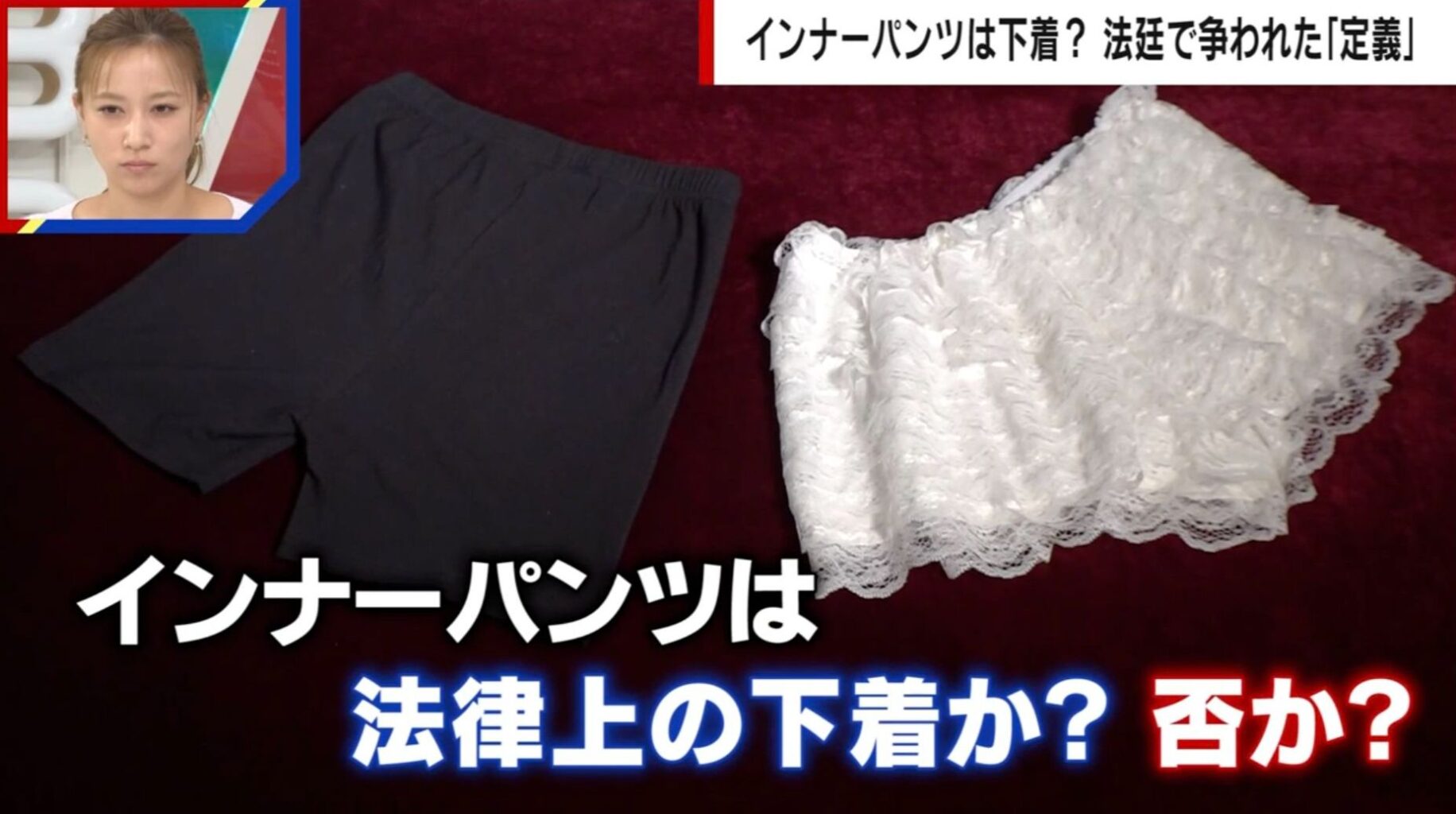
However, the trial centered on an unusual dispute regarding two of the upskirt incidents. In both cases, the victims were wearing “inner pants” — short, tight garments worn over traditional panties to prevent exposure — meaning their actual underwear was not visible on the defendant’s camera.
During the trial, the defense argued that because inner pants are explicitly designed to conceal actual underwear, they do not meet the legal definition of “underwear” themselves. As the actual panties were never caught on camera, the defense claimed the charges for those incidents should be reduced to attempted voyeurism.
Prosecutors fired back, pointing out that the inner pants were thin garments ending at the base of the thigh. Because they are never intended to be seen by the public, prosecutors argued they function exactly as underwear.
“Inner pants constitute underwear”
Under thelaw penalizing the illicit photography, underwear is defined as items “normally covered by clothing and used to cover sexual parts.”
Presiding judge Hiroshi Ono ultimately sided with the prosecution, ruling that inner pants are legally recognized as underwear. The judge emphasized the victims’ perspective, noting that the women considered the garments equivalent to underwear and would never go outside wearing only them.
“Given the victims’ intentions and the form of the garments, inner pants constitute underwear,” the judge concluded.
“What constitutes a punishable offense is crucial”
The defendant’s brazen excuse sparked outrage on Japanese social media, with users expressing disgust at his attempt to downplay the crime.
However, legal observers note the court’s decision successfully bridged the gap between rigid legal statutes and societal common sense, ensuring the voyeur did not escape full punishment on a technicality.
Attorney Michiko Nakagawa of Mitsuboshi Law Office explained to ABEMA (Sep. 27), “The law contains a provision prohibiting the filming of underwear. Determining whether an item qualifies as underwear is therefore a crucial factor in deciding whether the law applies.”
Nakagawa explained the court’s reasoning: “Even though the individual was wearing two layers — standard underwear and inner pants — the court focused on the legal interest the law aims to protect: the right not to have one’s private, sensitive areas photographed. It concluded that, since inner pants are not meant to be seen by others, they can indeed be classified as underwear.”
However, according to attorney Nakagawa, not all inner pants will necessarily be classified as underwear in the future; judgments could vary depending on factors such as type, shape, and the purpose of wearing them.
She continued, “Especially with laws involving criminal penalties, definitions are frequently established to clarify exactly what conduct is punishable and to prevent the scope of punishment from expanding indiscriminately. Without such definitions, the range of punishable acts could widen excessively. Defining exactly what constitutes a punishable offense is crucial when drafting legislation.”