
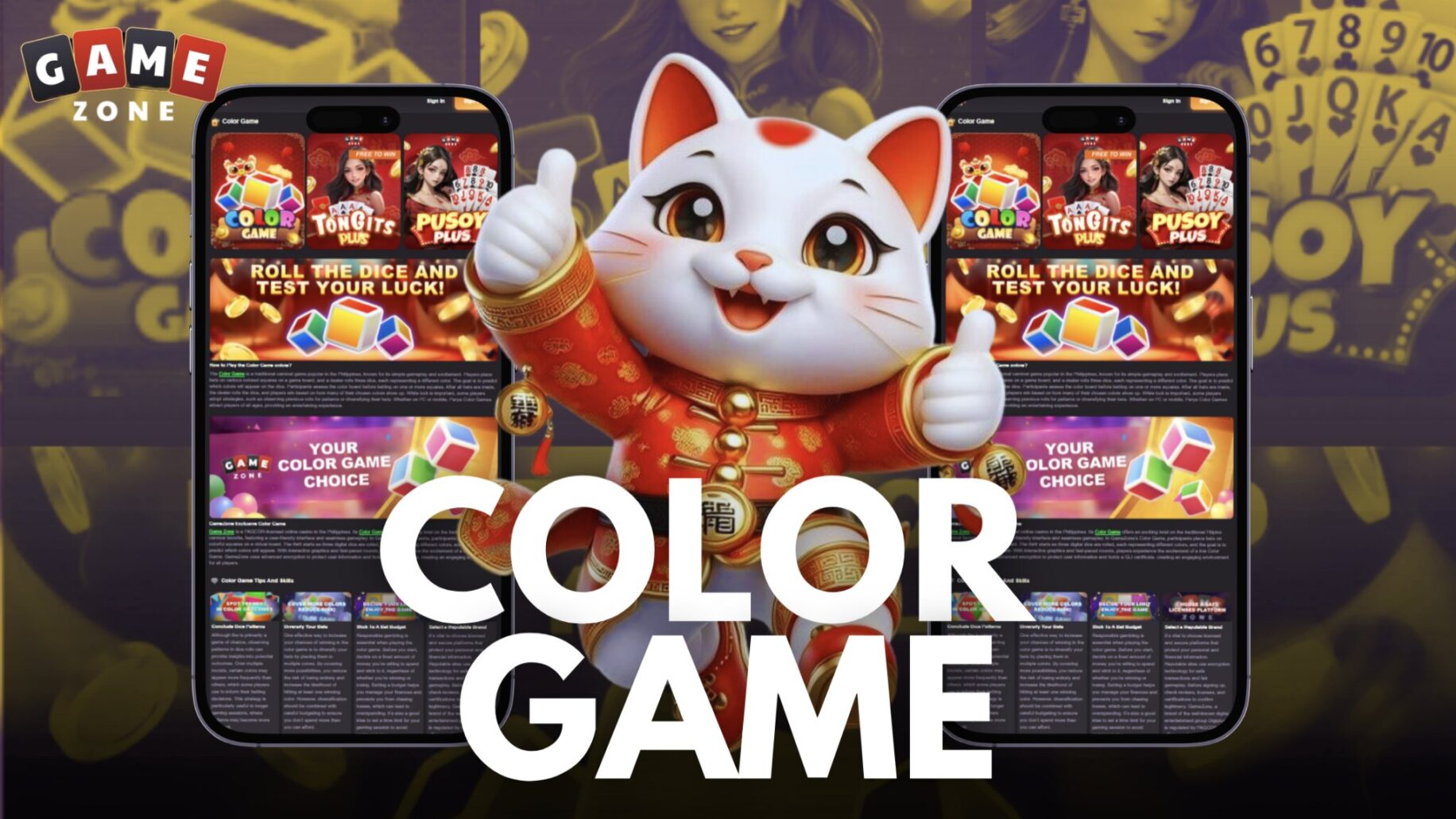
 For generations, Color Game has been associated with Filipino peryas, fiestas, and other community entertainment spaces. Its appeal is easy to recognize: a colorful playing area, dice, simple visual cues, and an outcome that can be understood at a glance.
What happens when that familiar format moves from a physical booth to a smartphone or computer screen?
The answer involves more than reproducing colors and dice digitally. Online versions can use graphical interfaces, animations, automated systems, live video, or combinations of these technologies.
At the same time, the digital environment introduces concerns that do not exist in quite the same way at a traditional perya booth, including mobile usability, accessibility, privacy, security, and the clarity of information presented to users.
Looking at Color Game through this broader lens provides a more useful understanding of how a recognizable Filipino entertainment format is being adapted for connected devices.
What Is Color Game?
Color Game is a traditional perya-style entertainment game commonly recognized by its colored playing spaces and dice-based outcomes. In a physical setting, the game is typically presented at a booth, allowing participants to see the board, dice, operator, and surrounding activity directly.
That physical setting is an important part of the traditional experience.
A perya booth is not simply a game interface. It is a social environment where the operator, participants, spectators, equipment, and surrounding attractions exist in the same place. The sights and sounds of the venue provide context that does not need to be explained through a screen.
Digital versions change that relationship.
Instead of observing a physical booth, users interact with a graphical interface through a smartphone, tablet, or computer. The interface must therefore communicate information that would otherwise be immediately visible in person.
This makes Color Game an interesting example of digital adaptation. The core visual identity may remain familiar, but the way users experience the activity can change considerably.
How Color Game Moved From Perya to Digital Platforms
Digitizing a traditional game means translating physical components into digital representations.
A physical board can become an interactive graphic. Dice can be represented through animation, digital graphics, or a live visual presentation. Information that was previously communicated by an operator may instead appear through labels, buttons, indicators, or on-screen instructions.
The resulting experience should not automatically be treated as an exact replica of the traditional version.
Different digital implementations can rely on different technical approaches. Some may use automated software systems, while others can incorporate live video or real-time presentations. The technology determines how the outcome and other game information are displayed to the user.
This distinction is particularly important when evaluating claims about online gaming technology. A live interface should not automatically be described as automated, just as an animated interface should not be assumed to represent a physical live event.
For readers trying to understand a digital Color Game, the better approach is to examine what the platform actually presents and how it communicates its functionality.
What Technology Powers Digital Color Game?
Behind a relatively simple interface can be several layers of digital technology. At a basic level, an online Color Game needs systems capable of delivering the interface, processing game activity, and presenting the resulting information to the user.
The exact architecture can vary between platforms.
Depending on the implementation, a digital version may involve:
- Graphical interfaces that recreate the visual elements associated with the traditional format
- Animations used to present game actions or outcomes
- Automated systems that process digital game activity
- Live video or streaming components where real-time presentation is part of the experience
- Responsive web or mobile technology that adapts the interface to different devices
- Backend systems responsible for handling data and delivering information to the front end
For users, however, technical complexity is secondary to transparency and usability.
An effective interface should make essential information understandable without requiring users to decode a complicated screen. The important elements should have a clear visual hierarchy, controls should behave consistently, and the interface should communicate changes in status or results without unnecessary ambiguity.
Technology is most useful when it stays out of the user’s way. Humanity spent decades inventing computers and then somehow decided tiny buttons with mysterious icons were a good idea.
Why Mobile UX Matters
The growth of smartphone use has made mobile design a central consideration for digital entertainment.
A Color Game interface viewed on a desktop monitor has considerably more screen space than the same interface displayed on a smartphone. Elements that appear comfortably spaced on a large display can become crowded or difficult to operate on a smaller device.
Mobile-friendly design should therefore consider both appearance and interaction.
Important considerations include:
- Readable text: Information should remain legible without excessive zooming or scrolling.
- Clear visual hierarchy: The most important information should be easy to identify.
- Responsive layouts: The interface should adapt to different screen sizes and orientations where appropriate.
- Accessible controls: Buttons and interactive elements should be large enough and sufficiently separated for practical touch interaction.
- Straightforward navigation: Users should be able to understand where they are and what different controls do.
- Consistent visual feedback: Changes in status, selections, or results should be communicated clearly.
These principles are not exclusive to Color Game. They are basic foundations of good mobile UX. A technically sophisticated service can still provide a poor experience if users struggle to read information or determine which controls perform specific actions.
What Digital Color Game Changes About the Perya Experience
The digital evolution of Color Game reflects a larger change in Filipino entertainment.
Traditional peryas depend heavily on physical location. People travel to a venue, encounter different attractions, interact with operators, and share the same environment with other visitors. The surrounding atmosphere contributes significantly to the experience.
Digital entertainment removes much of that physical context.
A smartphone can place an interface in front of a user without reproducing the sounds, crowds, physical equipment, or social environment of a traditional fiesta or perya. What remains is a more focused digital representation of the activity.
That means digital adaptation is better understood as reinterpretation rather than simple duplication.
The technology can preserve recognizable elements such as colors, dice, and visual presentation while changing how users interact with them. The result may feel familiar while still behaving very differently from its physical predecessor.
This distinction is useful when discussing the evolution of Color Game because it places the format within a broader history of Filipino entertainment adapting to new technology.
What Should Users Check Before Using an Online Platform?
Technology and design are only part of the equation. Users should also consider the digital environment surrounding an online gaming service.
A polished interface does not, by itself, establish that a platform is secure, transparent, or appropriate for every user. Before interacting with an unfamiliar service, readers should evaluate the information available about the platform.
A practical checklist includes:
- Privacy: Review what personal information is collected and how it is processed.
- Security: Use strong, unique passwords and avoid sharing login credentials.
- Permissions: Check whether an application requests access to device functions or information that appears unrelated to its purpose.
- Age and eligibility: Follow applicable age restrictions and participation requirements.
- Terms and policies: Read the platform’s terms of use and privacy information rather than treating them as decorative website wallpaper.
- Regulatory information: Where applicable, check whether the service provides clear information about relevant licensing or regulatory status.
- Responsible use: Treat gaming as entertainment and maintain sensible limits.
For users in the Philippines, privacy considerations are particularly relevant because the processing of personal information is governed by the Data Privacy Act of 2012 and its related regulatory framework.
Digital literacy should accompany digital entertainment. Knowing how an interface works is useful, but understanding how a service handles user information is equally important.
The Future of Color Game in Digital Entertainment
The evolution of Color Game illustrates how familiar Filipino entertainment formats can change when they move into digital environments.
The recognizable combination of colors, dice, and straightforward visual presentation can be adapted for websites and mobile devices.
Yet the transition also introduces new expectations. Digital versions must account for responsive design, accessibility, information clarity, privacy, security, and the technical systems operating behind the interface.
That makes the digital story more interesting than simply asking whether the traditional format can be placed on a screen.
The more useful questions are:
- What elements of the traditional experience are preserved?
- Which parts are redesigned for digital interaction?
- How does mobile technology change usability?
- Does the interface communicate information clearly?
- Can people with different accessibility needs understand the interface?
- What privacy, security, and regulatory information is available?
Seen this way, Color Game is part of a broader transformation in Filipino entertainment. Its movement from the physical perya to connected devices demonstrates how technology can preserve familiar cultural formats while changing the way people encounter them.
The colors and dice may remain recognizable, but the experience surrounding them has entered a very different environment.
Frequently Asked Questions
What is Color Game?
Color Game is a traditional perya-style entertainment game associated with colored playing spaces and dice-based outcomes. Digital adaptations can reproduce or reinterpret these elements through graphical interfaces, animation, live presentation, or automated systems.
How is digital Color Game different from the traditional version?
The traditional version takes place in a physical booth with tangible equipment, an operator, spectators, and a shared environment. Digital versions present the experience through a website, application, or other electronic interface.
Can Color Game be accessed on mobile devices?
Digital versions may be designed for smartphones and other mobile devices. A well-designed mobile interface should provide readable text, responsive layouts, appropriately sized controls, and straightforward navigation.
How can a Color Game interface be made more accessible?
Color should not be the only way information is communicated. Text labels, icons, symbols, patterns, clear states, and adequate contrast can provide additional visual cues and improve accessibility.
What should users check before using an online gaming service?
Users should review privacy policies, security practices, permissions, age and eligibility requirements, terms of use, responsible-use information, and applicable regulatory disclosures. These checks help users make more informed decisions before interacting with a digital service.