TOKYO (TR) – Mochi (rice cakes) are an essential part of the New Year’s dinner table. However, the sticky consistency of mochi makes choking a real hazard, one that results in multiple deaths nationwide each year.
According to an analysis by the Consumer Affairs Agency, the majority of deaths caused by choking on mochi occur during the first three days of the New Year.
If a family member or friend chokes on a mochi in front of you, what should you do? NHK (Dec. 27) provides some tips.
“Cough hard”
Emergency medical professional Mitsuki Kaneko of the Osaka City Fire Department says that the inability to speak or cough is a sign of choking.
First, says Kaneko, ask the person, “Can you cough hard and spit it out?” Also, encourage them to do so.
If the person is unable to cough or speak, it’s possible that the mochi has gotten stuck and they’re choking, so immediate action is needed to remove it. If there are people nearby, ask them to call emergency services.
If you’re the only one there, prioritize removing the mochi yourself.
Kaneko says to try the back-striking technique, which involves hitting the person’s back to coax them into spitting it out.
Kaneko advises: Tell the person, “I’m going to hit you now!” Then, use the heel of your palm to hit the area between their shoulder blades with force.
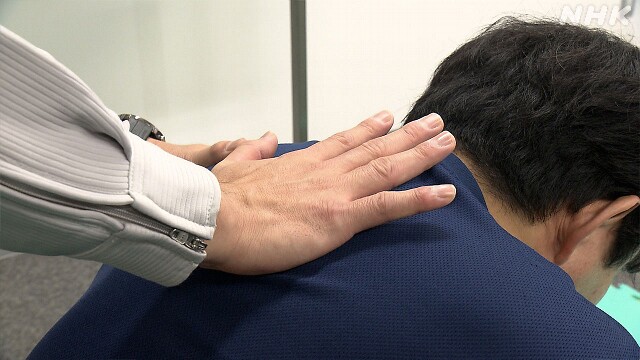
Tilt the chin back
According to Kaneko, the key is the angle and strength of the hit. It’s important to hit hard and without hesitation, as if you’re pushing the food out. Continue until the person spits out the mochi.
Even if the choking person is lying down, the location of the blows remains the same. However, since it is difficult to remove the blockage with a bent neck, it is recommended to tilt the chin back.
Some people also consider sticking a vacuum cleaner nozzle into the person’s mouth and sucking it out, but this is unhygienic and carries the risk of complications. Therefore, it is not recommended.
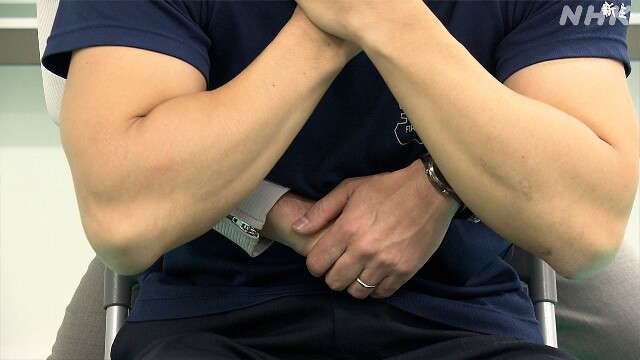
Abdominal thrusts
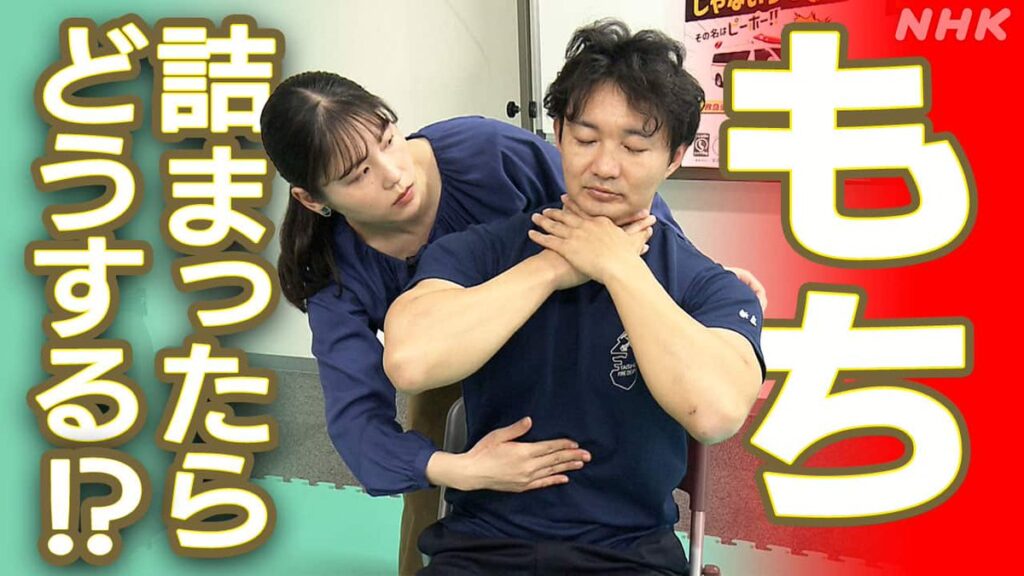
If the mochi does not come out with the back blows, try the abdominal thrusts. This method involves thrusting the abdomen forcefully to force the mochi out.
The key is the position of application of force. Go behind the person and place one fist just above the belly button, then wrap your other hand around the fist. Then, quickly pull it up and toward you.
However, because this method can cause internal organ damage, it should not be used on infants under one year of age or pregnant women.
Wait for an ambulance
Additionally, even if the person is able to spit out the mochi using this method, they are advised to seek medical attention as there is a possibility that their internal organs may have been damaged.
If the person becomes unresponsive, they are advised to perform CPR and wait for an ambulance to arrive.
Also, if you choked on the mochi and are home alone, for example, you are advised to ask a nearby resident for help or call emergency services.
Even if you are unable to speak and have to make a silent call, an ambulance can still be dispatched if the caller’s location can be identified.
“I also go to the scene, and in many cases, lives are saved because bystanders were able to remove the blockage or perform CPR,” Kaneko says. “The survival rate decreases with every passing second, so it’s extremely important for bystanders to act with courage. The Osaka City Fire Department’s official YouTube channel also has a video explaining the process, so please check it out.”
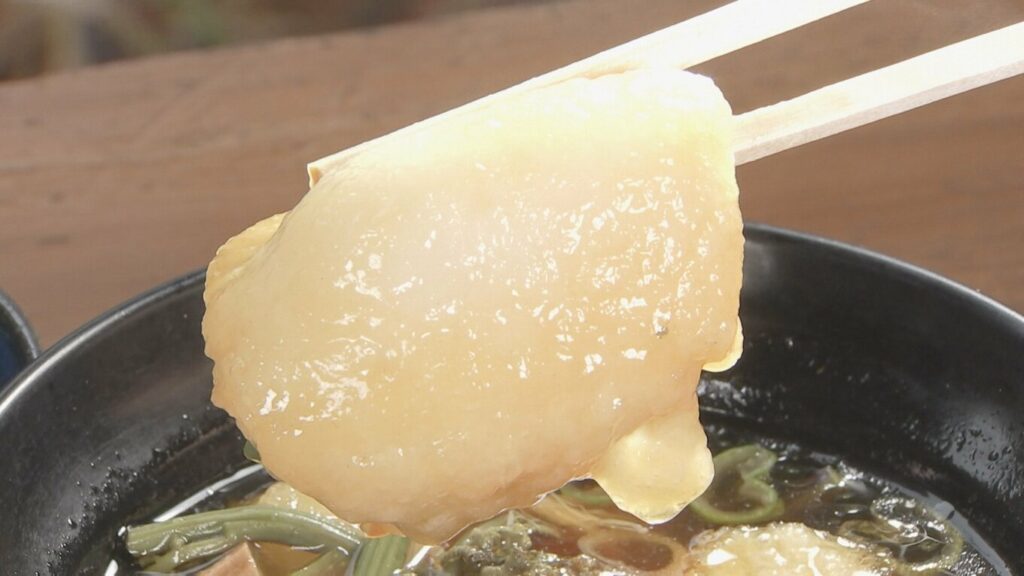
Choking prevention
Kiyoto Hosokawa, Deputy Director of the Dysphagia Center at Osaka University Hospital, has some tips to prevent choking.
Cut mochi into small pieces (approximately 2 cm or less) and eat slowly. “Eating mochi whole can lead to choking, so it’s important to cut it into small pieces. “Small” means bite-sized, and he recommended pieces of 2 cm or less,” says Hosokawa.
Drink water before eating. Hosokawa advises, “A dry throat makes mochi more likely to get stuck. It’s important to drink tea or water to moisten your throat immediately before eating.”
Sit upright when eating. “Sit upright in a chair, and you’ll naturally find it easier to swallow. Eating on tatami mats tends to lead to a hunched posture, so it’s a good idea to consciously correct your posture or use a zaisu [low-facing chair],” says Hosokawa.
Don’t eat while watching TV. Hosokawa cautions, “Eating while watching TV raises your chin, making it easier for food to enter your airway. Losing concentration on the meal also increases the risk of choking.”