Top

Nishi Azabu celebrity playpen target of Tokyo police gang probe

January 27, 2012

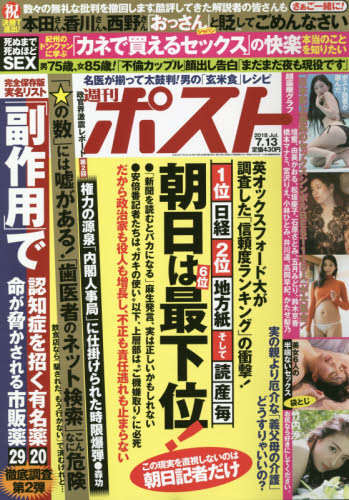
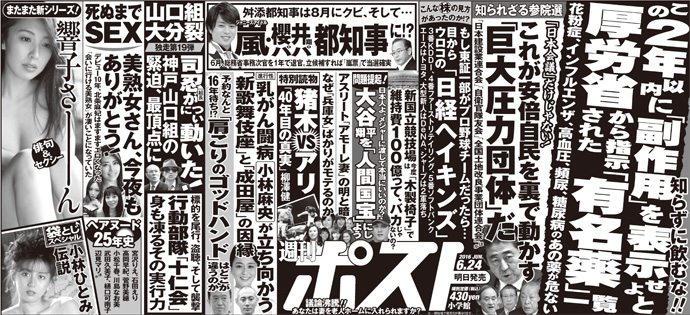
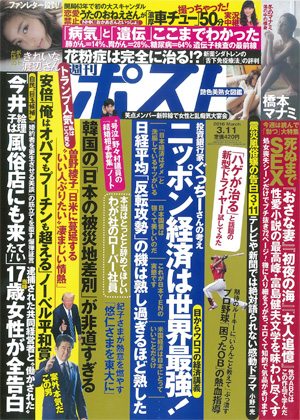
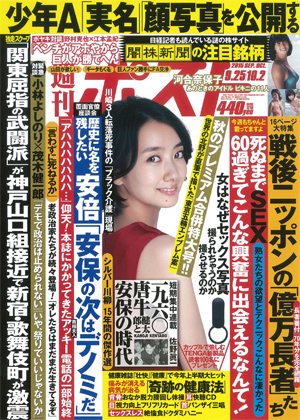
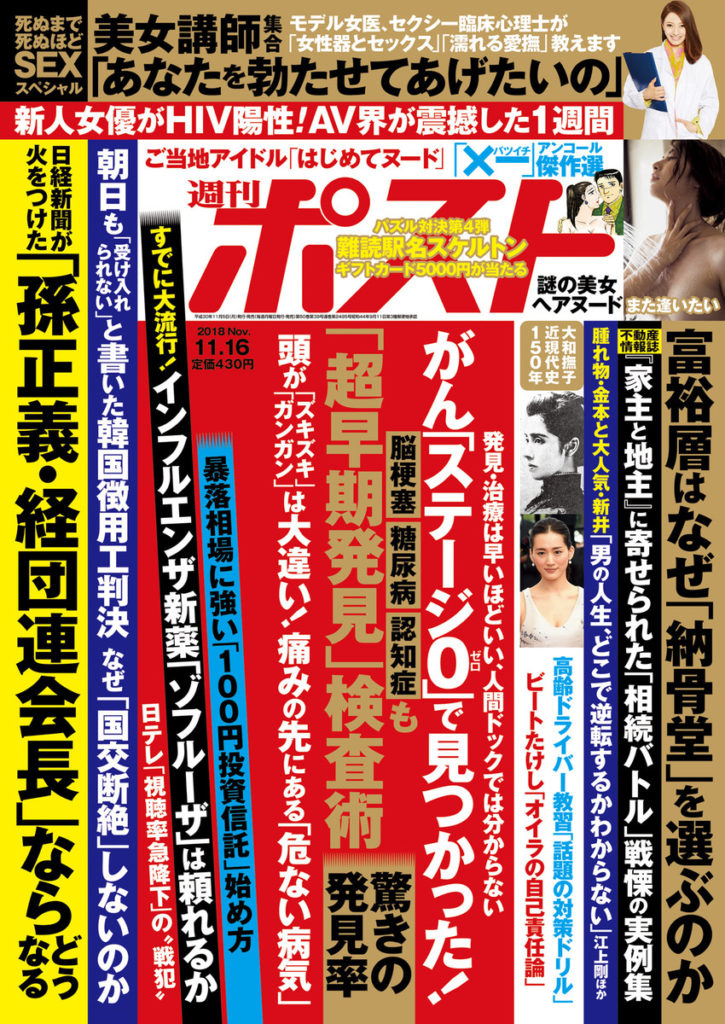
Shukan Post Feb. 3Coinciding with the enactment of anti-organized crime legislation last year, Tokyo Metropolitan Police have been focusing multiple investigations on a lavish club in upscale Nishi Azabu frequented by show biz personalities, reports Shukan Post (Feb. 3).

The club is owned by the former president of a real estate company that went bankrupt with liabilities of 10 billion yen. He has been arrested for tax evasion, and the club seized. The Tokyo District Court ruled that the property is to be put up for auction.

“The club as well as the owner’s residence are inside the same apartment building,” a person involved in the investigation tells the tabloid. “There are nine apartments in the building, and eight are intended for auction. After the ruling, a friend of the owner filed a preliminary claim for ownership of the other unit. So it has become impossible to auction the whole building.”

(Shukan Post does not give the name of the club, but a Google search reveals it to be Geihinkan Nishi Azabu. The owner is Daisuke Shioda, whose former real estate company is called ABC Home.) Read more

AV producer: One in 200 Japanese women performed in porn

December 27, 2011

Shukan Post Dec. 23Shukan Post (Dec. 23) closes the year out with a bang, so to speak. Citing an adult video production company employee, the weekly tabloid says that it is common knowledge in the industry that one Japanese woman in 200 has performed in a porn film.

To establish its bearings, the magazine says that in days past one porn actress per 400 female high school and university students was a standard assumption — a figure that represents roughly one woman per graduating class.

To then make the jump to encompass all women, the tabloid breaks down some numbers provided by the production company employee.

“If one considers all AV productions, including those distributed on the Internet and underground DVDs, there are 35,000 productions released each year,” the explains.

That converts to approximately 100 films a day.

“In one year,” the source continues, “between 2,000 and 3,000 new actresses will debut in conventional AV films. All told (including amateurs), the industry has 150,000 experienced women. Now, if one considers that between the ages of 19 and 55 Japan has 30 million women then…” Read more

Japanese television stations also rife with yakuza ties

November 21, 2011

Shukan Post Nov. 11The resignation of television personality Shinsuke Shimada over the summer put the spotlight on connections between gangsters and the entertainment world, but, warns reports Shukan Post (Nov. 11), the broadcasting stations themselves should be equally nervous about associating with organized crime.

Nationwide legislation passed in October prohibits ordinary citizens from assisting the business activities of criminal organizations, yet television stations, the article says, can be structured whereby certain activities involve yakuza connections.

“I have experience in helping sell tickets to events hosted by TV stations,” says a gang member involved in show business. “A TV station producer will come to an event promoter because he knows on the surface things look clean, but the reality is a connection to the mob. A request will be made to sell half the tickets to an event. That will happen, but with fifty percent of the sales price kept as commission.”

Both benefit from this arrangement, and the relations only get deeper from there. Gangsters connected to entertainment production companies will utilize their resources to ensure that the performers within the company’s talent pool rise to the top to receive a take of the large fees they are able to charge for dinner shows and banquets. Read more

Tokyo times: Legislation to limit perusal of Ginza pussy

November 15, 2011

Shukan Post Nov. 18On a typical evening at 1 a.m., the lights in the Ginza club district start to dim, but standing out will be at least one brightly lit pet store, in which a number of dogs and cats can be viewed by passersby, typically bar hostesses and their customers. However, reports weekly tabloid Shukan Post (Nov. 18), these late-night shops will be the subject of new regulations to reduce abuse beginning next year.

On October 31, the Ministry of the Environment announced new guidelines that will ban the exhibition of pet commodities during late hours. Set to start next June, the legislation aims to prohibit the display of cats and dogs after 8 p.m.

In Tokyo, late-night shops are common in the entertainment areas of Ginza, Roppongi, and Shinjuku. Most of their visitors after midnight are hostesses in flashy make-up and outfits who wonder aloud how ownership can be attained.

“I visit here after I’ve dealt with particularly difficult customers or simply felt fatigued,” a 25-year-old hostess tells the tabloid as she locks her eyes on a Chihuahua, priced at 250,000 yen. “By looking at them, I can feel a soothing feeling. I will feel sad if I don’t get to see them.” Read more

Soapland brothel ban in Ishikawa onsen resort town steams residents

November 5, 2011

TOKYO (TR) – Citizens in Katayamazu, Ishikawa Prefecture are taking up battle lines over the future of the city’s soapland brothels in Kaga Onsen Village, reports Shukan Post (Nov. 11). Read more

Tokyo trends: Ginza flower girls wilting

October 24, 2011

Shukan Post Oct. 28Wearing jeans and a casual jacket, Tamiko quietly holds three bunches of flowers under the flashing neon lights of Tokyo’s upscale Ginza district. She is one of the last independent flower vendors in this area known for its swank hostess clubs and bars.

“There aren’t that many classy customers who buy flowers anymore,” the 73-year-old tells Shukan Post (Oct. 28).

Tamiko is like a walking encyclopedia for Ginza, having experienced the area’s booms and busts. “There are only three Japanese ladies left selling flowers like this,” she says. “There is also one Korean girl but I haven’t even spoken to her.”

With the other two Japanese ladies not working due to health problems, Shukan Post believes that these flower girls are on the verge of extinction.

Tamiko remembers back to the early days. “In the 1940s, there were 100 girls selling flowers,” she explains. “They would buy flowers from the Shimbashi and Ginza areas and then hit the shops and clubs one by one. It was a really busy time.” Read more

Tokyo trends: Plucky pensioners picking up prostitutes with pay packets

October 17, 2011

Shukan Post Oct. 21Tokyo’s Yoshiwara district is known as the country’s largest soapland brothel area, offering a plethora of pleasures to please any punter, but exactly once every two months, reports weekly tabloid Shukan Post (Oct. 21), it’s filled with many grinning grandpas game to get it on.

Around the 15th day of even-numbered months, when pension checks are issued, the numerous bathhouses and bordellos that line the rectangular area’s streets become a playground for the Yoshiwara Nenkin-zoku, or the Yoshiwara Pension Tribe.

The magazine believes that this is one example of how the below-the-belt fuzoku industry is targeting the older generation and giving up on younger, more “passive” men, or soshokukei danshi.

“Soaplands that open early remind one of a hospital lobby since they are filled with many older men,” says Akira Ikoma, the editor of a guide to men’s entertainment called Ore no Tabi (My Trip). “That is the case with a place in Ikebukuro, where you can feel-up a gal’s chest. You’ll see many seniors smiling as they enjoy fumbling with their hands.” Read more

Japan trends: Women going wild over men’s white briefs

October 16, 2011

Shukan Post Sep. 16-23Several decades ago, most Japanese men wore white briefs (a.k.a. Jockey Shorts). But for various they began falling out of favor with women and their sales plummeted, to about half of what they were at the peak.

Shukan Post (Sep. 16-23), however, reports that since last summer white men’s briefs appear to have made something of a comeback.

“Perhaps the electric power cutbacks were a factor,” says a spokesperson for the Japan subsidiary of B.V.D. “Because beige chinos and other light-colored lightweight slacks were in fashion, dark-colored trunks showed through the material. So demand for white briefs made a comeback again.”

Still, out of concern that white briefs had fallen out of favor with women, most men tended to wear boxer shorts.

That said, lovelorn advice columnist Mikako Kikuchi writes that “The times have changed.” To wit, while an overwhelming majority of females say they don’t particularly like to see men wearing white briefs, the number who now prefer them has increased. Read more

Yakuza gangsters looking to feast on Tohoku construction pie

October 11, 2011

Shukan Post Oct. 14Not far from JR Sendai Station is a hotel that was used as an evacuation center after the Great East Japan Earthquake in March. Yet even now, seven months later, the mood inside its cafe is still rather dark.

Three groups of men in suits are seated, facing one another. One member casts a stern glance over at a reporter for weekly tabloid Shukan Post (Oct. 14). “Don’t make eye contact as they will likely start something,” says a local construction company employee. “This place is becoming a yakuza hangout.”

The commissioner general of the National Police Agency, Takaharu Ando, has stepped up measures to eliminate boryokudan activities, but he will have his work cut out for him in Tohoku, where gang groups are flocking to the area and the estimated 23-trillion yen in reconstruction work set to take place over the next decade.

“For many years, yakuza groups have been involved in reconstruction projects that follow disasters,” explains the same construction company employee. “They will have companies they back join the bids or rip off the contractors that get the work.” Read more

No-pan shabu-shabu was tip of illicit iceberg for MOF bureaucrats

October 7, 2011

Shukan Post Oct. 7Included in a series of articles inside Shukan Post (Oct. 7) discussing the complete power the Ministry of Finance (MOF) wields over Japan is a sidebar that explains that trips to an infamous restaurant in Tokyo’s Kabukicho red-light district over a decade ago were just the tip of the iceberg as far as the illicit entertainment of bureaucrats.

In the late ’90s, sexually-charged entertainment for MOF bureaucrats came in two forms. Widely known was that which was sponsored by bankers assigned to the ministry, but what few realized was that other members within the Kasumigaseki community also acted as hosts.

“The other ministries were in search budgetary allotments,” says a retired ministry official. “Those ministries would send someone who went to the same university in the same year as MOF officials for hard night out on the town.”

Entertainment costs were paid by corporations that a particular ministry oversees. The erotic arrangements were similar to that of what the banks offered, with reports of ventures to the now-defunct Loulan no-pan shabu-shabu restaurant in Kabukicho, where hostesses served without underpants, eventually becoming symbolic of government excess at the time. (For a list of members from various ministries and public corporations who dined at Loulan check this site.) Read more

Next Page »

Bottom