
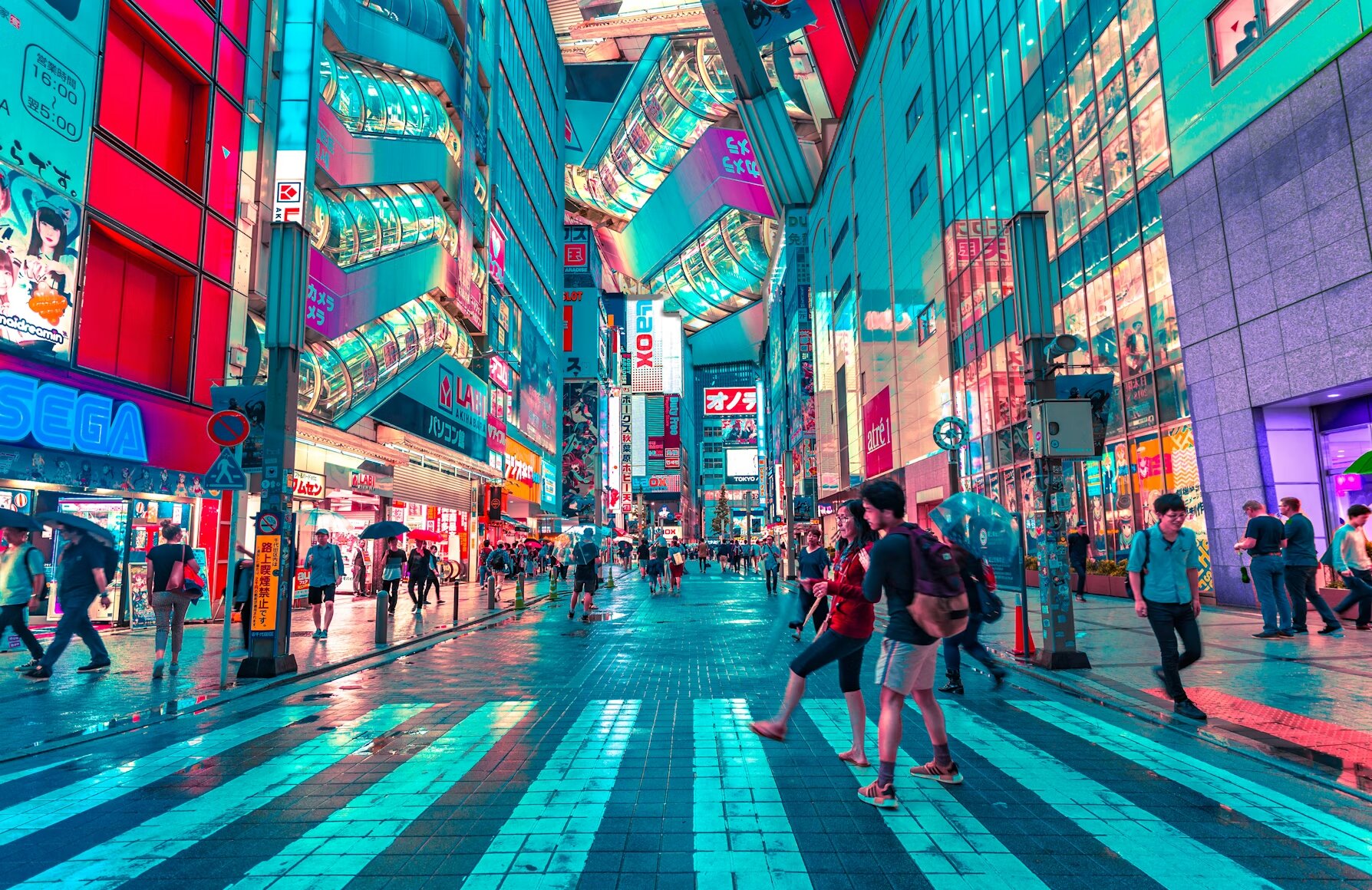
 Tokyo’s order is real. So is the pressure that helps produce it. The trains run, the streets clear fast, and entire districts can feel choreographed down to the last line of paint. But that surface is only half the story. Behind it sits a city built on exhausted labor, private isolation, and a nightlife economy that still knows how to exploit weakness after midnight.
That is not a romantic reading. It is the practical one. Japan recognized 1,304 cases of overwork-related deaths and health disorders in fiscal 2024, including 1,057 mental health cases and 89 suicides or attempted suicides linked to work-related mental strain. Separately, police data showed that 58,044 people aged 65 or older died alone at home in 2024. These are not fringe details. They are part of the hidden cost of a society that often looks more controlled than it feels from the inside.
Start with the labor, not the neon
The clean image of Tokyo is often sold as culture alone. That misses the machinery behind it.
The numbers on overwork are the clearest warning sign. Mental health cases recognized as work-related crossed 1,000 for the first time in fiscal 2024, with abuse of power from superiors, major changes in duties, and customer harassment among the leading causes listed in the data. Order, in other words, is not free. Somebody is absorbing the strain.
What the pressure looks like in practice
- Long hours normalized by industry habit
- Emotional stress hidden behind formal behavior
- Service workers carrying “customer first” expectations
- Younger workers treating fatigue as proof of commitment
Tokyo rarely dramatizes this in public. It simply folds the damage into routine and keeps moving.
The city is lonelier than it appears
A city can be crowded and still be deeply alone. Tokyo may be the best example of that contradiction.
The most chilling statistic is not about crime. It is about silence. National Police Agency data released in 2025 showed 58,044 elderly people died alone at home in 2024, and earlier police figures for the first half of 2024 had already signaled the scale of solitary deaths across age groups. The city’s efficiency can coexist with private collapse because isolation does not necessarily disturb the street.
Kabukicho still tells the truth after dark
If daylight Tokyo is about control, Kabukicho is where the mask slips. Not because chaos takes over, but because the city’s suppressed appetites become visible.
The government moved in 2025 to tighten regulations on host clubs, and police had received 2,776 consultations nationwide related to host clubs that year. Shinjuku Ward has also leaned harder on control measures around nightlife, warning that crowds, alcohol, trash, and fights are not abstract risks in Kabukicho because the district is physically small and easily overwhelmed. Even Tokyo’s order has to be enforced block by block when the drinking starts and the sidewalks fill up.
Even leisure has become compressed
Tokyo’s darker side is not only about vice. It is also about how little space many people have for genuine rest. Long workdays and dense commutes create a market for entertainment that can be opened, paused, and resumed in minutes rather than hours. That pattern helps explain the appeal of casino bet online, where quick rounds, responsive menus, and low-friction access fit the city’s habit of stealing leisure from train rides, late-night stops, and narrow breaks between obligations. The point is not spectacle. The point is compatibility with a schedule that leaves almost no room to spare.
Rules get stricter when the crowds get heavier
Tokyo’s famous order is increasingly defended by ordinances, patrols, and warnings rather than assumed social consensus. Shinjuku’s official Halloween guidance says street drinking is prohibited in the ward and explains the rule bluntly: accidents, fights, and trash spike when Kabukicho crowds overflow. That is not an aesthetic choice. It is crowd management in a city that no longer trusts major nightlife zones to regulate themselves.
Tourism adds another layer. Japan logged a record 42.7 million foreign visitors in 2025, and the national government adopted a new target in March 2026 to increase the number of regions implementing overtourism measures from 47 to 100 by fiscal 2028. Tokyo benefits from that demand, but it also absorbs the pressure it creates.
The phone has become part of the midnight city
Tokyo after dark now lives on the screen as much as the street. People track trains, watch messages, scan sports lines, and slip into short entertainment loops while waiting for the last move home. That usage pattern makes melbet download apk feel less like a standalone product and more like a natural extension of the city’s smartphone rhythm, especially when speed, readability, and one-hand navigation matter more than visual excess. The same compressed urban logic shapes everything else too. Tokyo looks spacious only if one ignores what its residents are squeezing into each hour.
The city’s order is still impressive. It is also expensive in ways a visitor can miss. The bill shows up in tired workers, solitary rooms, guarded entertainment districts, and rules written to keep the surface intact. That is Tokyo’s dark side. Not disorder. The cost of preventing it.