
Nepal’s sports and entertainment culture in 2026 is shaped less by a single dominant pastime than by how phones pull everything onto a single screen. DataReportal’s 2026 Nepal profile puts the population at 29.6 million, the median age at 25.3, internet users at 16.6 million, social media user identities at 14.8 million, and mobile connections at 32.4 million at the end of 2025; it also notes that 77.0 percent of the population still lived in rural areas. That mix matters because it creates a public that is young, mobile, and used to moving between clips, chat threads, match alerts, and payment tools without treating them as separate activities. Fast.
A young crowd, but not one crowd
The age structure explains a lot before a ball is kicked. DataReportal says 9.2 percent of Nepal’s population was aged 0 to 4 at the end of 2025, 15.0 percent was aged 5 to 12, and 9.7 percent was aged 13 to 17, indicating a large share of the country’s population is growing up in a phone-first media system rather than arriving at it later. At the same time, Facebook’s reach remained far larger than Instagram’s in late 2025, with 14.8 million users against 4.35 million, so the broad national conversation still leans toward big, familiar platforms even as younger users spend more time inside faster, shorter, more reactive formats. That is why the same weekend can hold an older fan reading a long football thread on Facebook and a younger viewer jumping between clips, live reactions, and short-form highlights without ever sitting still.
Cricket still owns the loudest room
Cricket remains the cleanest shared event in Nepal’s digital life. The ICC confirmed on 7 April 2026 that Nepal would host Oman and the United Arab Emirates from 25 April, then the United States and Scotland from 12 May, with matches at the Tribhuvan University International Cricket Ground in Kirtipur; the same ICC update noted Nepal had just beaten Scotland by 7 wickets at the Men’s T20 World Cup in Mumbai for its first win at that event in 12 years. One small observation keeps coming back on cricket days: the online conversation rarely waits for the result, because powerplay wickets, run-rate pressure, and batting tempo generate their own cycles of excitement long before the last over. A scorecard is no longer only a summary. It is part of the show.
Football found its second screen
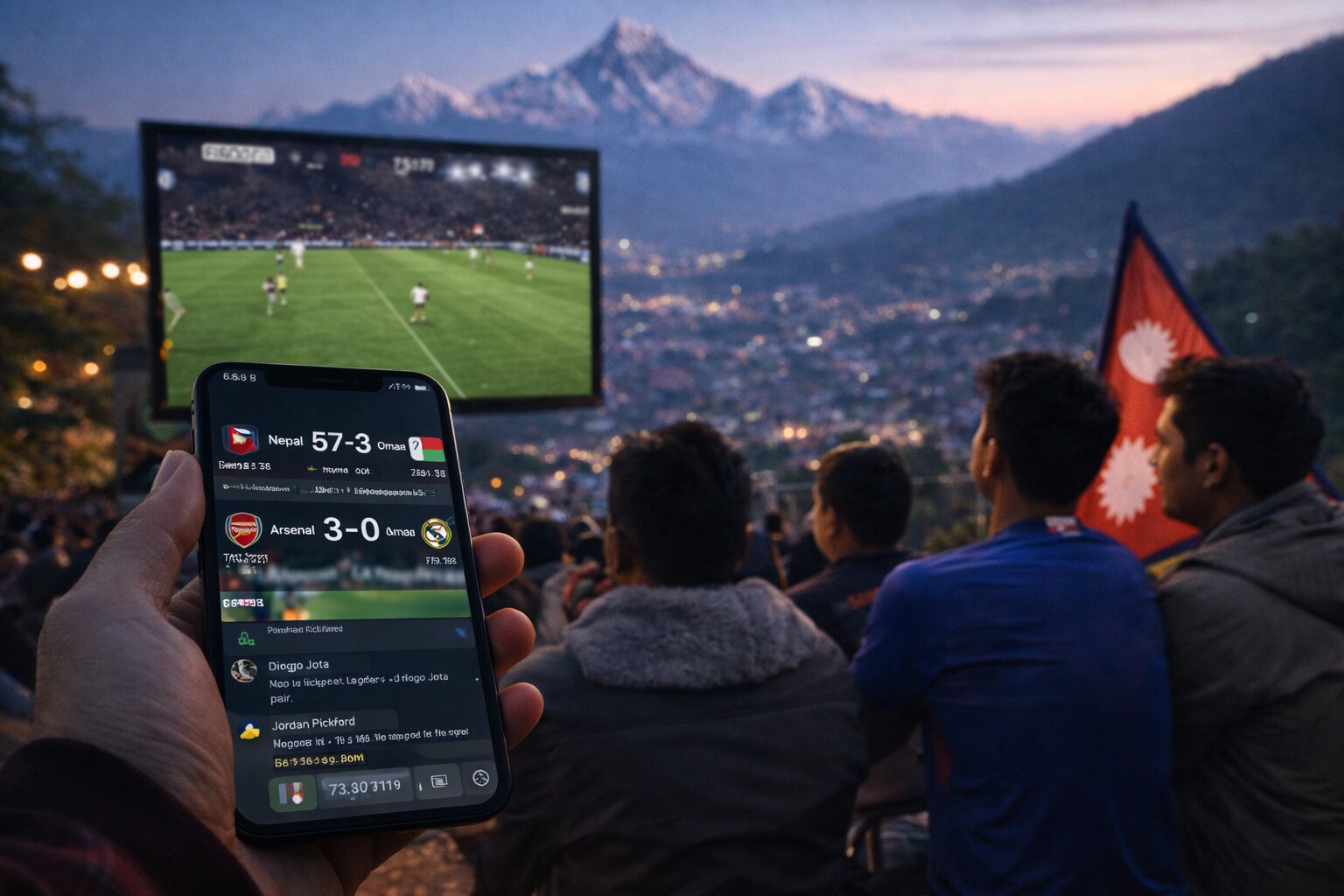
Football, especially European football, now lives inside the same second-screen habit. UEFA’s official match page recorded Arsenal’s 3-0 win over Real Madrid at Arsenal Stadium on 8 April 2025, and the Premier League’s official app says line-ups appear 75 minutes before kick-off while Matchday Live runs updates across every fixture. For a fan who wants team news, corners, substitutions, and the shape of the game in one place, cricket betting app nepal now sits in the same routine as lineup alerts and live score pages, because the phone is already open before the whistle and stays open after it. One small observation from recent match nights feels obvious once noticed: the first real spike in attention often comes when the XI drops, not when the referee starts the game.
The feed learned to keep people moving
Modern platforms are not only distributing entertainment; they are deciding its pace. Meta says it personalizes each Facebook Feed with machine-learning systems that rank content; YouTube says its Shorts Trends page is personalized to the creator within the Shorts feed; and TikTok says creators or moderators on LIVE can block messages, mute or limit viewers, and manage chat directly during a stream. Those features change how engagement feels, especially for younger audiences who do not want long gaps between pieces of content. Another small observation follows from that design: digital entertainment in Nepal increasingly feels less scheduled and more opportunistic, because the next match clip, reaction, or live discussion is presented to the user before the current one has fully ended.
One app is no longer enough
The services that hold attention longest are usually the ones that travel well between surfaces. The Premier League app sells itself on live blogging, detailed statistics, and 33 years of data; Netflix continues to treat offline viewing as a core mobile behavior; and product material for melbet online presents the same cross-platform logic across iOS, Android, web, and mobile web, with advanced statistics and 30K+ daily events built into the experience rather than bolted on later. Phones first. That matters because the audience no longer sees entertainment as one fixed appointment in one place; it expects to start on a bus, continue in a café, and pick the session back up at home without losing the thread.
Access still decides who stays in the game
The clearest reminder came when access was cut off. Reuters reported on 4 September 2025 that Nepal would block several unregistered social media platforms, including Facebook, and then reported on 8 and 9 September that youth-led protests expanded around the ban and corruption before the shutdown was lifted overnight; Reuters also noted that protesters used TikTok, Viber, and VPNs to mobilize thousands. That episode said more about modern fan behavior than any slogan could. When sport, live reaction, short video, messaging, and identity all sit inside the same device, blocking the platform does not merely interrupt entertainment; it interrupts the place where the crowd now gathers.