
Sit at a slot machine for an hour and you will make hundreds of choices, yet almost none of them are fully your own. The lights, the sounds and the timing of every near-win are engineered with a precision most players never notice, which raises an uncomfortable question worth asking honestly: are you playing the game, or is the game quietly playing you?
Telling the two apart is harder than it sounds, because the entire experience is built to keep that line invisible, and the people who design these games tend to grasp your psychology far better than most players grasp the games.
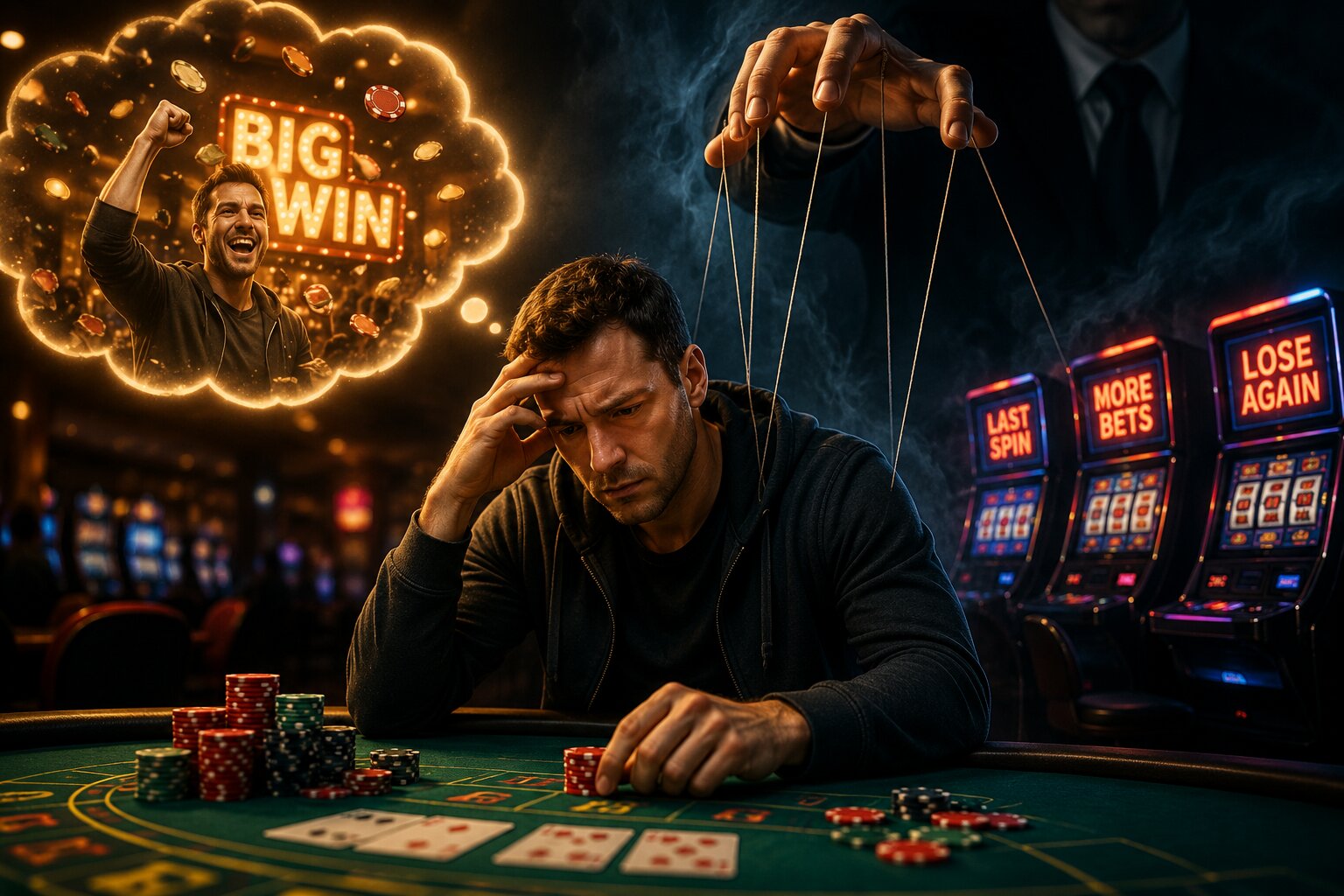
The Line Between Playing And Being Played
In theory the distinction is simple, since playing means you decide how much to stake, how long to stay and when to walk away. Being played means those decisions are increasingly made for you, partly by the design of the game and partly by the pull of your own impulses.
The difficulty is that the shift from one state to the other happens gradually, rarely in a single dramatic moment. A relaxed evening of entertainment can slide into something more compulsive without any obvious signal, which is exactly why honest self-checks matter more than gut feeling.
A useful test is whether gambling still competes with your other choices on equal terms. The moment it starts overriding your budget, your plans and your better judgement, the balance of control has already begun to tip.
How The Game Is Built To Play You
Modern gambling products rank among the most carefully tested consumer designs in existence, refined over decades to maximise time spent playing. None of their core features is accidental, and each one nudges behaviour in a particular direction.
A handful of mechanisms do most of the heavy lifting:
| Design feature | What it does to you |
|---|---|
| Variable-ratio rewards | Pays out at unpredictable intervals, the schedule psychologists find hardest to stop chasing |
| Losses disguised as wins | Celebrates payouts smaller than your bet with lights and sound, so a net loss feels like a win |
| Near misses | Shows two jackpot symbols and a third just short, firing reward pathways much like a real win |
| The “zone” | A trance-like flow in which time, money and surroundings fade from awareness |
| No clocks or windows | Strips out the natural cues that would otherwise prompt you to stop and check in |
Taken together, these features blur the feedback your brain relies on to judge how a session is really going, so the sense that you are doing fine can persist long after the money has gone. The most quietly dangerous of them is the zone itself, because a player who has lost all sense of time and money has, by definition, stopped doing the very monitoring that control depends on. Recognising the machinery is the first genuine step toward staying on the right side of that line.
Signs The Game Has The Upper Hand
Because the design works on perception, the clearest warnings come not from the game but from your own behaviour around it. These signals are well documented by researchers and counsellors, and most gambling problems develop slowly through exactly these small shifts. Spotting them in yourself is uncomfortable, yet it is also the single most reliable early-warning system you have.
Patterns worth taking seriously include:
- Chasing losses — placing bigger or riskier bets to win back what you have already lost.
- Betting money you need — dipping into funds meant for rent, bills or groceries.
- Hiding the habit — lying to friends or family about how much time or money is going in.
- Losing track of time — regularly staying far longer than you planned to.
- Gambling to escape — reaching for it mainly when stressed, bored or low rather than for fun.
- Relief over enjoyment — feeling tension rather than pleasure, eased only once the next bet is placed.
One of these on a rare occasion is not a verdict, yet several appearing together, or any of them becoming routine, is a strong sign the balance has shifted. The harder it feels to be honest about that list, the more useful the honesty tends to be.
How To Stay The One Playing
Staying in control is less about willpower in the heat of the moment and more about decisions made in advance, while your judgement is still clear. By the time a session is going badly, the part of your mind that should call a halt is often the least able to, which is why pre-commitment beats good intentions almost every time. The aim is to take choices away from your future, impulsive self and hand them to your calmer, present one.
Treating a gambling budget like the cost of any other night out — fixed, affordable and gone once it is spent — keeps the activity in its proper place as entertainment rather than as a way to make money.
Limits, Reminders And Time-Outs
Most licensed operators now build practical controls directly into account settings, and research shows that players who set deposit limits are markedly less likely to overspend. Deposit and loss caps put a firm ceiling on a session, while reality checks pop up to remind you how long you have been playing and how much has gone.
For heavier moments there are cooling-off periods and self-exclusion, which lock the account for anything from a single day to several years. It is worth familiarising yourself with these responsible gambling tools before claiming offers such as a Wanted win promo code, as having those safeguards ready turns control from a vague intention into something concrete you can rely on before placing the first bet.
None of these tools removes the fun, since a session with a firm limit is still a session; what they remove is the slow drift that the design quietly encourages.
The Honest Question To Ask Yourself
Stripped of the lights and the language, the whole issue comes down to one question you can ask after any session: did I decide how that went, or did the game? If the honest answer is increasingly the latter, that awareness is not a failure but the most valuable information you have.
Gambling is built to be enjoyable, and for most people it stays that way, yet its design means the line between control and compulsion deserves active attention rather than blind trust. Checking in with yourself regularly is what keeps you the one holding the cards.
If gambling ever stops feeling like a free choice, support is available and effective — services such as GamCare, the National Council on Problem Gambling and local helplines offer free, confidential help, and reaching out early genuinely makes a difference.
FAQ
How do I know if my gambling is still under control?
A simple check is whether you decide the stakes, the time and the stopping point, or whether the game and your impulses decide them for you. If you regularly stay longer or spend more than planned, control has started to slip.
What does “losses disguised as wins” mean?
On multi-line slots, the machine can celebrate a payout smaller than your bet using the same lights and sounds as a real win. Your brain registers it as winning, even though that spin lost you money overall.
What are the main warning signs of a gambling problem?
Chasing losses, betting money meant for essentials, hiding the habit, and gambling mainly to escape stress are the most common. Several of these appearing together is a strong signal to step back and reassess.
Do responsible gambling tools actually help?
Yes. Deposit limits, reality checks and time-outs are shown to reduce overspending, and self-exclusion provides a firmer barrier. They work best when set in advance, before a session rather than during a difficult one.
Why is it so hard to stop gambling when you’re losing?
Losses often trigger the urge to win money back quickly, a behaviour known as chasing losses. This can make players stay longer and take bigger risks, even though continued play usually increases the likelihood of further losses.