FUKUOKA (TR) – Dozens of Japanese nationals are reportedly disappearing after being lured or trafficked into an overseas fraud ring.
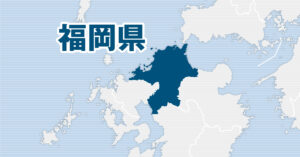
Now, a desperate mother from Fukuoka Prefecture is taking matters into her own hands to rescue her college-aged son from a Cambodian fraud ring, reports TV Asahi (Sep. 28).
The woman, in her 50s, says her son vanished nine months ago after telling her he was going on a three-day trip to South Korea. Alarm bells rang when she tracked his smartphone location data —not to Seoul, but to Cambodia.

“Working for a Cambodian company”
Upon consulting the police, she was warned her son had likely been swallowed up by a tokushu sagi (special fraud) syndicate. In such a case, a person poses as a public official or police officer on the telephone to con a victim.
After months of dead silence, the son suddenly initiated a video call last month. He appeared cheerful, eating at what looked like a Japanese restaurant, and claimed to be “working for a Cambodian company.”
However, when pressed for his exact location, he deflected. Instead, he repeatedly demanded that his mother withdraw the missing person report she had filed with Japanese police.
“He kept insisting it was causing problems at his company and demanded I send a certificate proving I canceled the search request,” the mother said. “My suspicions and anxiety only grew.”
She believes the syndicate orchestrated the call to make his disappearance look like a voluntary runaway, a tactic meant to call off police heat.
The threat is highly organized. On October 15, the Metropolitan Police Department announced the re-arrest of a man accused of kidnapping a woman in her 20s in order to traffic her to a Cambodian scam base. In June, a top official from Japan’s National Police Agency visited Cambodia, noting that “dozens” of missing Japanese nationals are believed to be held in the Southeast Asian country.
“More precious than diamonds”
The reality inside these bases is chilling. A man in his 30s, using the pseudonym Tanaka, recently managed to escape a syndicate in the Cambodian capital of Phnom Penh.
Tanaka, who had been working at a local restaurant, says he was “sold to the mafia” by someone he thought was a friend. He was thrown into a car by known gangsters and locked in a 13-story apartment overlooking the Mekong River, where he was kept under constant surveillance.
His captors ordered him to rewrite scam manuals into natural-sounding Japanese. While the gangsters acted friendly, telling him “Let’s get rich together,” the underlying threat of violence was ever-present.
“There was a machine to bind hands and feet in another room,” Tanaka recalled.
The gangsters told him Japanese captives were “more precious than diamonds” due to the immense profits generated from scamming victims back in Japan and the logistical difficulty of smuggling fresh recruits into Cambodia. Tanaka feigned cooperation for two weeks before making a daring escape during a brief, permitted outing.
Flight to Cambodia
Frustrated by a system where missing persons swept up by overseas scams are often dismissed locally as voluntary runaways, the mother from Fukuoka is refusing to wait for bureaucratic miracles. She recently boarded a flight to Cambodia to directly petition local authorities for her son’s rescue.
“Appealing for protection through the Foreign Ministry or the embassy gets a poor response,” she said before departing Fukuoka Airport. “I think going there directly must mean something.”