HIROSHIMA (TR) – A 74-year-old university lecturer was swindled out of 25 million yen in an elaborate romance and investment scam after falling prey to a smooth-talking fraudster she met on Facebook.
The victim, identified by the pseudonym Nobuko Sato, is an elite academic who continues to teach at a university in Hiroshima.
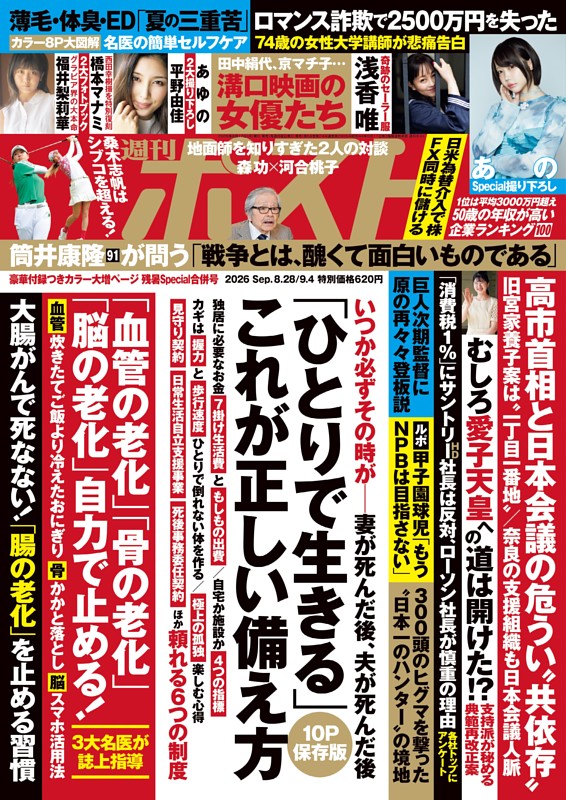
Despite her education, she handed over her life savings — kept as cash in a home safe from matured insurance policies — to scammers who exploited her lonely marriage, reports weekly tabloid Shukan Post (Aug. 28-Sep. 4).
“Yokota”
The ordeal began in February when Sato received a Facebook friend request from an account named “Yokota,” who appeared to be friends with a former student of hers. Yokota presented himself as a 53-year-old divorced Japanese man working at the Tiffany & Co. branch in Umeda, Osaka City and claimed to be a graduate of the University of Chicago.
Yokota quickly won Sato’s trust by engaging her in deep discussions about philosophy, art history, and economics. For Sato, who described her 50-year marriage to a domineering husband as oppressive and suffocating, Yokota provided a much-needed intellectual and emotional outlet.
“When he told me, ‘You’ve been heavily repressed,’ I was taken aback by how well he understood me,” Sato told the tabloid.
Cryptocurrency
By late March, the conversation shifted to cryptocurrency. When Yokota became pushy about investing, Sato initially refused and deleted his LINE contact. However, Yokota relentlessly pursued her via Facebook, sending a photo of his tear-stained face and claiming he could neither sleep nor eat because of her rejection. Feeling guilty, Sato resumed contact.
Yokota soon convinced her to download a cryptocurrency trading app, which was actually a sophisticated fake flagged by Japan’s Financial Services Agency. To bait her, Yokota claimed he would deposit a 30-million-yen “guarantee” into her account, promising massive returns if she matched it with her own funds.
Having skillfully extracted information about Sato’s hidden cash reserves, Yokota instructed her to hand the money over to “collection agents.”
Fake ID
On April 13, Sato met a man appearing to be in his 60s at a cafe in Hiroshima. Wearing an earpiece and a fake corporate ID badge, the man hastily stuffed the 20 million yen in cash into his backpack, remarking only on how heavy the bills were before leaving without issuing a receipt. Nine days later, Sato handed an additional 5 million yen over to a second agent.
The scam finally unraveled when Yokota told Sato she needed to pay 2.7 million yen in “taxes” to withdraw her supposed profits. When Sato visited her local bank to arrange the payment, a vigilant branch manager immediately pulled her into a private room.
“You are the victim of a scam,” the manager told her, explaining that the person she was communicating with was likely part of an overseas fraud ring.
Cryptocurrency
Sato filed a formal damage report with the police criminal investigation division on May 3. Detectives informed her that the men she met were merely ukeko (money mules) executing orders from higher-ups in the syndicate. Officers advised her to consult a lawyer, as recovering the defrauded cash is largely a civil matter.
The case remains unresolved, and the psychological toll on Sato has been devastating. Three months after the crime came to light, she continues to suffer from severe insomnia and physical exhaustion.
Compounding her distress, she has kept the massive financial loss a complete secret from her family. “My husband would definitely be furious, so I can’t bring myself to tell him,” Sato lamented. “The stolen money was my savings, but it is marital property. I know I have to tell him, but I just can’t bear to wear down my nerves any further.”