Naomi Kawase: Government not supporting film industry
July 31, 2008
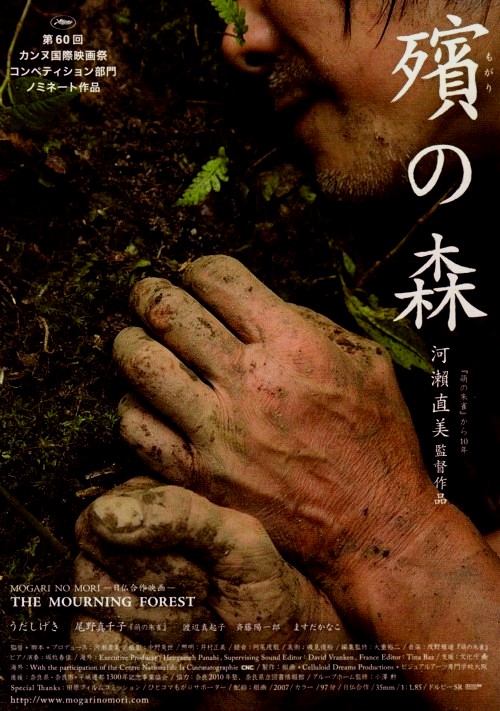
TOKYO - The red carpet at the Cannes Film Festival could be graced by more Japanese if the government and the film industry were to cooperate in a more substantive way, suggests director Naomi Kawase, this year’s winner of the Grand Prix for her film “Mogari no Mori” (The Mourning Forest).
“What I really desire, not only for myself but for the entire Japanese film industry,” Kawase told a press luncheon last week, “is to have some kind of system in place where it is fairly easy to ensure that Japanese films are distributed abroad in a very systematic way.” Read more
Coming soon: A digital theater near you
July 31, 2008
TOKYO - Even as Tokyo electronics stores seemingly unveil flashy new flat-panel HDTV models on a weekly basis, conventional multiplexes are not preparing to shutter their doors. Instead, they are contemplating a digital age themselves.
Warner Bros. Entertainment last month continued with the digital cinema experiment “4K Pure Cinema” by transmitting a digital version of Martin Scorsese’s “The Departed” from Los Angeles to Japan via fiber-optic lines. D-cinema’s sharp images and multichannel digital sound combine to give theatergoers a new experience. Read more
Stake house: Telcos place their bets
July 31, 2008
TOKYO - The pot has been raised in Japan’s telecommunications poker game.
Very recently, Japan’s largest mobile phone company, NTT DoCoMo, took a 3% stake in Nippon Television, a play that further strengthens a relationship that began early last year with the seven-year, $83 million limited liability venture D.N. Dream Partners (DNDP).
The move, which follows DoCoMo’s purchase of 2.6% of Fuji Television Network shares in January 2006, is the latest gamble linking a broadcaster and a telecom giant in a bid to boost services to customers, and represents another step toward a union within the two media sectors. Read more
The hypnotic underworld of Ghost
July 31, 2008
TOKYO - It was the band’s blistering 15-minute sonic blowout performance to conclude the first night of Seattle’s Terrastock music festival four years ago that blew a few minds.
“We were told there was no time,” remembers Masaki Batoh, the tall and angular singer and guitar player of Ghost, a six-piece band based in Tokyo. “Maureen Tucker and Country Joe were supposed to join us for a live jam session but it didn’t happen because of the lack of time.” Read more
‘The Sky Crawlers’ to compete at Venice
July 31, 2008
TOKYO - Japanese animation studio Production I.G announced this week that its animated feature “The Sky Crawlers” will compete for the Golden Lion Award at the 65th Venice Film Festival.
Directed by Mamoru Oshii (”Ghost in the Shell”) and based on the best-selling novel by Hiroshi Mori (800,000 copies in print in Japan), the film tells the story of a fantasy world in which children living in perpetual adolescence are enlisted to pilot fighter planes for the public’s entertainment. Read more

Latest issue of Takarajima chock full of chicks
July 27, 2008
The September issue of Takarajima magazine features a 30-page special titled “Deai-kei no Onna-tachi,” about foul gals on the prowl. The report starts out with an essay by sociologist Shinji Miyadai — the maven of the enjo-kosai (”compensated dating”) crowd — that looks back on the two decades since terekura (”telephone clubs”) underwent a boom back in the mid-1980s. The next piece classifies the types of businesses where women on the make congregate, including o-miai (”matchmaking”) pubs and serikura, modern-day slave auctions where women agree to go out with the highest bidder.
Pages 24-27 look into the whos, whats and hows of the enjo-kosai trade, and provide a fascinating sidebar on “secret slang,” euphemisms used to prevent the gals’ commercial messages from being flagged by monitors hired to keep keitai sites clean. (One example: “Yukichi Ichi-san” means 13,000 yen, so said because the 10,000-yen bill bears the image of educator Yukichi Fukuzawa. “San” means three.) Read more
Drumming up team spirit with Amanojaku
July 24, 2008
TOKYO - One hundred years of cross-cultural relations coming together in less than ten minutes. That is “Kizuna” (Bond), a song by Tokyo-based taiko drum group Amanojaku that was inspired by the first Japanese immigrants that moved to Brazil a century ago.
“The music symbolizes the bond between the first immigrants to Brazil and their descendants,” says the seven-member group’s burly founder, Yoichi Watanabe, who co-authored the piece. “It’s about the bond between Japan and Brazil, Japanese-Brazilian society and Brazilian society, and the bond between Japanese-Brazilians and their ancestors.” Read more
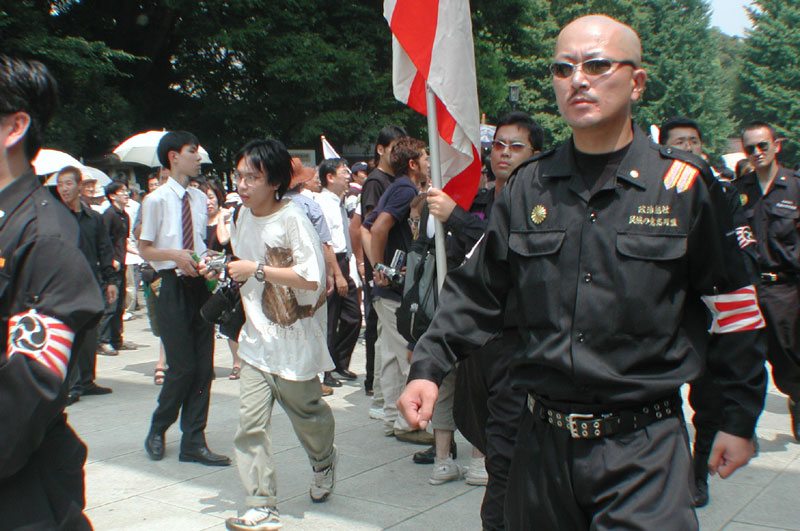
Left-wing group announces Yasukuni Shrine demonstration
July 23, 2008
TOKYO - The Anti-War Joint Action Committee will lead a one-hour protest near the grounds of the controversial Yasukuni Shrine on the morning of Friday, August 15th, the anniversary of the conclusion of World War II.
Organizers of the leftist group feel that they must counteract the activities of the uyoku dantai (right-wing groups) that are so prevalent in the shrine’s vicinity on that day.
“On the anniversary, the uyoku begin working from early in the morning,” said the committee’s representative, Misumi Tadashi in an exclusive interview with The Tokyo Reporter. “Not only around Yasukuni, but all throughout Tokyo, they blast their messages from speakers mounted atop their trucks. This is the most appropriate day of the year for them to appeal their existence to the public. The police cannot control them, and we cannot let them continue with these harsh activities. We have to do something.” Read more
Weekly Taishu titillates readers with 3-D photos
July 20, 2008
Much to Al Gore’s chagrin, a story in the August 4 issue of Shukan Taishu debunks the effects of global warming. (”The polar ice is melting, but how come the oceans aren’t rising?” it asks.) The weekly then proceeds to raise Japan’s ambient temperature, with a steamy “summer heat-up special issue” that includes nude photos of 20 Korean cuties, a tale about nurses who secretly engage in prostitution while on hospital premises, and a nostalgic look back at two decades of extramarital affairs by female TV announcers.
What sets this week’s Taishu apart from its competitors is that it each issue is supplied with 3-D viewing “glasses” — imported from the USA, according to a notation on the paper enclosure. While holding the viewers over their eyes, readers are invited to ogle at photos of a model known as “Honoka” in a special tear-out section. Honoka’s bio data is rather sketchy, noting on page 98 that her date of birth is June 20, 1983; that she stands 156cm tall; and that her vital measurements are 85-56-85. Holding the 3-D viewers over the photos does makes certain things appear to pop out more prominently. A great pick-me-up for those on a tight budget, at just 360 yen a copy. (K.S.) Read more
Three premieres, sci-fi classics to mark Tokyo festival
July 18, 2008
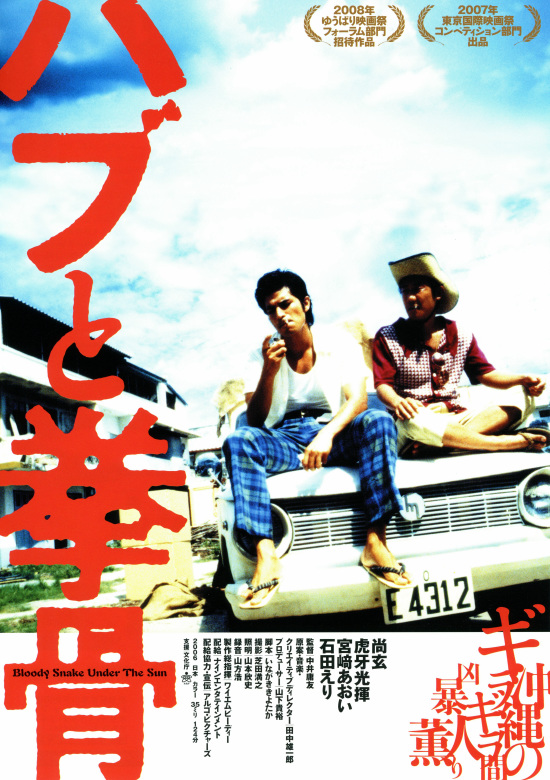
TOKYO - Three world premieres, including Yu Nakai’s “Bloody Snake Under the Sun” and “Dangerous Parking” by Peter Howitt, will highlight the competition lineup of the 20th edition of the Tokyo International Film Festival, an event that organizers hope will continue to expand in importance.
“I have tried to make this festival truly enjoyable for real cinema lovers,” said Tsuguhiko Kadokawa, who is in his final year as TIFF chairman, at a press conference earlier this week. “I have wanted to position TIFF as a significant event by giving birth to new talent and nurturing new cinema people.” But, he added, now is the time for TIFF to become truly international, something he feels this year’s schedule exemplifies. Read more