
TOKYO (TR) – Earlier this year, the Ministry of Health, Labour and Welfare revealed that the number of suicides among elementary, middle, and high school students in Japan reached a grim milestone last year, surging to a record 538.
The figure is the highest recorded since comparable statistics began in 1980, shedding light on a growing mental health crisis among the nation’s youth, reports Nippon News Network (Aug. 22).
A disturbing trend underlining the statistics is the profound isolation felt by these youths. A research team from Tokai University recently surveyed 100 minors who were hospitalized following suicide attempts to determine if they had shared their “desire to die” with anyone.
The results were stark: 76 of the patients admitted they had kept their agonizing feelings entirely to themselves.
Katsuo Mikami, a professor at the Tokai University School of Medicine, noted a troubling psychological pattern. “For various reasons, it appears they gradually lose the ability to consult others or express their emotions from a young age,” he said.
“SOS”
In an effort to address the crisis, the Board of Education in Akashi City, Hyogo Prefecture, recently hosted a workshop aimed at teaching elementary and junior high school students how to send out an “SOS.”
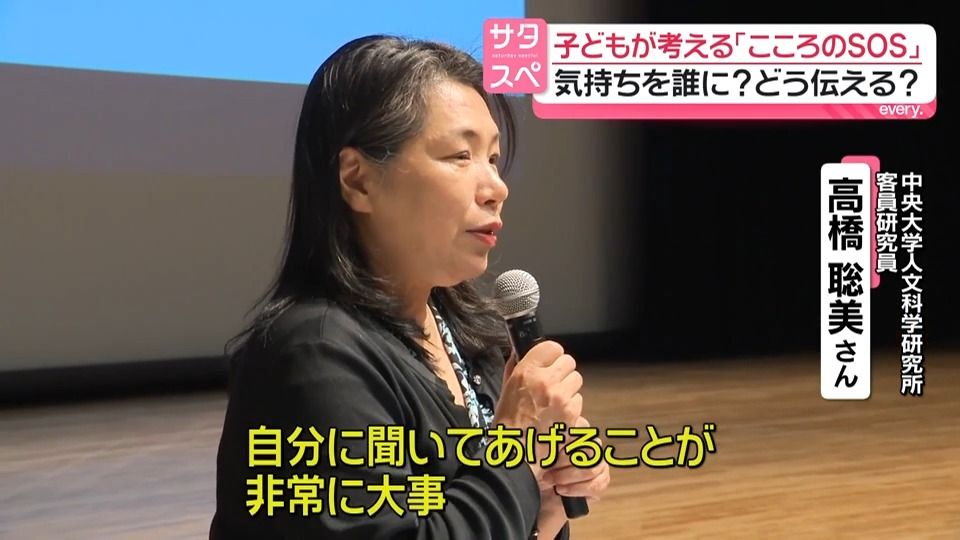
Led by Satomi Takahashi, a psychiatric nursing specialist and guest researcher at Chuo University, the workshop asked students who they would turn to if they were being bullied or ignored by friends.
The students’ candid responses highlighted a deep distrust of the adults in their lives.
“I probably wouldn’t tell my parents because they would just worry,” one student said. Another noted that adults “don’t listen seriously even when you are talking seriously.”
“I’d use AI”
When asked about consulting teachers, the rejection was immediate. “Absolutely not, never,” one student said. “They make it into a massive deal.”
Instead, an unexpected confidant emerged in the discussion: Artificial Intelligence.
“I’d use AI,” one student admitted, sparking agreement from others who proudly declared themselves in the “AI camp.” As one child bluntly put it: “AI is just easier.”
Despite the youths’ reluctance to approach adults, Takahashi urged the students to keep trying to find a human connection.
“Even if the first person doesn’t listen to you, I want you to keep trying and not give up until you reach a third person,” Takahashi told the students. “There is absolutely an adult out there who wants to help you, so please reach out.”
Takahashi also stressed that recognizing one’s own internal “SOS” is a crucial first step, advising children to acknowledge when they feel hurt or uncomfortable.
As for the adults, Takahashi offered a clear directive on how to handle youths in crisis: “Do not treat them like children. Have a real dialogue with them.”